The Nourishing Home

living healthier lives in service to the King!

  • Home
  • About
    • About TNH
    • Contact
  • Meal Planning
  • Health & Wellness
    • Real Food Basics
  • Whole30
  • GF Recipes
    • Whole30
    • Breakfast
    • Lunch
    • Entrées
    • Slow Cooker
    • Soups & Stews
    • Sides & Salads
    • Snacks
    • Desserts
    • Kids in the Kitchen
  • My Cookbook
  • Subscribe

Get Inspiralized! {discovering the art of spiralizing}

By Kelly · 14 Comments

I have a new love in my life … I’m not ashamed to tell you that it’s yet another amazing kitchen tool. And why should I be shy about sharing the joys of newfound culinary delights! Especially since this one has brought such joy to my plate and palate, because ever since I went grain-free, I’ve seriously been missing noodles!

That was until I got “Inspiralized!”

I first learned about this amazing little kitchen gem called the Spiralizer when I read an intriguing guest post at Against All Grain by Ali author of the beautiful and delicious cookbook Inspiralized. The photo made my heart leap – could those little zucchini noodles really fill the void in my tummy {heart} for noodle slurping fun?

Oh yes, my friends! It’s true! I was even tempted to take a photo of my hubby and I slurping up a zoodle together just like in Lady & the Tramp … but my hubby gave me the eye-roll and I’m pretty sure you’re probably doing that right now. But I’m betting that with just one zoodle slurp, you’ll be hooked too!
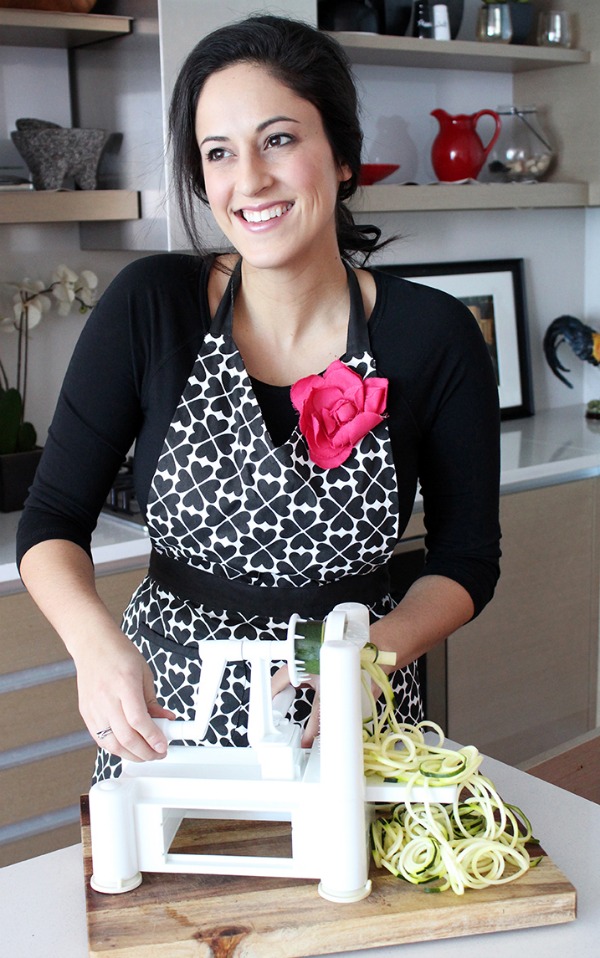
Ali Spiralizing

Meet my new friend Ali author of  Inspiralized. She’s helping inspire families everywhere to eat healthier with each tasty twist of her spiralizer. And I’m betting that after just one bite, you’ll be inspiralized too!

That’s why I’m so excited to introduce you to THE ultimate source of my inspiralization – my new friend Ali author of Inspiralized. She also has an amazing blog completely dedicated to teaching us how to use the spiralizer to create amazing culinary delights that are certain to not only put more veggies on your plate, but a smile on your face and a warm-fuzzy in your tummy too!
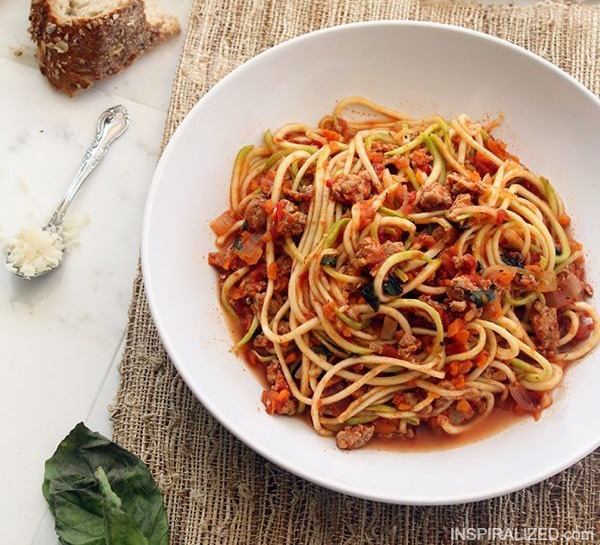
Inspiralized Turkey Bolognese CloseUp

So to kick-off this special Oodles of Zoodles Spiralizer Series, Ali is sharing one of her easy and delicious zoodle recipes that’s so good even the skeptics in my house were asking for seconds.

But before we get to the recipe, I asked Ali a few questions …

Kelly:  In a nutshell, what is spiralizing all about?

Ali: By definition, spiralizing is about turning vegetables into noodles. However, spiralizing goes beyond that. By spiralizing vegetables, you no longer have to sacrifice flavor for health. Spiralizing allows you to transform real, whole ingredients into big bowls of your favorite pastas, noodles and rices.

Instead of having to make tasteless or chewy noodles with flavorless sauces, you can eat a restaurant-sized portion of recipes like this delicious Turkey Bolognese – without the heavy calories, carbs or sugars. In reality, spiralizing is a new cooking method that allows us the freedom to eat healthy, creatively and deliciously!

Kelly: Tell us about your incredible site Inspiralized …

Ali Spiralizing 2Ali: Inspiralized is the only online resource devoted 100% to spiralizing. You can find tutorials and videos for how to spiralize vegetables, daily recipes and other related content. When you first open your spiralizer, you should have your browser set on Inspiralized.com! And better yet, grab a copy of my new cookbook, Inspiralized!

My mother actually discovered the spiralizer. One evening in spring of 2013, she made me a simple zucchini noodle dish. I was so blown away that I took her spiralizer that night, went back to my apartment and made dinner for my boyfriend and I the next day. When he tasted it, he was amazed and literally told me to quit my job, saying “This is revolutionary!” A couple months later, I quit my job and the next day, I went to a local coffee shop, bought the Inspiralized.com domain and started blogging!

I’ve always loved to write and cook, so it only seemed natural to start a food blog. However, the real joy in blogging comes from everyone’s excitement and relief when they realize they can eat healthily and deliciously. We’re too caught up on trying to portion control our favorite foods (ie pasta) and this gives everyone the opportunity to pack in their nutrient-dense veggies in a delicious way. Every time I receive a kind e-mail from a reader about how my blog has changed his/her life (whether they’re gluten-free, grain-free, on a low-carb diet, or just trying to eat healthier and more creatively), I’m reminded of the power of spiralizing and my mission to make it a common way of preparing food!

Kelly: Thank you for being our guest today, Ali! You have such a wonderful talent for creating amazing dishes that are nutrient-dense and incredibly flavorful.
Inspiralized Turkey BologneseSpeaking of which, I’m super excited to share with ya’ll one of Ali’s amazing pasta transformations … it’s her world famous Turkey Bolognese recipe. A perfect way to introduce your family to the joys of spiralizing.

And … Can I tell you a little secret? This amazing little device does more than just noodl-ize zucchini, as Ali mentioned, it can turn virtually any veggie into a noodle and have you noticed how much kids like noodles?

Even my finicky preteens gave the veggie noodles a shot and had to admit they’re pretty awesome! Yes, getting more veggies into my boys is proof enough for me that this new kitchen tool ROCKS!

So I invited you to jump in with me to the delicious world of spiralizing. Each week, during the month of April, I’ll be sharing how I’ve transformed one of my family’s favorite pasta dishes using the spiralizer.

Are you a spiralizer fan too? If so, what are your favorite ways to use this amazing kitchen wonder?
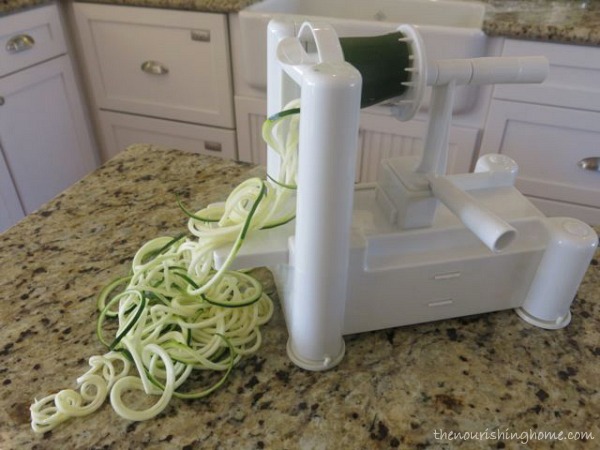
Disclosure: The above links to the spiralizer kitchen tool are amazon affiliate links. By purchasing via these links The Nourishing Home receives a small percentage of the sale at no additional cost to you. Of course, you are not obligated to use these links to make a purchase, but if you do, please know that it helps to support this site and ministry. Thank you!

You Might Also Like:

Banana Créme Brûlée Oatmeal Bake (Dairy-Free, Gluten-Free)
Day in the Life of a Meal Planner ...
Cheesy-Basil Eggs (GF)

Filed Under: Uncategorized ·

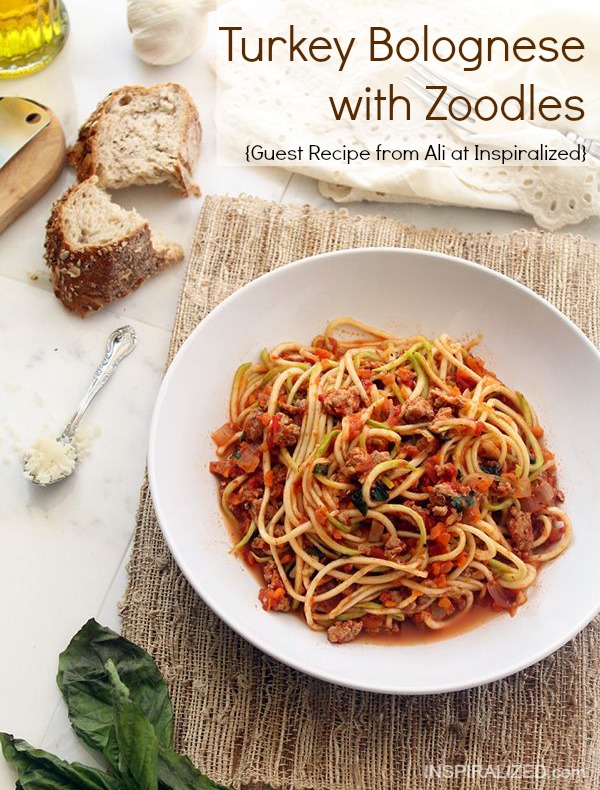
Turkey Bolognese with Zoodles {Special Guest Recipe}

By Kelly · Leave a Comment

This amazing Turkey Bolognese with Zoodles is an amazing pasta make-over recipe. You won't miss the pasta at all!

Incase you missed the news, I’ve completely fallen head-over-heels in love with the spiralizer kitchen tool. I guess we can blame my new friend Ali author of the awesome cookbook Inspiralized for this new obsession … after all, it was her gorgeous blog that sparked my spiralizing passion.

So I ended up chatting with Ali, you can read all about her in my special interview with her, and of course imploring her to share a recipe with us. Cause seriously, once you taste how yummy these zoodles are, your mind will be spinning with ideas on how to get your family to happily and willingly eat more veggies.

In fact, Ali’s amazing Turkey Bolognese with Zoodles is just the first in a series of pasta make-over recipes I’ll be presenting this month all featuring the amazing zoodle! (See the list of spiralizer recipes below.)

So what is a “zoodle,” you may ask?

This amazing Turkey Bolognese with Zoodles is an amazing pasta make-over recipe. You won't miss the pasta at all!

It’s zucchini that’s been spiralized into noodles. These “zoodles” as we call them, can be used in place of pasta to create delicious, highly nutritious gluten-free and grain-free dishes with all the fun and bite of al dente pasta, but without the gluten, grain and carbs – making them an excellent choice for those on GF diets, or for those who simply want to enjoy more veggies.

A bonus to spiralizing is that it literally takes just seconds to turn the little handle and create a healthy mound of fresh zoodles. In fact, in far less than the time it takes to boil water and cook pasta, you can spiralize some zucchini and add the zoodles to your favorite sauces and sautés, as they literally only take 2-3 minutes to cook.

Want to learn more? I have a 3 Easy Steps to Spiralizing Photo Tutorial that will show you just how simple and delicious it is to spiralizer. So be sure to check it out!

Okay enough chatter, let’s get to the recipe … It’s so delicious that even the skeptics in my house (i.e. preteen boys) asked for seconds. So there you have it – zoodles ROCK!

This amazing Turkey Bolognese with Zoodles is an amazing pasta make-over recipe. You won't miss the pasta at all!

P.S. Please be sure to meet Ali by checking out my special interview with her. She’s a super sweet friend that really knows how to create delicious healthy dishes using the amazing spiralizer.

Looking for the other recipes shared as part of the four-part spiralizer series? Here they are for easy reference:
• Part Two:  Fresh Caprese with Zoodles
• Part Three: Veggie Sauté with Zoodle Ribbons
• Part Four: The Best Veggie Stir Fry.
• BONUS! Learn to spiralize with my fun photo tutorial: How to Spiralizer in 3 Easy Steps!

Print
Turkey Bolognese with Zoodles (GF)

Yield: 2-3 servings

a special guest recipe from Ali at Inspiralized.com

Ingredients

  • 3 medium zucchini
  • 1/2 cup coarse-chopped celery
  • 3/4 cup peeled and coarse-chopped carrots
  • 2 tbsp olive oil
  • 2-3 cloves garlic, minced
  • 1/2 tsp red pepper flakes
  • 1/2 cup diced red onion
  • 1/2 lb ground turkey
  • 1 1/2 tsp oregano flakes (plus extra for pinching)
  • 1/3 cup homemade chicken stock
  • 1 cup crushed tomatoes
  • 1 tsp tomato paste
  • Sea salt and pepper to taste
  • 3 tbsp chopped basil
  • Optional: Parmesan cheese to garnish (omit for Whole30)

Instructions

  1. Using a spiralizer with the small-hole blade attachment, make zucchini noodles; set aside. (For step-by-step instructions on how to make zoodles, be sure to check out my How to Spiralize in 3 Easy Steps Photo Tutorial.)
  2. Add the chopped celery and carrots to a food processor and pulse until finely diced.
  3. Put a large skillet over medium heat and add the olive oil and garlic. Cook for 30 seconds. Then add the red pepper flakes, cooking for another 30 seconds.
  4. Next, add the onions and cook about 2 minutes, or until they begin to soften. Then add the carrot and celery mixture and cook for an additional minute.
  5. Push the veggie mixture to one side of the skillet and add in the ground turkey, making sure to crumble the meat. Break up the meat further with a spatula or wooden spoon.
  6. Add in ½ teaspoon of oregano flakes and cook the meat until no longer pink.
  7. Combine the veggies with the turkey in the skillet. Then add the chicken broth and cook, stirring continually until the broth reduces by half.
  8. Add in the crushed tomatoes, tomato paste and season generously with salt and pepper. Then add the remaining oregano flakes and basil. Bring to a boil and then lower heat and let simmer for 15-20 minutes or until sauce is completely reduced.
  9. Finally, toss in the zucchini noodles and mix thoroughly to combine. Cook for about 2 minutes or until zucchini softens and heats through.
  10. Evenly divide among 2-3 plates and enjoy!
3.1
https://thenourishinghome.com/2014/04/turkey-bolognese-with-zoodles/

Stay tuned … there are even more delicious pasta makeover recipes to come as part of my special Oodles of Zoodles Spiralizer Series this month.

Disclosure: The above links to the spiralizer kitchen tool are amazon affiliate links. By purchasing via these links The Nourishing Home receives a small percentage of the sale at no additional cost to you. Of course, you are not obligated to use these links to make a purchase, but if you do, please know that it helps to support this site and ministry. Thank you!

You Might Also Like:

Chicken Parmigiana / Parmesan Chicken Tenders (GF Option)
Southwestern Chicken Burgers
Slow Cooker Chicken Verde with Peppers

Filed Under: Poultry ·

How to Make Dairy & Non-Dairy Greek-Style Yogurt {no straining required}

By Kelly · 51 Comments

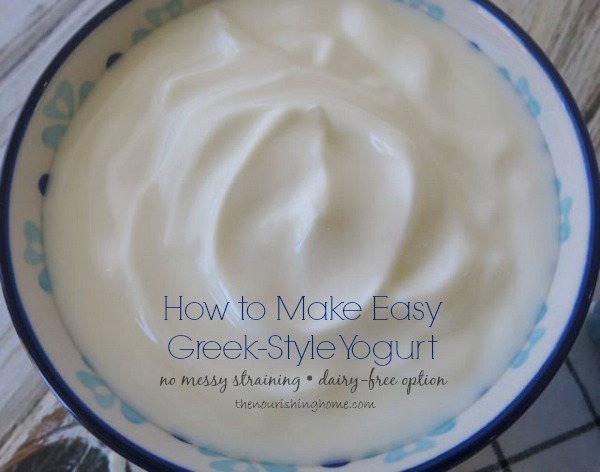
This recipe photo tutorial teaches an easier way to achieve thick, creamy dairy and non-dairy Greek-Style Yogurt no straining required. Can you guess the secret?

Thick.creamy.delicious! Three words that definitely describe Greek Yogurt, which is why so many of us are huge fans of this custard-like probiotic treat.

Yet, each time I attempted to make it, I found myself frustrated by the straining process required to achieve its classic thick texture. My frugal tendencies cringed at how much yogurt was wasted in the straining process, and my neat-nick alarms were blaring over the mess of cleaning out the yogurt-laden strainer.

Of course, I don’t want my issues to rain on anyone’s Greek yogurt making parade, so if you love straining yogurt, then don’t let me stop you.

But as for me and my yogurt-devouring family, there just had to be an easier way to achieve a thick, creamy yogurt without all the extra effort and fuss.

Thankfully, my dreams came true as I found out from a few real foodie friends THE SECRET … you can indeed bypass the pain of the strain, thanks to handy dandy plain gelatin.

Basic Dairy and Non-Dairy Recipes for Making Greek-Style Yogurt 

Since this is intended to be a visual step-by-step tutorial, the two recipes below (for dairy and non-dairy Greek-Style Yogurt No Straining Required) provide the list of ingredients and some important instructions, but please do be sure to follow the photo tutorial below for easy step-by-step instructions.

Print
Whole Milk Greek-Style Yogurt

Yield: 1 quart (4 cups) of yogurt

Ingredients

  • 1 quart (4 cups) *pasteurized organic whole milk
  • 1 1/2 teaspoons unflavored gelatin
  • 1/4 cup plain organic Greek yogurt (or 1 yogurt starter packet)

Instructions

    Follow the step-by-step photo tutorial below for detailed instructions. The following is a brief outline for easy printing and reference.
  1. Heat the milk over medium to medium-high heat until it reaches 165 degrees, making sure to stir the milk constantly. Do not allow the milk to come to a boil.
  2. Once the milk comes to temp, turn off the burner and place the pan on a cooler area on the stovetop. Allow milk to cool to 110 degrees. (Or you can use a cold water bath method to more quickly cool the milk – see the photo tutorial for details.)
  3. When milk reaches 110 degrees, thoroughly whisk in the gelatin for about one minute.
  4. Then add the yogurt starter and continue to whisk until thoroughly combined, about one minute.
  5. Place the yogurt mixture into a yogurt maker, or use another reliable incubation method as outlined in the photo tutorial.
  6. Allow yogurt to culture for 8-12 hours, depending on taste preference. The longer you culture, the more tangy the taste. (If making SCD yogurt be sure to culture for 24 hours.) Then give it a good whisking to re-blend, and transfer it to the refrigerator to cool completely. Once chilled, you can transfer the yogurt to individual serving containers, if desired.
  7. Or use your homemade yogurt to make delicious Fruit & Yogurt Parfaits, Yogurt Banana Splits, Fruit-on-the-Bottom Yogurt Cups and Homemade Flavored Yogurt.

Notes

* Be sure to use pasteurized milk only for this recipe. Yogurt experts do not recommend using ultra-pasteurized milk to make yogurt. UHT milk is actually cooked at high temps making it unsuitable for culturing.

Also note: I do not recommend using this recipe to make raw milk yogurt, as it requires a different heating process. See Cultures for Health for details.

P.S. It's normal to see small gelatinous clumps of yellow liquid when using gelatin to thicken yogurt. It is the whey that has separated from the milk solids. Simply use a whisk to gently blend it back into the yogurt.

3.1
https://thenourishinghome.com/2014/03/make-greek-style-yogurt-no-straining-required/

Print
Coconut Milk Greek-Style Yogurt (Dairy Free)

Yield: 3-4 cups of coconut milk yogurt

Ingredients

  • Two 13.5 oz cans pure coconut milk
  • 1 1/2 teaspoons unflavored gelatin
  • 1 packet of non-dairy yogurt starter or 1 good quality probiotic capsule

Instructions

    Follow the step-by-step photo tutorial below for detailed instructions. The following is a brief outline for easy printing and reference.
  1. Heat the coconut milk over medium to medium-high heat until it reaches 115 degrees, making sure to stir the milk constantly. Do not allow the milk to come to a boil.
  2. Once the coconut milk comes to temp, turn off the burner and move the saucepan to a cooler area on the stovetop.
  3. Allow milk to cool to 110 degrees. (This won't take long, since it's such a small temperature difference.) When milk reaches 110 degrees, thoroughly whisk in the gelatin for about one minute. And then add the non-dairy yogurt starter and continue to whisk until thoroughly combined, about one minute.
  4. Place the yogurt mixture into a yogurt maker, or use another reliable incubation method as outlined in the photo tutorial.
  5. Allow yogurt to culture for 10-18 hours. The longer you culture, the more tangy the taste.
  6. Then give it a good whisking to re-blend, and transfer it to the refrigerator to cool completely.
  7. Once chilled, thoroughly whisk the yogurt again to blend it together, since separation commonly occurs. Cover and store in fridge. Or transfer the yogurt to individual serving containers, if desired.
  8. Use your homemade coconut milk yogurt to make delicious Fruit & Yogurt Parfaits, Yogurt Banana Splits, Fruit-on-the-Bottom Yogurt Cups and Homemade Flavored Yogurt.

Notes

Almond Milk Yogurt: Several have asked if this recipe will work with almond milk substituted for the coconut milk. You can substitute with almond milk, but do note that the yogurt will be quite runny without an added starch, such as arrowroot powder or tapioca starch. For details on making almond milk yogurt, I recommend checking out Lexie's Kitchen.

3.1
https://thenourishinghome.com/2014/03/make-greek-style-yogurt-no-straining-required/

Photo Tutorial:
How to Make Greek-Style Yogurt in 5 Easy Steps!

This recipe photo tutorial teaches an easier way to achieve thick, creamy dairy and non-dairy Greek-Style Yogurt no straining required. Can you guess the secret?

Making Greek -Style Yogurt is not only easy, it’s also a great way to save money and avoid the unhealthy additives found in many commercial brands. And if you’re not a fan of straining either, just follow these simple steps below, and you’ll soon be enjoying your own healthy homemade thick-n-creamy Greek-Style Yogurt! Yum!

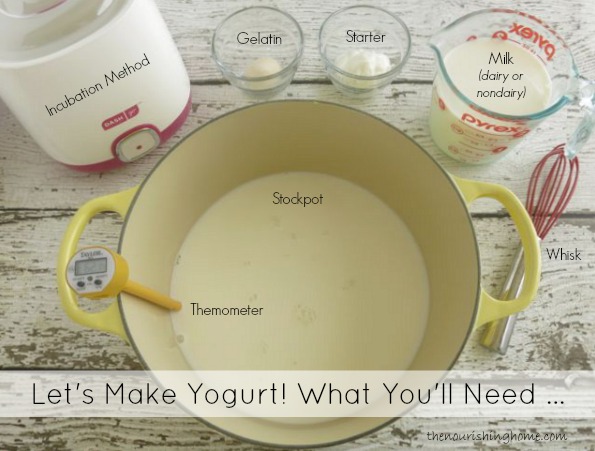
Here’s What You’ll Need to Get Started!

This recipe photo tutorial teaches an easier way to achieve thick, creamy dairy and non-dairy Greek-Style Yogurt no straining required. Can you guess the secret?

Making homemade yogurt doesn’t require a lot of expensive gadgets, but you will need to purchase a yogurt starter (details below) and a waterproof thermometer, if you don’t already own one.

It’s much more convenient to have a yogurt maker, but it’s not an absolute must. There are several other methods for incubating yogurt, which are outlined below.

Step One: Heating the Milk

This recipe photo tutorial teaches an easier way to achieve thick, creamy dairy and non-dairy Greek-Style Yogurt no straining required. Can you guess the secret?

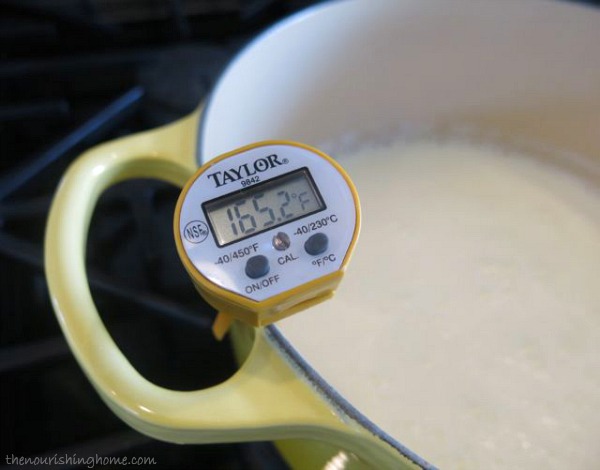
The temperature you’ll need to heat the milk depends on the type of milk and cultures used. In this post, I am covering how to make whole milk Greek-Style Yogurt using either pasteurized whole milk, or pure coconut milk. If you would like to make raw milk yogurt, I recommend checking out the instructions provided at Cultures for Health for best results.

Heating Whole Milk
In general, you’ll want to heat pasteurized whole milk between 160–165 degrees, if using Greek-style yogurt cultures. Or 180–185 degrees, if using traditional yogurt cultures. (Note: If purchasing a powdered yogurt starter, be sure to follow the instructions provided.)

Heating Coconut Milk
If you’d like to make an easy and tasty non-dairy yogurt, I recommend using pure coconut milk, not “light” coconut milk. I find it to be the most consistent in achieving a thicker coconut milk yogurt with a pleasant tangy flavor. (Note: Do not use coconut milk beverages as they will not work.) Simply heat the pure coconut milk to 115 degrees and then proceed to step two below.

Step Two: Cooling the Milk

This recipe photo tutorial teaches an easier way to achieve thick, creamy dairy and non-dairy Greek-Style Yogurt no straining required. Can you guess the secret?

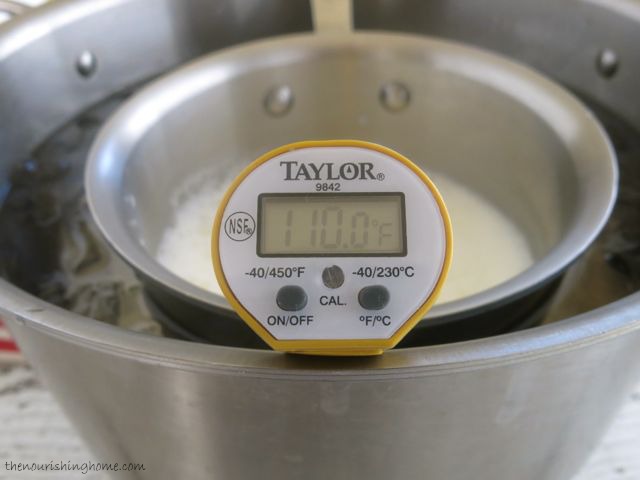
Whether you’re making dairy or non-dairy yogurt, 110 degrees is the magic number! When the milk reaches 110 degrees, that’s the time you’ll add the gelatin and the starter (see details in step three below).

Time-Saving Tip: A simple method for cooling the milk faster is to create a cold water bath. Simply fill a large stockpot with water until it reaches halfway up the saucepan of hot milk. Then add a little ice. Slowly whisk the milk until it reaches 110 degrees. Then remove the pan of milk from the cold water and move on to step three below. (Note: If using ceramic cookware, it’s important to know that going from one temperature extreme to another may cause it to crack or break. To be safe, transfer the hot milk to a stainless steel saucepan or bowl instead.)

Step Three: Adding the Gelatin and Starter

This recipe photo tutorial teaches an easier way to achieve thick, creamy dairy and non-dairy Greek-Style Yogurt no straining required. Can you guess the secret?

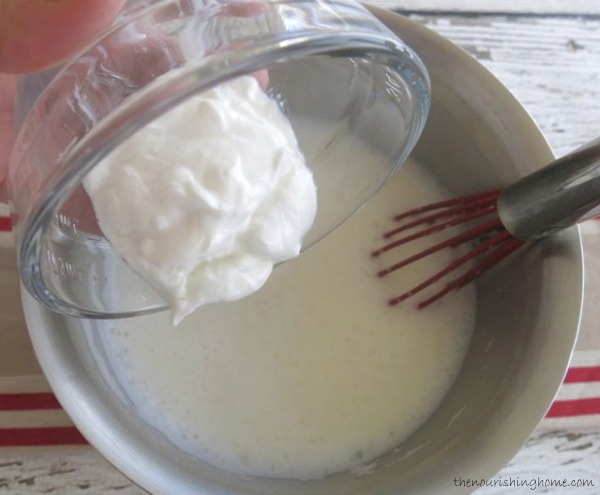
As previously mentioned, gelatin is the secret ingredient to making a thick, custard-like yogurt without the need for messy straining. I personally like Great Lakes brand, because it’s pure gelatin made from grassfed cows. Just add the gelatin to the warm milk and whisk thoroughly for at least one minute. Then, add your starter and whisk again for an additional minute to ensure the mixture is well combined.

Choosing the Right Starter
The term “starter” refers to the live cultures that turn ordinary milk into that thick-n-tangy probiotic treat we all love. You have several options when it comes to yogurt starters. The simplest is to use a good quality, plain organic store-bought Greek-Style yogurt, such as Straus or Wallaby. Just make sure that the Greek yogurt you select as your starter has live and active cultures in it, and does not contain unwanted additives.

Another option is to purchase powdered starters, such as those available at Cultures for Health. If you’re dairy-free, you’ll want to be sure to use a starter that is dairy-free such as Belle & Bella or Cultures for Health’s Vegan Starter. A tip I learned in Danielle’s book Against All Grain is that you can also use a probiotic supplement as a starter for coconut milk yogurt, such as Ultimate Flora.

Does it really matter which starter you choose? Yes. The type of cultures in the starter have an impact on the overall flavor of the yogurt, and the cost of your homemade yogurt too. I found it helpful to experiment a bit by trying different types of cultures, until we found one that we really liked and is budget-friendly.

Of course, once you make your first batch of homemade yogurt, depending upon the cultures used, you can set aside a little of your homemade batch to use as starter for your next one. Keep in mind, it’s important to use your reserved starter within 3-4 days for best results. Additionally, after making several batches of yogurt, you may need to start over with a fresh starter (not from your homemade yogurt). 

Step Four: Culturing Your Yogurt (a.k.a. Incubation)

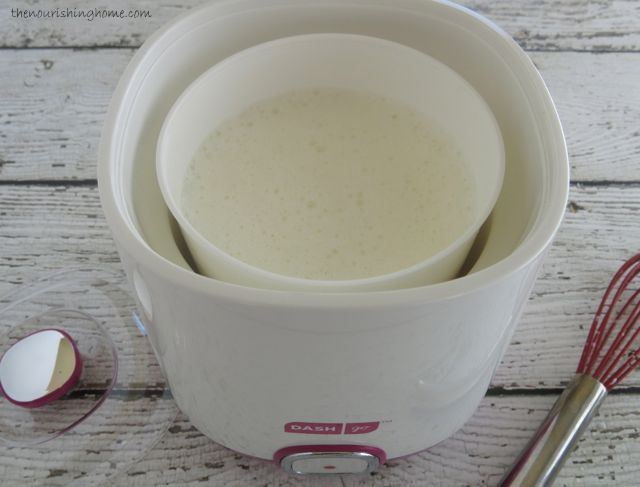
This recipe photo tutorial teaches an easier way to achieve thick, creamy dairy and non-dairy Greek-Style Yogurt no straining required. Can you guess the secret?

Another important step in the yogurt-making process is incubating the yogurt mixture. The more stable and consistent the temperature remains, the better the taste, texture and culturing of your yogurt.

I personally prefer to use a simple, no-nonsense yogurt maker, since I’m making yogurt at least 1-2 times per week. It was worth the small investment to be able to just pour my yogurt mixture into the yogurt maker, turn it on, set the timer, and go about my day.

However, there are several other incubation methods that can be utilized. The key to each of these methods is ensuring your yogurt mixture remains at a consistent temperature of 110 degrees until it has set, usually about 7-8 hours for whole milk yogurt, and 10-18 hours for coconut milk yogurt.

Step Five: Enjoy!

This recipe photo tutorial teaches an easier way to achieve thick, creamy dairy and non-dairy Greek-Style Yogurt no straining required. Can you guess the secret?

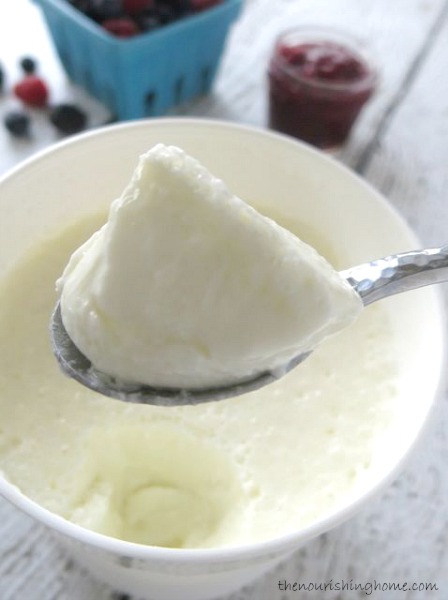
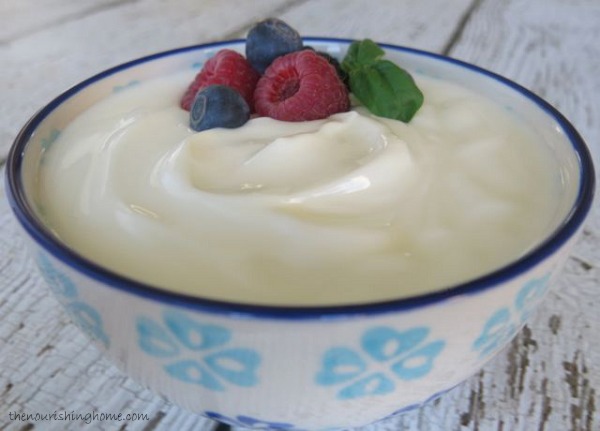
Congratulations! If you’ve followed this recipe tutorial, you’ve just made an incredibly healthy and delicious real food for far less than you would pay for good quality store-bought brands. And there are soooo many ways to enjoy your fresh homemade yogurt.

This recipe photo tutorial teaches an easier way to achieve thick, creamy dairy and non-dairy Greek-Style Yogurt no straining required. Can you guess the secret?Here are a few of our favorite recipes for enjoying homemade yogurt:

• Fruit & Yogurt Parfaits
• Fruit on the Bottom (and top) Yogurt Cups
• Yogurt Banana Splits
• Peach Crisp Yogurt Cups
• Homemade Flavored Yogurt 

This recipe photo tutorial teaches an easier way to achieve thick, creamy dairy and non-dairy Greek-Style Yogurt no straining required. Can you guess the secret?

What are your favorite ways to enjoy delicious homemade yogurt? 

You Might Also Like:

Fruit & Nut Grain-Free Bars
Cherry Chocolate Chip Scones
Pumpkin Spice Granola (Grain-Free, Dairy-Free)

Filed Under: Other Breakfast Foods, Sweet ·

  • « Previous Page
  • 1
  • …
  • 53
  • 54
  • 55
  • 56
  • 57
  • …
  • 182
  • Next Page »

My New Cookbook is Here!

Welcome to The Nourishing Home!

I’m so glad you’re here and want you to feel right at home! My heart in creating this blog is to help you by sharing helpful meal planning strategies and nourishing GF recipes that are healthy, easy and delicious with thanksgiving to God! [Read More …]


All content (recipes, photos, posts, etc.) on this site is the creative property of Kelly Smith. You are welcome to share a photo via social media, as long as it contains a link back to the corresponding recipe or post from this site. However, you may not republish a recipe in its entirety in any form. For questions, or for permission to use a photo or recipe, please contact me via email at [email protected]. Thank you!

Please Note: All content (recipes, photos, text, etc.) on this site is the creative property of Kelly Smith of The Nourishing Home. You are welcome to share a photo via social media, as long as it contains a link back to the corresponding recipe from this site. However, re-publishing a recipe in any form is strictly prohibited. Additionally, please refrain from adapting recipes without properly linking back to the original recipe, and keep in mind that simple substitutions do not constitute an adapted or original recipe. For details regarding recipe copyright law, please visit the Food Blog Alliance.
The Nourishing Home is a participant in the Amazon Services LLC Associates Program, an affiliate advertising program designed to provide a means for sites to earn advertising fees by advertising and linking to amazon.com.

Privacy Policy
DMCA.com

Copyright © 2026 · All Rights Reserved · The Nourishing Home · Artwork by Nancy Panaccione · Site Design by Deluxe Designs · Log in