
I’m smitten with this amazing little kitchen gadget called the “Spiralizer.” Why? Because it’s an easy, delicious and nutritious way add more wholesome veggies to your family’s plate! Plus, these scrumptious little “zoodles” make a healthy grain-free replacement for pasta whether you plan to Join Us for the Whole30 or not.
In fact, in far less time than it takes to boil water and cook pasta, you can spiralize a whole bunch of zucchini noodles, and other delicious veggie noodles, such as butternut squash, sweet potatoes, beets, cucumbers and more.
Let me show you how simple it is to spiralize … and be sure to check out all of the spiralizer recipes I’m sharing by scrolling down to “Cooking Your Spiralizer Veggies” below.
P.S. Personally, I use the Paderno Spiralizer, but there’s lots of spiralizers out there to choose from like these! So it’s easy to find one that matches best with your preferences and budget!
How to Spiralize – Just 3 Easy Steps
Step One: Prep the Veggie

First, trim the ends off of the zucchini (or veggie you opt to use). It’s important to select veggies that are evenly shaped (like a long even cylinder) and are at least two-inches thick for best results. If you have slightly uneven veggies, cut them into shorter cylinder lengths. You can opt to peel the zucchini or not. However, for some veggies, like butternut squash, peeling is a must.
Step Two: Properly Lining Up & Securing the Veggie
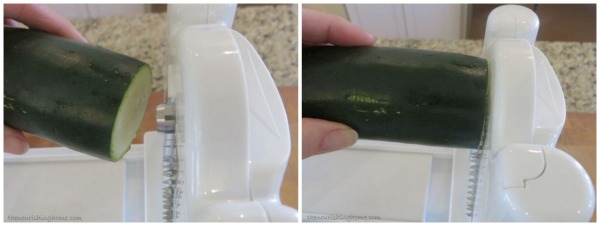
Once you have the veggies trimmed, it’s important to properly line up the veggie by placing the thickest end into the hole at the front of the spiralizer. You want to be sure that the hole is lined up in the center of the veggie as shown in the photo collage above.
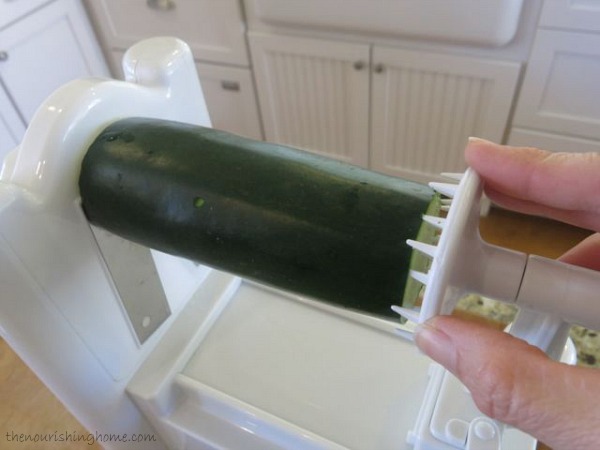
Next, move the sharp gripper to the other end of the veggie and push it securely into place. This will ensure your veggie is centered properly for best results.
It’s also important to be sure the base is secure. So push down on the spiralizer until the suction-cup feet are secure. A flat countertop is best, so ignore my wood cutting board pictures, they’re pretty but not practical as the little feet will more easily lose their grip on a wood surface.
Step Three: Ready to Spiralize!
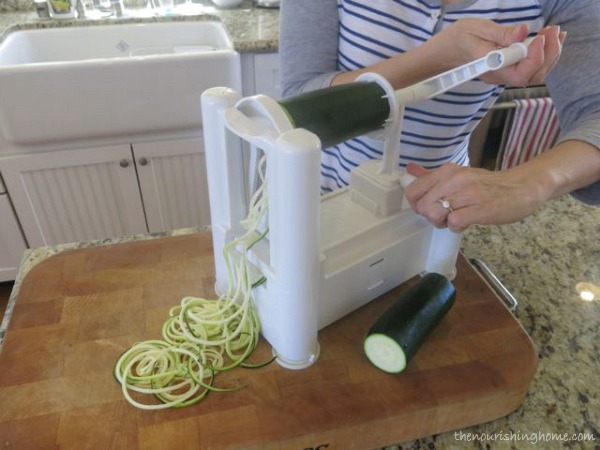
Once the veggie and base are secure, use one hand to hold the handle at the bottom and gently push that handle forward into the blade, while using the other handle to turn the spiralizer in a clockwise direction. As you can see in the photo above, the zucchini is instantly transformed into nutritious zucchini noodles that can be used in virtually any pasta recipe as a healthy, grain-free option.
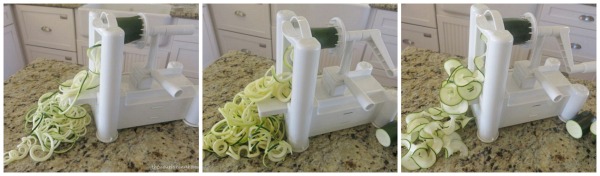
One of my favorite things about the spiralizer is that you can change the shape of your “zoodles” by simply selecting from among the three blades that come with it. As shown in the photo collage above (from left to right): The blade with the small holes creates zoodles that are about the thickness of spaghetti. The larger hole blade creates thicker noodles similar to bucatini. And the flat blade creates beautiful ribbons of zoodles similar to pappardelle. This provides a wonderful versatility in creating a multitude of healthy and delicious recipes.
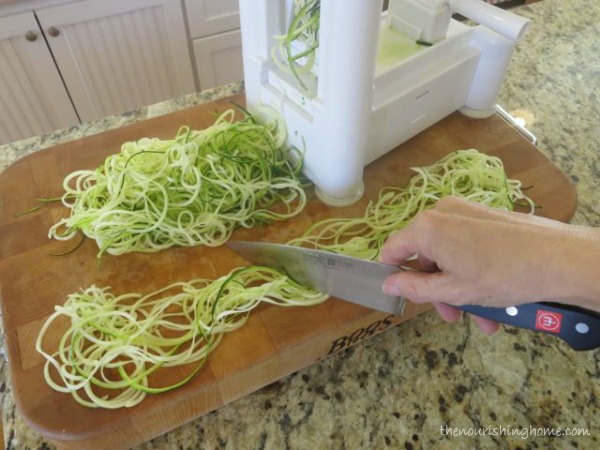
One thing you’ll quickly notice about zoodles is that they are really L O N G … so it’s best to cut them into manageable lengths, unless of course you don’t mind twirling your fork forever, or enjoying a never-ending zoodle slurp (hee hee!).
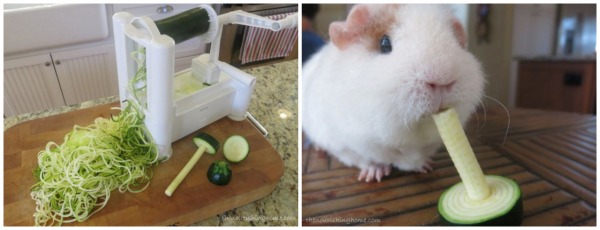
Wondering what to do with those funny little spiralizer veggie plugs and ends? As you can see above, our sweet little guinea pig Phoebe is more than willing to take care of them for us. But if you don’t have a furry little friend, be sure to use these leftover veggie bits & pieces in soups, stocks, casseroles, sautés or in your compost.
Storing Your Spiralized Veggies
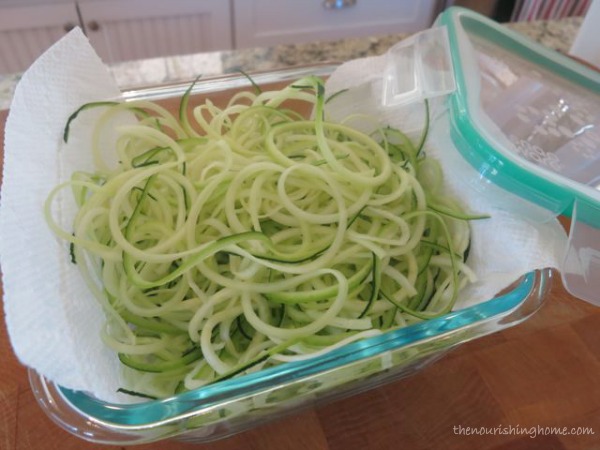
Another great thing about spiralizing, is that most of the veggies can be easily stored in the fridge for up to 3-4 days, making it easy to prep ahead. I prefer to use glass snap ware containers for storing my spiraled veggies. Just place a paper towel at the bottom of the dish to help absorb any excess moisture. Then secure the lid and store in the fridge until ready to cook.
Cooking Your Spiralized Veggies
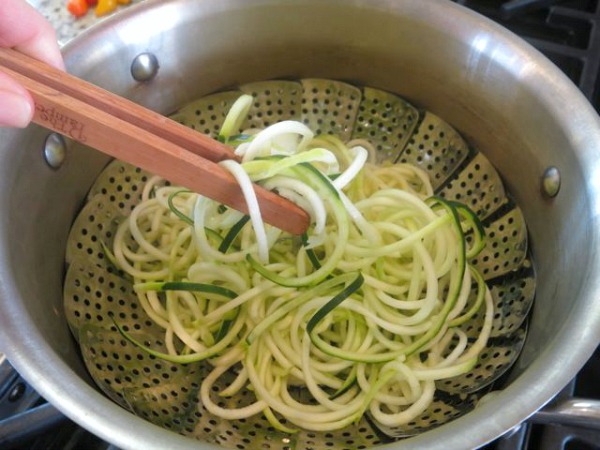
For most dishes, you can simply add the raw zoodles to your finished sauce to warm them. If using them in cold dishes or salads, you may wish to steam them a bit first. Just remember to not overcook your zoodles, as they’re best served al dente, not mushy.
Oodles of Zoodles Spiralizer Recipes
Ready to get started spiralizing, here a few of my favorite veggie-packed spiralizer recipes perfect for putting your new “zoodles” skills to work:
• Chicken Zoodle Pho Bowl (Whole30, GF, DF)
• Slow Cooker Italian Beef & Swiss Chard with Zoodles (Whole30, GF, DF)
• Pan-Seared Balsamic Chicken with Pesto Zoodles (Whole30, GF, DF)
• Veggie Sauté with Zoodle Ribbons (Whole30, GF, DF)
• Veggie Stir Fry with Zoodles (Whole30, GF, DF)
By the way, if you’d like to Join Us for the Whole30, you can join in anytime. Also, just a friendly reminder, that I provide free monthly meal plans over at The Better Mom blog. Each week’s meal plan contains delicious family-friendly GF recipes utilizing a time-saving method to make getting a healthy dinner on the table a snap! I highly recommend you pop over to The Better Mom and download these free meal plans.
P.S. If the price tag of the spiralizer isn’t within budget, I wanted to let you know about an affordable alternative. Oxo makes a terrific little julienne peeler that can be used to create zoodles. It takes more effort and it doesn’t produce completely uniform in size zoodles, but it still works quite well and is a good option while you save for the real deal.


 , plus extra for sprinkling

 with coconut oil and line bottom only with parchment paper, slightly greasing the parchment as well. Please note: A standard 9x5-inch loaf pan will result in a longer shorter loaf. But it will still taste great! (If making dinner rolls, see *recipe note below.)
