The Nourishing Home

living healthier lives in service to the King!

  • Home
  • About
    • About TNH
    • Contact
  • Meal Planning
  • Health & Wellness
    • Real Food Basics
  • Whole30
  • GF Recipes
    • Whole30
    • Breakfast
    • Lunch
    • Entrées
    • Slow Cooker
    • Soups & Stews
    • Sides & Salads
    • Snacks
    • Desserts
    • Kids in the Kitchen
  • My Cookbook
  • Subscribe

Real Food on a Budget, Part 2

By Kelly · 8 Comments


Buy Big, Save Big:  Real Life Example 

This article is a follow-up to “8 Tips for Real Food on a Real Budget” and provides a cost comparison of three items as an example of how you can save money by buying large/bulk sizes. so, if you’re looking for ways to curb costs and better manage your budget, I highly recommend reading 8 Tips for Real Food on a Budget.

How buying BIG will save you money:
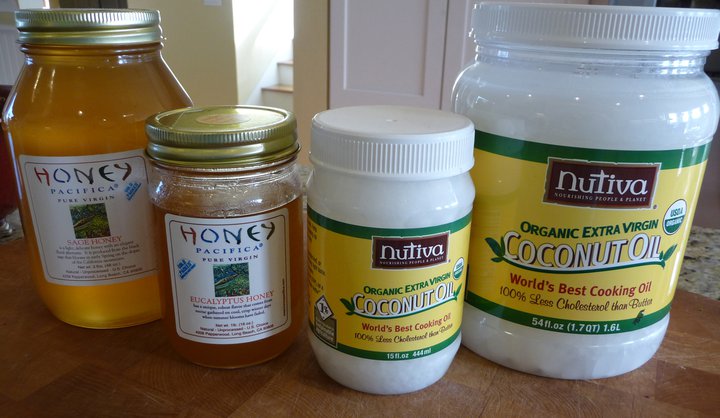
For comparison purposes, let’s say I use approximately 15 ounces of coconut oil, 16 ounces of honey and a pound of blanched almond flour each week. The cost per week for these four items would be $30.91 per week, if I am buying just what I need for the week (i.e. small size containers).

However, if I started buying the largest size available for these items (that I could reasonably use before the expiration date), then I would actually save a significant amount of money.

Let’s compare costs and see how much money we can save per week on just these four items by buying larger/bulk sizes at Mother’s Market – a local whole foods type store in CA (please note these prices reflect the current costs at the time this post was written):

Coconut Oil
Small size (15oz) Nutiva coconut oil is $0.69 per ounce
Large size (54oz) Nutiva coconut oil is $0.47 per ounce
Savings= $0.22 per ounce

Raw Honey
Small size (16oz) Pacifica honey is $0.61 per ounce
Large size (48oz) Pacifica honey is $0.35 per ounce
Savings= $0.26 per ounce

Blanched Almond Flour
Small size (16oz) Bob’s Red Mill blanched almond flour is $10.80 per pound
Large size (5 lbs) Honeyville blanched almond flour is $6.72 per pound
Savings= $4.08 per pound

Buy Big, Save BIG!
So as you can see from the above cost comparisons, by buying larger/bulk sizes for just these three items on my shopping list, my cost savings would be about $11.54. So, per month I’d save about $46.16 and per year I’d save a minimum of $553.92.  So when you do the math, it’s easy to see that in general, buying BIG is definitely the way to save BIG!

Join A Co-op & Save Even More!
I am so grateful to be in a local Azure Standard co-op. It has really helped me and my family trim down our food budget. Just as one example, I can now purchase Bob’s Red Mill blanched almond flour for just $21.35 for a 5 lb. bag. That is $6.53 less per pound than the same brand at my local market, and it’s $2.45 per pound less than what I was paying for it online.

So buying in bulk either at your local market, or via online, or even better, through a co-op, is a great way to help you trim costs on your food bill. (HOW DO I FIND A CO-OP IN MY AREA? One of the best ways is to contact your local Weston A Price Foundation Chapter and speak with the chapter leader. He/She will be able to provide you with information about any local co-ops that exist, as well as other helpful real food resources in your area.)

Again, buying larger sizes, or in bulk, is just one example of the many ways you can help curb costs to maintain your budget while enjoying healthy real foods. Employing the many other tactics outlined in “8 Tips for Real Food on a Real Budget” will also help you to further keep your budget in check.

Happy savings! Joyfully Serving HIM, Kelly

You Might Also Like:

5 Frugal Ways to Save on Groceries without Using a Calculator
Room for Dessert? (the joys of healthier all-natural sweeteners)
The Secret to a Healthy Grocery Budget: Keeping Your Receipts

Filed Under: Real Food Basics, Real Food on a Budget ·

Room for Dessert? (the joys of healthier all-natural sweeteners)

By Kelly · 16 Comments

The Joys of Healthier All-Natural Sweeteners

Following a real food lifestyle doesn’t mean you cannot enjoy an occasional sweet treat. The key is healthier ingredients and moderation.

What makes your sweet treat sweet?
If it’s refined sugar (white, brown, raw, confectioners), high fructose corn syrup (now disguised as “corn sugar”), artificial sweetners, etc., then it’s time to give your sweets a major overhaul by using healthier real food sweetening agents in moderation, such as raw honey, pure maple syrup, coconut sugar and Rapadura (or sucanat). Each of these healthier options is discussed in detail below.

Developing a healthy palate
As Americans, we have been reared in a culture geared toward sugar (and salt) addiction. Because most of our food supply is nothing more than nutrient-stripped, processed junk, sugar (and salt) has to be inserted at high levels into these “foods” in order to give them some level of flavor. So it’s no wonder that our palates have become accustomed to high levels of sweetness (as well as saltiness).

The good news is, by adopting a real food lifestyle and weeding out refined sugars, we can retrain our palates to enjoy the delicious variety of flavors of real food rather than masking them with an overdose of sweetness. Unlike processed food, real food is bursting with a wealth of amazing flavors that God has infused within them for our enjoyment.

So the ideal is not to use natural sweeteners in excess either. Moderation is key with any of these healthier natural sweeteners. As we back off our addiction to sweet (and salt), we will come to enjoy the full flavors and health benefits of real food.

Pure Raw Honey 
Raw honey is the best option because it’s a living food full of natural antioxidants, enzymes, amino acids, vitamins, and minerals, including calcium, iron, zinc, potassium, phosphorous, magnesium, copper, chromium, manganese and selenium. Research also shows that nutraceuticals are found in raw honey. These important nutrients assist in neutralizing the free radical activity in your body, and also help boost the overall function of your immune system.

Another plus is that raw honey tends to be much sweeter to taste than sugar, so you can use less, yet still achieve an exceptional sweet taste. Raw honey is a great choice for recipes that you will not be heating, as heating above 115 degrees destroys the naturally occurring enzymes and nutraceuticals.

For example: I like to use Honey Pacifica brand creamy raw wildflower honey to sweeten smoothies, as a sweet treat on toast and homemade biscuits, and as a spread on nut-butter sandwiches!

When it comes to baking or cooking with honey, I still prefer to use raw honey, even though it will be heated because I simply prefer a minimally processed all-natural product. However, when baking or cooking, I prefer liquid raw honey, rather than the solid version, as it is easier to measure and incorporate into recipes. My favorite choice for cooking/baking are the very mild flavors of either clover honey or sage honey, since their delicate taste never overpowers the intended flavor of a recipe.

Important to note: Honey requires a lower baking/cooking temperature because it burns easily. So when baking or cooking with honey, for best results, do not exceed 350 degrees.

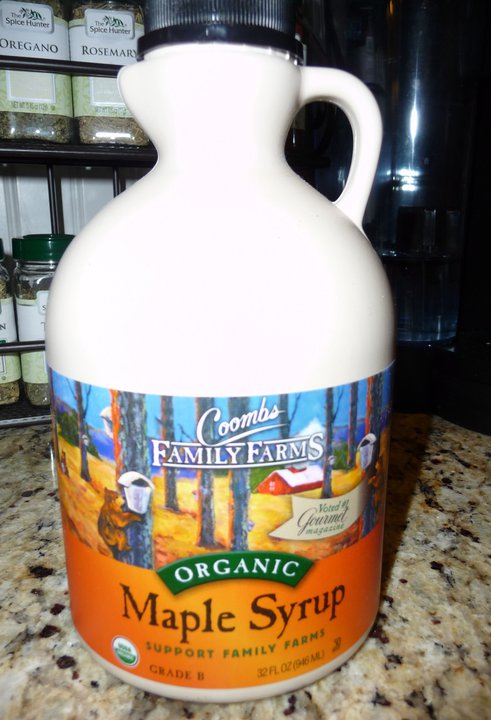
Pure Organic Maple Syrup 
Pure organic maple syrup is a rich and delicious natural sweetener perfect for use in just about any recipe, especially baked goods like quick breads, muffins and cakes. Additionally, pure maple syrup has a higher baking temperature than honey, so it is a better choice for recipes that require baking temps of 350 degrees or higher.
As with other natural sweeteners, pure maple syrup has beneficial nutrients not found in refined sugars. In fact, according to research from the University of Rhode Island, maple syrup has more than twenty compounds that are beneficial to health, including important trace minerals such as zinc and manganese – and it also contains bioactive compounds that serve as antioxidants. But before you start slathering on the maple syrup, do keep in mind that it is high in calories, so again moderation is key!

When it comes to maple syrup, there are two basic varieties to choose from – Grade A and Grade B. Grade A is the most popular, with a light maple flavor and a relatively thin consistency. Grade A is usually made from the maple sap collected at the beginning of the mapling season. Grade B maple syrup is much darker and has a stronger maple flavor. It’s also a bit thicker in consistency than Grade A. Experiment with both and discover which you prefer.

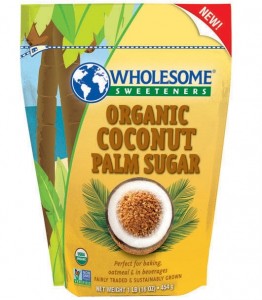
organic-coconut-palm-sugarCoconut Sugar (Coconut Palm Sugar)
Coconut sugar is produced by tapping the sweet nectar from the coconut palm tree flower (similar to tapping a maple tree for syrup) and drying the nutrient rich juice in a large open kettle drum. The juice condenses into a delicious whole brown sugar with a low glycemic value. Coconut sugar can be used as a one-for-one replacement for refined sugar, and not only adds sweetness to recipes, but rich caramel undertones as well.

I personally like to purchase brands such as Wholesome Sweeteners Organic Coconut Palm Sugar because it is produced on small, sustainable, cooperative owned farms. These cooperative farmers are committed to sustainable agriculture and use every part of the coconut palm tree.

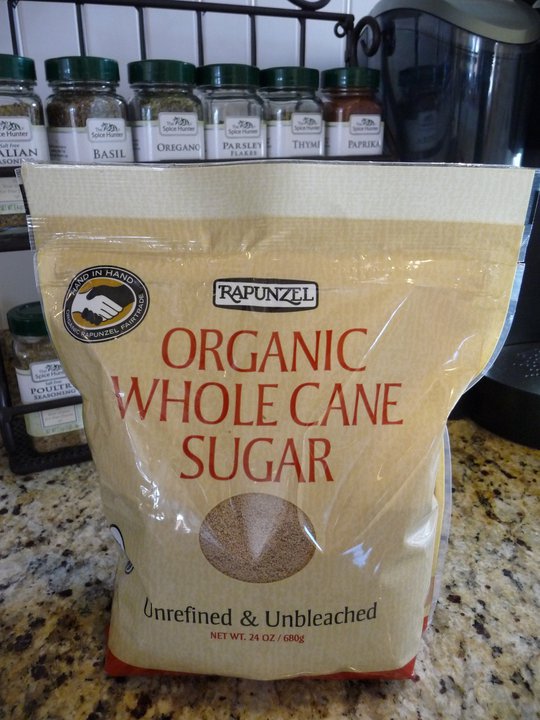
Rapadura (Sucanat) 
Rapunzel Rapadura is a special brand of all-natural sugar made by dehydrating pure organic cane sugar juice. According to the Weston A. Price Foundation, both Rapadura and a similar product called sucanat are healthier alternatives to refined white or raw sugar. That’s because both Rapadura and sucanat are much more nutritious than refined sugars. Like coconut palm sugar, Rapadura and sucanat are minimally processed, therefore, they retain all of the natural vitamins and minerals found in pure sugar cane juice, along with its rich molasses and caramel flavor, making them excellent substitutes for any recipes that calls for sugar. Additionally, because both undergo less processing, they have no harmful chemicals (if grown organically).

Again, moderation is key. Both Rapadura and sucanat work well for baking and can be substituted cup-for-cup for refined sugar. Sucanat can be found in many health food stores, while Rapadura, may be harder to find. However, it is available at many whole foods type markets, or online at Amazon.com.

Other sweet choices
There are several other natural sweeteners that are better choices than refined sugars. The above sweeteners outlined are simply the basic staples I use in my recipes here at The Nourishing Home.

Some other natural sweeteners to consider include: molasses, sorghum syrup (a good replacement for corn syrup), raw green stevia, maple sugar and date sugar.

What it really comes down to is opting to use the least refined, healthiest choices available – in other words, selecting natural unrefined sweeteners (that maintain all of their healthy nutrients) rather than using refined, processed or artificial sweeteners.

Yet keep in mind, the goal, even with healthier sweeteners, is moderation. Less truly is more – by using less sweetening agents in our real foods, we can retrain our palates to appreciate the natural flavors of the food God created for us to enjoy and be nourished by!

Joyfully Serving Him, Kelly

Shown in photos above: Almond Flour Thumbprint Cookies and Raw Cookie Dough Bites – two of the many examples of The Joys of Healthier All-Natural Sweeteners!

Disclosure: Some of the links in this post include affiliate links, providing The Nourishing Home a small percentage of the sale at no additional cost to you. Of course, you are not obligated to use these links to make a purchase, but if you do, it helps to support this site and ministry.

You Might Also Like:

What are GMOs? (and how to avoid them)
Day Zero: Getting Ready for the Whole30!
How to Spiralize ... it's easy, delicious and nutritious!

Filed Under: Real Food Basics, The FUNdamentals ·

Stocking Your Pantry/Fridge with Whole Food GF Cooking Essentials

By Kelly · 14 Comments

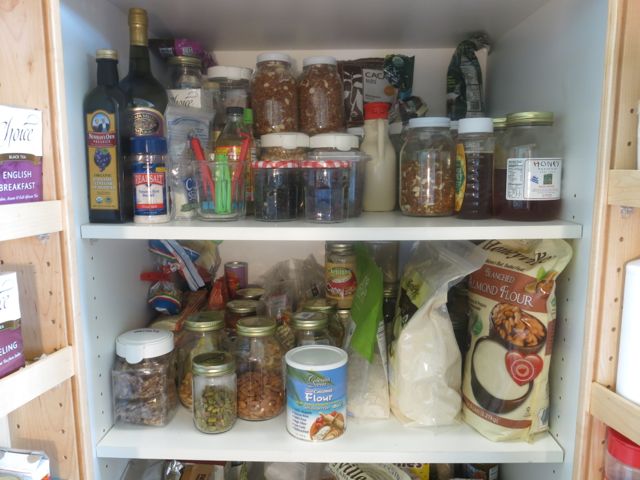
A Peek in my Real Food Pantry

A “Peek” in My Pantry & Fridge too!
It’s kinda funny how many people ask to look inside my pantry and fridge when they come over. But I totally get it! When I first began this journey of trying to eliminate processed/packaged foods, my cupboards were as bare as Old Mother Hubbard’s and my family was a little upset to say the least.

That’s because I decided to toss out virtually everything non-real-food friendly the day I finished reading the book Nourishing Traditions. I was fully committed to moving forward with the real food game plan, but my family was not quite sure where this journey was going to take us. All they knew was that their favorite snack “foods” were missing.

So although I’m giving you a sneak peek into my grain-free whole food pantry (see the list below of the whole food basics I recommend, particularly if you’re GF and plan to make some of the recipes posted on this blog), it is by no means a call-to-action for you to throw everything away and stock up on a bunch of ingredients that you may not be quite sure what to do with yet.

Instead, it’s important to start slowly – pick one or two things you want to change about how you & your family eat and once you have those down, keep the momentum going and make more changes. I’m still doing that myself – making slow, but steady, changes to improve my family’s nutrition and health. And the great thing is, once I slowed down a bit, my family started coming on board more quickly and enthusiastically.

So … what is inside my pantry?

The following are the key items that I keep stocked and use frequently. It is not an exhaustive list of everything in my pantry (or the many great other real-food items out there). These are simply my personal favorite staples and are the most common ingredients you’ll find in the recipes posted on this blog (as well as other real food sites):

• Nutritious Grain-Free Baking Options, such as blanched almond flour and coconut flour.

• Organic beans/legumes, if you’re following the SCD or GAPS lifestyle, these programs allow limited amounts of beans and legumes, such as white beans and lentils.

• Dried fruits, such as raisins, cherries, figs, cranberries, etc.

• A variety of soaked/dehydrated organic nuts (note: walnuts keep better in the freezer)

• Natural sweeteners, such as raw honey, pure organic maple syrup, maple sugar and coconut sugar. And of course, there’s chocolate – unsweetened fair trade cacao powder and fair trade chocolate chips. (I believe in enjoying some good GF chocolate on occasion.)

• Healthy oils, such as unrefined extra virgin olive oil, avocado oil and coconut oil.

• Other: Organic herbal and green teas, Celtic sea salt or Real Sea Salt, GF baking soda, aluminum-free baking powder, various pure organic extracts (vanilla, almond, lemon), etc.

• Limited canned/bottled/packaged items, such as pure coconut milk, pumpkin puree, marinara sauce, assorted vinegars, organic almond butter and cashew butter, canned tuna and salmon, etc.

• Not kept directly in my pantry, but also important are a wide selection of organic herbs and spices

A peek inside my refrigerator too …
In the refrigerated section of my fridge, I like to keep on hand:

• Various organic/pasture-fed meats, poultry and eggs

• Wild-caught fish (not farm-raised), such as salmon, black cod and dover sole

• Organic cultured whole milk products from pasture-fed cows, such as homemade yogurt, cultured butter and raw milk lactose-free cheeses.

• Plain unsweetened almond milk (If you don’t make you’re own, look for an “unsweetened” brand using non-GMO, GF ingredients and no fillers.)

• A variety of organic fresh fruits, vegetables and herbs

• Lacto-fermented pickles, salsa, sauerkraut, etc.

• Kombucha (a delicious probiotic beverage that’s easy to make at home)

• An assortment of homemade salad dressings and condiments

In my freezer you’ll find:

• A variety of organic raw nuts (waiting to be soaked and dehydrated)

• Various organic/pasture-fed meats, poultry and wild-caught fish

• Various organic fruits cut into chunks (for making smoothies)

• Various organic veggies (for quick additions to soups, stews and other meals)

• Homemade organic chicken stock and soups

• Homemade GF baked goods, such as GF breads, muffins, pancakes and cookies

Hope you’ve enjoyed a “peek” into my pantry (and fridge too)! Just remember to take it slow and set goals!

Joyfully Serving Him, Kelly

Disclosure: Some of the links in this post include affiliate links, providing The Nourishing Home a small percentage of the sale at no additional cost to you. Of course, you are not obligated to use these links to make a purchase, but if you do, it helps to support this site and ministry.

You Might Also Like:

Real Food on a Budget, Part 2
Free bonus gift eBook with purchase of Everyday Grain-Free Baking
Day Zero: Getting Ready for the Whole30!

Filed Under: Real Food Basics, The FUNdamentals ·

  • « Previous Page
  • 1
  • …
  • 4
  • 5
  • 6
  • 7
  • Next Page »

My New Cookbook is Here!

Welcome to The Nourishing Home!

I’m so glad you’re here and want you to feel right at home! My heart in creating this blog is to help you by sharing helpful meal planning strategies and nourishing GF recipes that are healthy, easy and delicious with thanksgiving to God! [Read More …]


All content (recipes, photos, posts, etc.) on this site is the creative property of Kelly Smith. You are welcome to share a photo via social media, as long as it contains a link back to the corresponding recipe or post from this site. However, you may not republish a recipe in its entirety in any form. For questions, or for permission to use a photo or recipe, please contact me via email at [email protected]. Thank you!

Please Note: All content (recipes, photos, text, etc.) on this site is the creative property of Kelly Smith of The Nourishing Home. You are welcome to share a photo via social media, as long as it contains a link back to the corresponding recipe from this site. However, re-publishing a recipe in any form is strictly prohibited. Additionally, please refrain from adapting recipes without properly linking back to the original recipe, and keep in mind that simple substitutions do not constitute an adapted or original recipe. For details regarding recipe copyright law, please visit the Food Blog Alliance.
The Nourishing Home is a participant in the Amazon Services LLC Associates Program, an affiliate advertising program designed to provide a means for sites to earn advertising fees by advertising and linking to amazon.com.

Privacy Policy
DMCA.com

Copyright © 2026 · All Rights Reserved · The Nourishing Home · Artwork by Nancy Panaccione · Site Design by Deluxe Designs · Log in