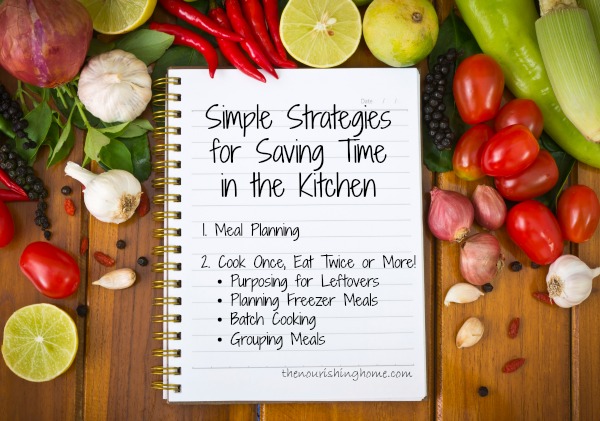
Throughout the year (and especially when our schedules get over busy), one of my favorite time-saving techniques is to “Cook Once, Eat Twice or More!” This basic meal planning strategy really helps you save time and work more efficiently in the kitchen, which is why I always incorporate it into each of my weekly meal plans.
In a nutshell, you cook (or simply prepare) a double portion of something and save half for a future meal.
How does this save time? Well, think of all the work that needs to happen to get a healthy meal on the table – there’s the preparation time, cooking time, and of course, everyone’s favorite – clean-up time! So, if you make double of something during one cooking session, you’re being more efficient because you don’t have to repeat those same exact steps twice.
Cook Once, Eat Twice or More can take several forms, such as:
• Purposing for Leftovers
• Planning Freezer Meals
• Batch Cooking
• Grouping Meals
We’ll cover each of the above principles in detail below. Because once you adopt these time-saving strategies, I’m certain they will become your newfound favorite tips, especially when planning ahead for busy days, when time in the kitchen is limited.
FREE Gluten-Free, Family-Friendly Meal Plans:
Just a friendly reminder, that I provide free monthly meal plans over at The Better Mom blog. Each week’s meal plan contains delicious family-friendly GF recipes utilizing a time-saving method to make getting a healthy dinner on the table a snap! I highly recommend you pop over to The Better Mom and download these free meal plans.
How to “Cook Once, Eat Twice or More!”
As with most things related to saving time in the kitchen, it starts with your Meal Plan! So if you’re new to meal planning, please view my Mastering Meal Planning presentation, or visit the Meal Planning section of this to help you get started.
So here’s how it works … as you’re creating your weekly meal plan, consider what meals you could cook (or simply prepare) a double batch of and freeze or refrigerate for future use. Then schedule time on your meal plan (or on your meal planning prep day) to utilize one of the following Cook Once Eat Twice or More principles, such as:
Purposing for Leftovers
One of the easiest and most common time-saving strategies is to intentionally plan for leftovers. Simply double an entire recipe, cook it and then refrigerate/freeze the leftovers for a future meal. In general, soups, stews, casseroles, and pasta dishes make excellent leftovers. In fact, some dishes taste even better as time passes, because the flavors have had a chance to meld.
And of course, there’s also the option of “repurposing” leftovers, which simply means using your leftovers to create a slightly different meal. For example, leftover ground meat from taco night, can easily be used to make a Taco Salad for lunch. Or a bit of leftover grilled chicken can be turned into a delicious Greek Salad Wrap. Leftover black beans can be used to make a fun Rainbow Bean Dip lunch. And the great thing is, repurposing leftovers not only saves time, it saves money too!

Planning Freezer Meals
With freezer meals, you simply spend a little extra time upfront prepping and freezing meals for future use. This is a popular strategy especially with crockpot meals, casseroles, soups, stocks and stews.
I find the most efficient method is to prepare (and cook, in some cases) two or more of the same meal in one session. Then use one of the meals for dinner that night, and freeze the other(s) for future quick-n-easy dinners.
One of our favorite crockpot meals is Sweet & Spicy Crockpot Chicken. This is a great example of a meal that can easily be prepped ahead and frozen. Then it’s as simple as removing the ingredients from the freezer, popping them into the crockpot and coming home later to a delicious, healthy dinner.
Another example is my Turkey Times Three (T3) strategy for making three great ground turkey based recipes all at the same time and then freezing them to have ready-to-go meals on busy days.
And yet another example, is doubling casserole-style meals. Whenever I plan to make Chicken Parmesan, I always make two at the same time. I cook one for dinner that night and freeze the other for a future meal. Or in this case, you can make a double batch of just the chicken and use half to make Chicken Parmesan and the other half can be frozen for use as Chicken Tenders for a future meal.
Sidebar: If you participate in any meals ministries, doubling casseroles and freezing them is a great way to always have an extra meal on hand for a family in need!
Batch Cooking
Batch cooking is really just another way to describe intentionally planned leftovers – you simply make large quantities of a food that can be stored for later use. For example, on the weekends, I like to make double or triple batches of pancakes, french toast or muffins, which I can then freeze and use for quick breakfasts during busy weekday mornings.
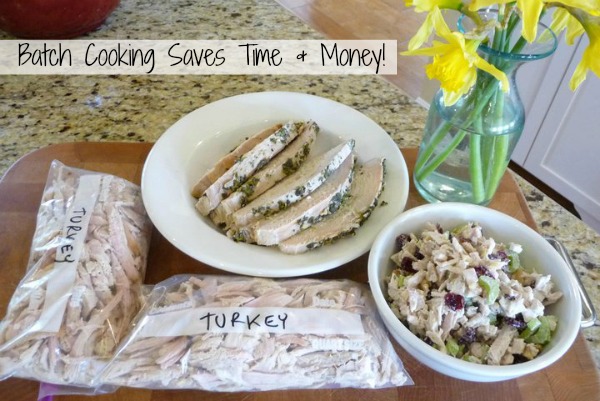
One of my favorite batch cooking strategies is to simply double or triple a main ingredient in a meal (such as meat, poultry or beans) and save half to create a future meal that uses the same main ingredient. For example, as shown in the photo above, I intentionally made a large 6 lb. roast turkey breast for dinner. Then, divided-up the leftovers for 4 more meals: Sliced breasts for leftovers night, two 2-cup portions of shredded turkey (frozen for future use in turkey noodle soup and turkey pot pie) and turkey salad for lunch.
In addition, whenever I make Stovetop Chicken Stock, I always make two batches instead of one. That way, I end up with lots of stock and meat that I can freeze and use to quickly make other soups and meals in the future.
And don’t forget your veggies! When having grilled veggies as a side dish, plan to grill extra and use them to make Veggie Quesadillas for lunch or dinner the next day, or add them to a salad or sandwich … these are just a few ideas to get you started.

The yellow highlighted meals demonstrate how I group meals with the same main ingredient on my meal plan so I can “Cook Once, Eat Twice or More.” The pink highlighted meals show how I further use batch cooking and “purposing for leftovers”to save even more time in the kitchen. With just a little planning and practice, you’ll be saving lots of time too!
Grouping Meals on Your Meal Plan
A simple twist on the batch cooking concept is a strategy I call “Grouping Meals.” How it works is, you take a look at your Master List of Meals and consider what recipes contain the same main ingredient. Then, you intentionally schedule on your meal plan to serve at least 2-3 of those meals with the same main ingredient over the course of the week. (Obviously, the busier the week, the better to have more meals with the same main ingredient.)
For example, whenever I plan make our favorite Grilled Pineapple Chicken (or Grilled Herb Chicken) recipe, I also take a look at other meals that use grilled chicken and plan a couple of those meals on my meal plan as well. That way, I can simply double (or triple) the amount of chicken I toss on the grill. Then, I refrigerate or freeze the extra grilled chicken for use in the other grilled chicken based meals on my meal plan.
To better illustrate Grouping Meals, take a look at the meal plan above. You will see the yellow highlighted meals each use grilled chicken as the main ingredient. So by planning several meals that use the same main ingredient – grilled chicken in this case – I can save a lot of time by simply preparing and grilling all of the chicken needed in one cooking session.
Honestly, it takes very little extra time to incorporate batch cooking into your schedule. Yet, this simple step saves a ton of time later since you only have to prep, cook and clean-up once, rather than two or three separate times. And of course, it also saves a significant amount of time when you go to prepare other meals using this same batch-cooked item.
Applying these “Cook Once, Eat Twice” concepts across the board
Now that you know these time-saving secrets, start thinking about how you can apply them to many of your favorite recipes, such as casseroles, soups, meats, poultry, and side dishes.
As you start looking over your Master List of Meals, it will be exciting to see how you can group meals with the same ingredients together to make preparation time and cooking time faster, easier and less stressful via batch cooking.
Remember to also look for recipes that make great freezer meals, and schedule time to make two of these meals during one cooking session – one for now and one to freeze for later. That way, you can start creating a nice stockpile of quick freezer meals for back-up on nights when you are limited on time.
And of course, one of the easiest ways to save time is to simply plan for leftovers (or repurpose them).
As always, if you have any questions, please feel free to leave a comment or send me an email. And if you have some meal planning success stories or time-saving tips to share, please leave a note below.
Remember, “Whatever you do, do it all for the glory of God!” (1 Cor 10:31) So have fun and give all praise and glory to the Lord as you strive to provide healthy, home-cooked meals for your family while saving lots of time in the process!

Kelly,
I just found your blog through Pinterest and I just want to say how refreshing it is that you always bring it back to God and glorifying him above all else!
Thanks again, Debbie! I appreciate your kind notes! 🙂
Hi Kelly. Thank you so very much for this incredible resource. I’ve learned so much!
My question is about freezing things. I have not been big on freezing things because I am so afraid of using plastic bags or plastic containers due to toxic chemicals. Do you have any other suggestions for this? I was thinking about trying mason jars. Thanks a bunch!
Hi, Christie. Thanks for your kind words. I’m so glad you’re finding this site helpful. I use snapware glass containers to freeze as well as BPA-free plastic containers. You can use mason jars, but they have been know to break, especially if overfilled. So be sure to use a good quality jar, like ball, and leave at least an inch or more from the top of the jar so there’s plenty of room for expansion. Hope this helps! Blessings, Kelly 🙂
I love this idea. I have three 5pm finishes in my work week, so i cook two meals on those days and eat those on my 6pm finishes. Ill do a stove top meal and a thermomix meal, or two oven ones. It saves electricity too! I either freeze it or just leave it in the fridge. I always cook extra too for my lunch and put it aside before my husband gets to it! : )
Thanks for taking the time to share, Carly. It sounds like you have a great plan in place! 🙂
Can you freeze meals such as the “Cream Cheese Chicken Breast” cooked in a crock? I have often wondered about this as you can freeze milk. I sometimes use a dairy free version of cream cheese for this recipe, would that work better?
Love your blog with the GF recipes! We have been slowly transforming to the Whole Foods and GF due to health issues, you have opened up new recipes to us.
Thanks for your question, but I’m not sure which recipe you’re referring to? I know I have a lot of recipes posted here so I may not be recalling this one. However, most recipes that contain milk or dairy can be frozen successfully. Thank you so much for your kind words! Please send me a link to the recipe you’re asking about and I’d be happy to help. 🙂