
The Nourishing Home

living healthier lives in service to the King!

  • Home
  • About
    • About TNH
    • Contact
  • Meal Planning
  • Health & Wellness
    • Real Food Basics
  • Whole30
  • GF Recipes
    • Whole30
    • Breakfast
    • Lunch
    • Entrées
    • Slow Cooker
    • Soups & Stews
    • Sides & Salads
    • Snacks
    • Desserts
    • Kids in the Kitchen
  • My Cookbook
  • Subscribe

5 Frugal Ways to Save on Groceries without Using a Calculator

By Kelly · 23 Comments

5 Frugal Tips to Save on Groceries

NOTE FROM KELLY: Happy news! … My dear friend Tiffany at Don’t Waste the Crumbs is joining The Nourishing Home as an official monthly contributor. Each month, she’ll be sharing some of her favorite frugal tips for Real Food on a Budget. Many of you already know Tiffany via her terrific blog and the many guest posts she’s shared here, such as my personal favorite “Small Steps in the Right Direction.” It’s a joy to have her join me in this ministry to help you and your family live a more nourished life in service to the King. Welcome aboard, Tiffany!

As 2013 draws to a close, many of us are considering how we can “do better” in 2014.  This short series on creating a frugal grocery budget inspired quite a few families to hunker down and reign in their food expenses for the New Year. But, if the idea of crunching numbers makes you cringe, here are five super simple, frugal ways to save on groceries – any time of year – without using a calculator.

  1. Save butter wrappers for greasing pans.  Grass-fed butter is full of health benefits like weight management and gastrointestinal health, but it also costs a pretty penny.  So instead of throwing away the wrappers, we save them for greasing baking sheets and cooking pans.  It allows us to stretch one can of cooking spray to last nearly six months!
  2. Count bananas sold in bunches.  Bananas are one of the most frugal fruits available year round, and are often sold in bagged bunches.  The typical bunch includes seven bananas.  In some cases, you can find a bag with eight or even nine bananas.  Intentionally seek out a bag with ten bananas and you’ve essentially gotten three bananas for free!
  3. Weigh fixed-price, pre-bagged produce.  Produce is usually sold in one of two ways: Either you bag it and pay per pound, or it’s pre-bagged and you pay a fixed price for the bag.  If you weigh the pre-bagged produce, you’ll often find it’s heavier than the 3lb or 5lbs stated.  Choose three to five “heavy” bags and weigh each, purchasing the heaviest bag out of the bunch.  You can end up with up to two pounds of additional produce for the same price!
  4. Save overripe produce (and scraps) for smoothies.  Got overripe produce? Don’t toss it. Chop and freeze it for use in smoothies. Likewise, when you’re chopping fresh fruits and vegetables for snacks and meals, don’t toss the scraps – save them to make smoothies!  Strawberry tops, apple cores (minus the seeds), the ends of carrots, etc. all make excellent additions to smoothies. By saving overripe produce and scraps, you’ll reduce your waste, stretch your food AND enjoy the health benefits of real food smoothies.
  5. Eat like you’re going on vacation.  No one likes to come home to moldy leftovers, or expired food, after being out of town. So we make a practice of pretending we’re about to go on vacation to ensure we’re making use of all the food we’ve purchased to eliminate any wasted, expired food. If you incorporate “pre-vacation eating” into your meal plan (planning meals around what you have left in your fridge and pantry), you’ll most certainly rack up the savings in your grocery budget. Plus, you just might devise a few new recipes in the process!

Can these 5 simple tips really save you money?

Absolutely!

I know I told you that you wouldn’t need a calculator, and you don’t! I’ve done the math for you just to demonstrate how little tips like these can really add up to big savings …

  1. A can of olive oil cooking spray is approximately $1.99.  If you buy one can every two months (on average), you would save $8 a year by using butter wrappers instead to grease your pans.
  2. In my area, Costco sells bananas for $1.39 per bag.  By seeking out bags with ten bananas, you can save 60¢ each week.  This doesn’t sound like much, but over the course of a year that equates to saving more than $31 on just bananas!
  3. $1 per pound for fresh seasonal produce is a pretty common price.  By weighing pre-bagged produce and choosing the heaviest bag, you can save anywhere from $1 to $2 each time.  Over the course of a year, that’s nearly a $104 savings on produce!
  4. We spend good money on food, so throwing food away is really a waste of money.  By turning food scraps into smoothies you’re creating extra meals without spending extra money.  So if you blend a high protein smoothie using your produce scraps, instead of buying a smoothie from a local shop, you could save $4 with each smoothie you make at home, or $208 in savings per year! (Note from Kelly: Tiffany is being a little humble here in not tooting her own horn loud and proud … so I’ll let you in on the good news – she has a completely awesome new eBook launching in January full of terrific real food high protein smoothie and bar recipes. I’ll be posting a review on her book and sharing one of her delicious recipes next week! So stay tuned.)
  5. In the Crumbs household, our grocery budget is $330 per month, or $82 each week.  By making it a habit of eating like we’re about to go on vacation every so often, we saved nearly $250 in one year!

Total savings for these five simple tips?  $601!

Looking for more ways to save money in 2014?  Subscribe to Don’t Waste The Crumbs weekly newsletter.  It’s free, filled with exclusive content not found elsewhere on my site and it always includes tips to help you eat real food, on a real budget!

And while you’re at it, be sure to sign-up for Kelly’s new weekly The Nourishing Home newsletter, which launches in January 2014. She’s got some great budget-saving tips and other real food resources and recipes in store for you in the New Year as well!

What is your favorite frugal tip for saving on your family’s food budget? Please share below!

You Might Also Like:

The Secret to a Healthy Grocery Budget: Keeping Your Receipts
Real Food on a Budget, Part 2
Top 10 Grocery Budgeting Tips of 2014

Filed Under: Real Food on a Budget ·

8 Tips for Real Food on a Budget {and how to set healthy living goals}

By Kelly · 16 Comments


One of the top questions I’m asked, relates to the expense of eating Real Food. In a nutshell, inquiring minds want to know: “How does eating real food impact your budget?”

Of course, there’s no simple answer to this question, as there are many variables that need to be considered. My goal in this article, is to outline many different ways you can adopt a healthy real food lifestyle, while still keeping your budget in check.

And, at the end of this article, I’ve included a list of resources to help you further explore and implement some of the tips and suggestions listed below. In addition, I’ve provided a follow-up post “Buy Big, Save BIG,” which provides an example of how buying in bulk can truly help families save money.

1. Get a Handle on Your Current Food Budget

Before you can accurately determine how much making the switch to real food is going to impact your budget, you have to determine what you are currently spending each week/month on food? What about eating out? It’s critical to include what you spend on eating out with family and friends, daily/weekly lunches out with your office colleagues, and special treats, like trips to your favorite frozen yogurt place, Starbucks, etc. Most people are shocked when they discover how much they are spending each week/month in eating out and/or ordering take-out. It’s important to keep in mind that the more you stop eating out, the more you will improve your health, and the more you will free up your budget to purchase real food, that’s real nourishing!

2. Set Goals/Determine Priorities and PRAY!

I can’t stress how important this is! Once you get a handle on how much you’re currently spending on food, including eating out, it’s important to sit down with your spouse and discuss your goals/priorities together.

However, before we go any further, I want to be sure to address the importance of being a good steward. Followers of Christ are called to be faithful stewards – using all of our various resources for His glory. My time, money and talent are God-given gifts – so in reality nothing is mine, it is all His. So my first priority is nothing less than to give sacrificially of my time and money in serving God. Everything else has to come second!

So I encourage you to prayerfully consider how God wants you to use the resources He has provided to you and your family. Seeking the Lord in prayer should be the first step you take before you and your spouse set any goals or priorities of any kind. Ask Him for His will in this first, before moving forward in setting goals/priorities for improving your family’s diet.

And when you are ready to move forward … please don’t try to change everything at once, it will not only be overwhelming, but it will also be expensive. Taking time to prioritize, and make one change at a time, will help you to keep a close eye on your budget and also help you to not become overwhelmed.

Ready to get started on your real food journey? Here are some tips:
• List out your goals for healthy eating
• Talk to your spouse and pray about them together
• Prioritize – put your goals in order of priority
• Focus – select one of your top priority goals
• Make an action plan – list out the steps you will take to meet that goal, including setting a grocery budget and exploring options to keep your budget in check. (I cannot recommend enough my dear friend Tiffany’s “How to Create a Frugal Grocery Budget Series” – it’s a great way to help you to set a do-able food budget.)
• Just do it – start putting your action plan into action!
• Analyze your success – how’s it going with meeting your goal? What obstacles are you facing, what can you tweak or change to be more efficient and save money?
• Keep on moving – once you have successfully achieved a goal, initiate an action plan for your next goal, and keep on building from there. It’s slow, steady progress that results in long-term change!

3. Meal Planning Saves Money!

Whether you’re trying to reduce the frequency and expense of eating out, or you’re trying to save time and money on the meals you’re already making at home, it’s important to get savvy with meal planning. Mastering Meal Planning will not only help you to more efficiently get a healthy meal on the table, but it will also help to reduce the expense of eating at home. In addition, meal planning enables you to take advantage of other important money-saving strategies like repurposing leftovers and the time- and money-saving strategy of Cook Once, Eat Twice or More.

4. Beyond Organic: Get to Know The Clean 15

Most people know that eating organic is the ideal. Organic foods are free of harmful pesticides, herbicides and other toxic chemicals; they contain more nutrients; contribute to a healthier environment; and of course, they’re GMO free.

However, there’s also no doubt, organic produce is more expensive. We all know that you can’t put a price on good health, however, if you’re on a tight budget, it’s nice to know that there is a little wiggle room. It comes in the form of two great resources called: The Clean 15 and The Dirty Dozen.

The Clean 15 is a list of the top 15 non-organic produce items that are considered safe to purchase, whereas the Dirty Dozen are the top 12 foods that you definitely want to be sure to purchase as organic in order to avoid high levels of toxins. Knowing which non-organic produce is safe to purchase will help you save money without compromising your family’s health. The great news is, the Environmental Working Group provides a free downloadable pocket guide with all of the details.

IMPORTANT NOTE: The “Clean 15” shoppers guide is based on the highest and lowest pesticide levels on produce. However, it does NOT cover another important health issue – GMOs. For a free shoppers guide about how to avoid GMOs, please visit Non-GMO Shopping Guide. If you’re unfamiliar with GMOs and why you and your family should avoid them, or if you are interested in knowing the “secret” PLUs that reveal which produce is GMO, please check out What are GMOs & How to Avoid Them.

5. Convenience Verses Saving

Another great way to save money is to be aware of convenience versus saving. Those convenient premade/prepackaged foods that we’ve become completely dependent upon in modern society don’t come without a price. It’s not just the poor nutritional value that costs us, it’s also the price-per-serving that is oftentimes much more expensive than when we commit to making these same products ourselves using real food.

For example: Organic whole milk yogurt costs from $3-5 for a 32oz. container. A loaf of GF bread runs around $5-7. A box of “healthy” organic cookies runs about $4-5 per package. However, these items, homemade with healthy real food ingredients, will not only save you money, but are also substantially higher in beneficial nutrients and do not contain any unwanted added preservatives or fillers (“natural” or not).

Additionally, precut and packaged fruit and veggies are generally much more expensive than if you take the time to cut them yourself. For example, a container of precut pineapple at Trader Joe’s runs about $3.50. However, a more frugal option is to purchase a 3 lb. whole pineapple at the usual going rate of 99¢ a pound and slice it yourself, because for just $3.00 and five minutes of your time, you will get nearly double the amount of pineapple!

As a personal example, one of the first steps I took in eliminating packaged foods was to stop buying boxed cereals (which number one are not healthy, no matter what the label says and number two are expensive). When it comes to “cereal,” the grain lovers in my home eat homemade soaked granola and breakfast porridges, such as soaked oatmeal. (Personally, since I’m GF, I enjoy a delicious homemade grain-free “granola” blend made from various nuts, seeds and dried fruits.)

In addition, I make all of our healthy baked goods and sweet treats from scratch (i.e. cookies, muffins, cakes, biscuits, breads). I also make my own Kombucha, salad dressings and more – and WOW do I save big for my time invested in making these items. (Visit the Healthy Recipes section of this website for lots of homemade recipes.)

So, eating real food on a budget comes down to a barter system between time and money. It’s not always feasible to completely make everything from scratch. Believe me, I know! But, if you invest a little extra time by making many of the key staples in your diet, you will save money and even better, you and your family will also enjoy healthier foods. So if you really want to reduce your food budget, you need to take a look at your time, and determine how much time you have to save even more money by making more of your family’s food.

6. Buy Big, Save Big

Once you find a staple real food item that you like and plan to use frequently, be sure to buy it in the BIGGEST size you can afford and will use before its expiration. Larger-sized containers are almost always significantly less expensive per ounce, than their smaller counterparts.

Take honey for example: If I purchase the largest size (48oz) at the market, I will pay 26¢ less per ounce than if I purchase the 16oz size. So if I use 16oz of honey each week, that would equate to me saving more than $4.00 a week on honey alone.

Flour (whether whole grain or grain free) is another great example. I highly recommend buying your flour in bulk sizes and storing it in the freezer (up to 6 months) to maintain freshness. You can even divide the flour into smaller portions, if you’d like, so you can keep the majority in the freezer and have some on hand in your pantry for ease of use.

One of the best ways to save BIG, is to buy direct from the manufacturer in bulk. Even with the shipping, it’s oftentimes substantially less than grocery store/health food store prices. Especially if they run sales.

Even better is if you can join a co-op. There are many out there and I am blessed to be part of a co-op through Azure Standard. I’m completely thrilled, because many of the products are significantly less expensive than store prices, and with a co-op you don’t have to pay shipping! So now, instead of paying $8 per pound online for my blanched almond flour, I pay just $5.75 per pound through Azure Standard! That’s a savings of $2.25 per pound – what a blessing!

Another similar “buy big” concept is to buy more when it’s on sale! In other words, if there is an item that you use regularly and it goes on sale, buy as much of it as you know you’ll use before the expiration date. For example: I found my favorite brand of pure maple syrup on sale. Well, not only did I save money by buying the larger size container. I also saved money because the larger size was on sale. So I bought three of the jumbo-sized containers on sale and saved $3 each per container. I know that doesn’t seem like a lot ($9). But every dollar (or penny for that matter), adds up. And if you know you are going to use it, you might as well save as much as you can!

Be sure to check out my Buy Big, Save Big: Real Life Example article for a cost comparison of four common real food staples to help you discover how buying BIG results in significant cost savings!

7. Buy Local Produce

Next to organic, pasture-fed meats, fresh produce can be one of the top budget breakers. However, a great way to enjoy more fresh organic produce, while still saving money, is to buy local. I highly recommend that you take a trip to a local Farmers Market or Farm Stand and compare prices with your favorite whole foods market. You may be surprised to find some great deals!

Another money-saving option for many families is to join a CSA … It’s important to note that joining a CSA may require you to be a bit more flexible, as the boxes generally contain a set selection of seasonal produce and there may be limited ability to pick and choose what you’d prefer. So a CSA may not be the best option, if you have a family of picky eaters.

IMPORTANT NOTE: When purchasing organic produce at a farm stand or anywhere, be sure to look for the certified organic label (sticker) on the produce to ensure that what you are paying for is truly certified as organic.

8. Plant a Garden

Planting a garden and growing some of your favorite organic produce is definitely a budget-friendly option. And even if you don’t have a green thumb (or the real estate), consider starting with a simple herb container garden. I couldn’t believe it when I realized how much money I could save by something as simple as cultivating an herb container garden.

Let’s do the math … It costs about $2 for one small box of a fresh organic herb, like rosemary for example. By purchasing the boxed herb, you get 1-3 meals out of it, and then you have to buy another box. However, you can buy an organic rosemary plant at a local nursery for virtually the same price and enjoy free rosemary thereafter all year long! Saving just $2 a week for a year on just one variety of fresh herb equals $104. Now imagine if you grew all of your favorite fresh herbs! (That’s what I call saving money!)

And depending on how adventurous you are, you can take it even further depending upon your time and resources. This spring, my boys and I are planning to start a strawberry container garden to grow some fresh organic strawberries. It will be fun to learn how to grow strawberries and perhaps, depending on our yield, make some homemade strawberry ice cream together!

One final word of encouragement …
It’s important to not allow healthy eating or maintaining a budget to become an area of over-importance and stress in our lives. Eating healthy should not break the bank and it should not become an idol – something we pursue rather than whole-heartedly worshipping and trusting God. He knows what we need and has promised He will provide for us (Matthew 6:26) and He also reminds us that what we really need is to seek true nourishment only found in His Word and in sweet communion with Him (Matthew 4:4).

Helpful Resources

Online bulk flour and other staples:
• Azure Standard
• Bob’s Red Mill
• Honeyville Brand Blanched Almond Flour

Consider joining a co-op or starting one:
• Azure Standard
• Local Harvest Food Co-ops

Shop at a Local Farmers Market:
• Certified Farmers Markets in Orange County, CA
• Search for a Farmers Market Near You

CSAs/Organic Farm Stands in Orange County, CA:
• South Coast Farms
• Tanaka Farms

Additional Help for Creating a Real Food Budget:
• “How to Create a Frugal Grocery Budget Series” by budgeting guru friend Tiffany at Don’t Waste the Crumbs
• Real Food on a Real Budget (e-book) by Keeper of the Home


You Might Also Like:

8 Strategies for Saving Money at Farmers Markets
Top 10 Grocery Budgeting Tips of 2014
Real Food Guide to Gluten-free Food at Costco

Filed Under: Real Food Basics, Real Food on a Budget ·

Real Food on a Budget, Part 2

By Kelly · 8 Comments


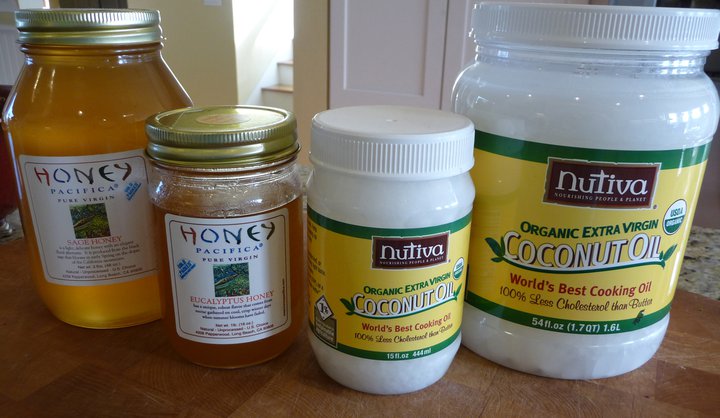
Buy Big, Save Big:  Real Life Example 

This article is a follow-up to “8 Tips for Real Food on a Real Budget” and provides a cost comparison of three items as an example of how you can save money by buying large/bulk sizes. so, if you’re looking for ways to curb costs and better manage your budget, I highly recommend reading 8 Tips for Real Food on a Budget.

How buying BIG will save you money:
For comparison purposes, let’s say I use approximately 15 ounces of coconut oil, 16 ounces of honey and a pound of blanched almond flour each week. The cost per week for these four items would be $30.91 per week, if I am buying just what I need for the week (i.e. small size containers).

However, if I started buying the largest size available for these items (that I could reasonably use before the expiration date), then I would actually save a significant amount of money.

Let’s compare costs and see how much money we can save per week on just these four items by buying larger/bulk sizes at Mother’s Market – a local whole foods type store in CA (please note these prices reflect the current costs at the time this post was written):

Coconut Oil
Small size (15oz) Nutiva coconut oil is $0.69 per ounce
Large size (54oz) Nutiva coconut oil is $0.47 per ounce
Savings= $0.22 per ounce

Raw Honey
Small size (16oz) Pacifica honey is $0.61 per ounce
Large size (48oz) Pacifica honey is $0.35 per ounce
Savings= $0.26 per ounce

Blanched Almond Flour
Small size (16oz) Bob’s Red Mill blanched almond flour is $10.80 per pound
Large size (5 lbs) Honeyville blanched almond flour is $6.72 per pound
Savings= $4.08 per pound

Buy Big, Save BIG!
So as you can see from the above cost comparisons, by buying larger/bulk sizes for just these three items on my shopping list, my cost savings would be about $11.54. So, per month I’d save about $46.16 and per year I’d save a minimum of $553.92.  So when you do the math, it’s easy to see that in general, buying BIG is definitely the way to save BIG!

Join A Co-op & Save Even More!
I am so grateful to be in a local Azure Standard co-op. It has really helped me and my family trim down our food budget. Just as one example, I can now purchase Bob’s Red Mill blanched almond flour for just $21.35 for a 5 lb. bag. That is $6.53 less per pound than the same brand at my local market, and it’s $2.45 per pound less than what I was paying for it online.

So buying in bulk either at your local market, or via online, or even better, through a co-op, is a great way to help you trim costs on your food bill. (HOW DO I FIND A CO-OP IN MY AREA? One of the best ways is to contact your local Weston A Price Foundation Chapter and speak with the chapter leader. He/She will be able to provide you with information about any local co-ops that exist, as well as other helpful real food resources in your area.)

Again, buying larger sizes, or in bulk, is just one example of the many ways you can help curb costs to maintain your budget while enjoying healthy real foods. Employing the many other tactics outlined in “8 Tips for Real Food on a Real Budget” will also help you to further keep your budget in check.

Happy savings! Joyfully Serving HIM, Kelly

You Might Also Like:

5 Frugal Ways to Save on Groceries without Using a Calculator
Stocking Your Pantry/Fridge with Whole Food GF Cooking Essentials
8 Strategies for Saving Money at Farmers Markets

Filed Under: Real Food Basics, Real Food on a Budget ·

  • « Previous Page
  • 1
  • 2
  • 3

My New Cookbook is Here!

Welcome to The Nourishing Home!

I’m so glad you’re here and want you to feel right at home! My heart in creating this blog is to help you by sharing helpful meal planning strategies and nourishing GF recipes that are healthy, easy and delicious with thanksgiving to God! [Read More …]


All content (recipes, photos, posts, etc.) on this site is the creative property of Kelly Smith. You are welcome to share a photo via social media, as long as it contains a link back to the corresponding recipe or post from this site. However, you may not republish a recipe in its entirety in any form. For questions, or for permission to use a photo or recipe, please contact me via email at [email protected]. Thank you!

Please Note: All content (recipes, photos, text, etc.) on this site is the creative property of Kelly Smith of The Nourishing Home. You are welcome to share a photo via social media, as long as it contains a link back to the corresponding recipe from this site. However, re-publishing a recipe in any form is strictly prohibited. Additionally, please refrain from adapting recipes without properly linking back to the original recipe, and keep in mind that simple substitutions do not constitute an adapted or original recipe. For details regarding recipe copyright law, please visit the Food Blog Alliance.
The Nourishing Home is a participant in the Amazon Services LLC Associates Program, an affiliate advertising program designed to provide a means for sites to earn advertising fees by advertising and linking to amazon.com.

Privacy Policy
DMCA.com

Copyright © 2026 · All Rights Reserved · The Nourishing Home · Artwork by Nancy Panaccione · Site Design by Deluxe Designs · Log in
