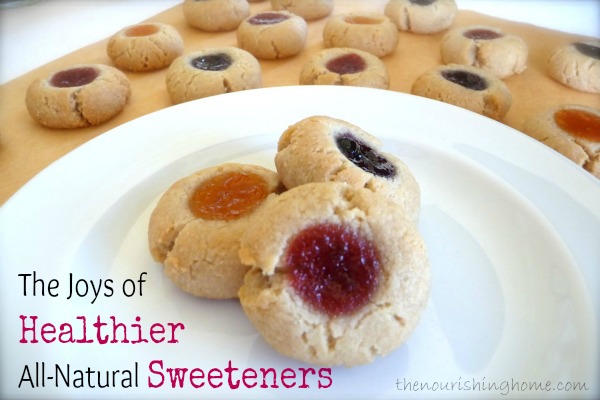
Following a real food lifestyle doesn’t mean you cannot enjoy an occasional sweet treat. The key is healthier ingredients and moderation.
What makes your sweet treat sweet?
If it’s refined sugar (white, brown, raw, confectioners), high fructose corn syrup (now disguised as “corn sugar”), artificial sweetners, etc., then it’s time to give your sweets a major overhaul by using healthier real food sweetening agents in moderation, such as raw honey, pure maple syrup, coconut sugar and Rapadura (or sucanat). Each of these healthier options is discussed in detail below.
Developing a healthy palate
As Americans, we have been reared in a culture geared toward sugar (and salt) addiction. Because most of our food supply is nothing more than nutrient-stripped, processed junk, sugar (and salt) has to be inserted at high levels into these “foods” in order to give them some level of flavor. So it’s no wonder that our palates have become accustomed to high levels of sweetness (as well as saltiness).
The good news is, by adopting a real food lifestyle and weeding out refined sugars, we can retrain our palates to enjoy the delicious variety of flavors of real food rather than masking them with an overdose of sweetness. Unlike processed food, real food is bursting with a wealth of amazing flavors that God has infused within them for our enjoyment.
So the ideal is not to use natural sweeteners in excess either. Moderation is key with any of these healthier natural sweeteners. As we back off our addiction to sweet (and salt), we will come to enjoy the full flavors and health benefits of real food.
Pure Raw Honey 
Raw honey is the best option because it’s a living food full of natural antioxidants, enzymes, amino acids, vitamins, and minerals, including calcium, iron, zinc, potassium, phosphorous, magnesium, copper, chromium, manganese and selenium. Research also shows that nutraceuticals are found in raw honey. These important nutrients assist in neutralizing the free radical activity in your body, and also help boost the overall function of your immune system.
Another plus is that raw honey tends to be much sweeter to taste than sugar, so you can use less, yet still achieve an exceptional sweet taste. Raw honey is a great choice for recipes that you will not be heating, as heating above 115 degrees destroys the naturally occurring enzymes and nutraceuticals.
For example: I like to use Honey Pacifica brand creamy raw wildflower honey to sweeten smoothies, as a sweet treat on toast and homemade biscuits, and as a spread on nut-butter sandwiches!
When it comes to baking or cooking with honey, I still prefer to use raw honey, even though it will be heated because I simply prefer a minimally processed all-natural product. However, when baking or cooking, I prefer liquid raw honey, rather than the solid version, as it is easier to measure and incorporate into recipes. My favorite choice for cooking/baking are the very mild flavors of either clover honey or sage honey, since their delicate taste never overpowers the intended flavor of a recipe.
Important to note: Honey requires a lower baking/cooking temperature because it burns easily. So when baking or cooking with honey, for best results, do not exceed 350 degrees.
Pure Organic Maple Syrup 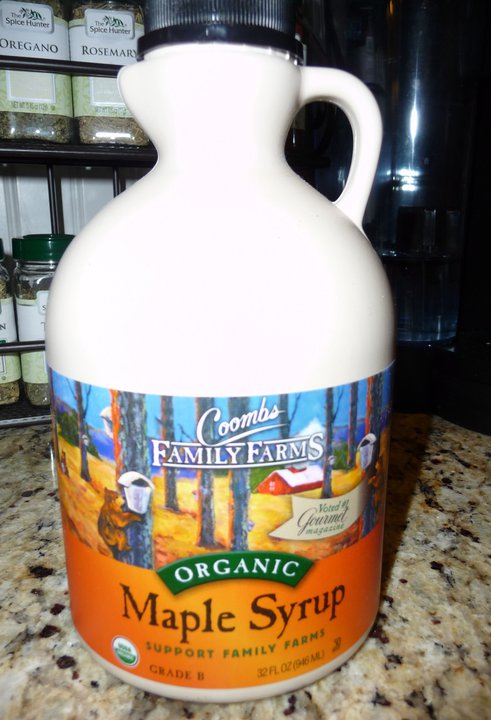
Pure organic maple syrup
As with other natural sweeteners, pure maple syrup has beneficial nutrients not found in refined sugars. In fact, according to research from the University of Rhode Island, maple syrup has more than twenty compounds that are beneficial to health, including important trace minerals such as zinc and manganese – and it also contains bioactive compounds that serve as antioxidants. But before you start slathering on the maple syrup, do keep in mind that it is high in calories, so again moderation is key!
When it comes to maple syrup, there are two basic varieties to choose from – Grade A and Grade B. Grade A is the most popular, with a light maple flavor and a relatively thin consistency. Grade A is usually made from the maple sap collected at the beginning of the mapling season. Grade B maple syrup is much darker and has a stronger maple flavor. It’s also a bit thicker in consistency than Grade A. Experiment with both and discover which you prefer.
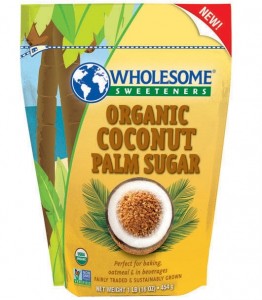 Coconut Sugar (Coconut Palm Sugar)
Coconut sugar is produced by tapping the sweet nectar from the coconut palm tree flower (similar to tapping a maple tree for syrup) and drying the nutrient rich juice in a large open kettle drum. The juice condenses into a delicious whole brown sugar with a low glycemic value. Coconut sugar can be used as a one-for-one replacement for refined sugar, and not only adds sweetness to recipes, but rich caramel undertones as well.
I personally like to purchase brands such as Wholesome Sweeteners Organic Coconut Palm Sugar because it is produced on small, sustainable, cooperative owned farms. These cooperative farmers are committed to sustainable agriculture and use every part of the coconut palm tree.
Rapadura (Sucanat) 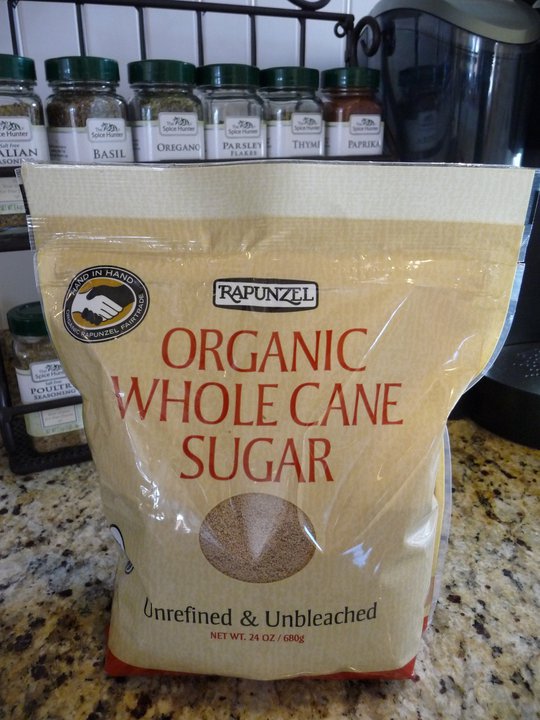
Rapunzel Rapadura is a special brand of all-natural sugar made by dehydrating pure organic cane sugar juice. According to the Weston A. Price Foundation, both Rapadura and a similar product called sucanat are healthier alternatives to refined white or raw sugar. That’s because both Rapadura and sucanat are much more nutritious than refined sugars. Like coconut palm sugar, Rapadura and sucanat are minimally processed, therefore, they retain all of the natural vitamins and minerals found in pure sugar cane juice, along with its rich molasses and caramel flavor, making them excellent substitutes for any recipes that calls for sugar. Additionally, because both undergo less processing, they have no harmful chemicals (if grown organically).
Again, moderation is key. Both Rapadura and sucanat work well for baking and can be substituted cup-for-cup for refined sugar. Sucanat can be found in many health food stores, while Rapadura, may be harder to find. However, it is available at many whole foods type markets, or online at Amazon.com.
 Other sweet choices
There are several other natural sweeteners that are better choices than refined sugars. The above sweeteners outlined are simply the basic staples I use in my recipes here at The Nourishing Home.
Some other natural sweeteners to consider include: molasses


What it really comes down to is opting to use the least refined, healthiest choices available – in other words, selecting natural unrefined sweeteners (that maintain all of their healthy nutrients) rather than using refined, processed or artificial sweeteners.
Yet keep in mind, the goal, even with healthier sweeteners, is moderation. Less truly is more – by using less sweetening agents in our real foods, we can retrain our palates to appreciate the natural flavors of the food God created for us to enjoy and be nourished by!
Joyfully Serving Him, Kelly
Shown in photos above: Almond Flour Thumbprint Cookies and Raw Cookie Dough Bites – two of the many examples of The Joys of Healthier All-Natural Sweeteners!

Hi .. is there a specific brand of stevia you use ,,, i have noticed that you can hardly find pure stevia
thanks
Hi, Sasha. I rarely, if ever use Stevia, because I don’t care for it’s extreme sweetness and slightly bitter after-taste. But if you opt to be sure to purchase green stevia as the white versions are refined/processed. Here’s a brand for reference: http://essentiallivingfoods.com/products/green-stevia-powder-organic-8oz Lots of blessings, Kelly 🙂
Hi there, a friend gave a link to you site and I’m so glad she did! Thanks fir all your work. Question for you: what do think about coconut sugar? Have you used it much? Thanks again. Blessings.
Hi, Heather. Coconut sugar is another good all-natural unprocessed option, it also has a very low glycemic index. I don’t personally use it because I find it doesn’t always dissolve well in certain recipes. But it is a great option. I just personally prefer rapadura or sucanat. I should add coconut palm sugar to this discussion though, because it is a valid option. I’ll have to do that. Lots of blessings, Kelly
Hey Kelly I am sooooooooo glad I ran across your site. I have quite a few things going on and research says glutens, processed and refined sugars are some or if not most of our problems. My husband has hyperthyroidism, my 5yr old has ADHD, and PDD (prevasive developmental delay). And I suffer from clinical depression and anxieties. Please suggest where I start with this clean eating lifestyle. I have already tried the soaked granola and my family loves it. I am just sooooo overwhelmed! Please help!
Hi, Zsa Zsa. No worries, I fixed your error in your comment 🙂 All’s good! Yes, you are on the right track. And you’re right it can be overwhelming. The best way to start is to start slow, making a list of goals and tackling one at a time so you and your family do not become overwhelmed by the changes both in terms of getting used to new foods, eliminating ones you’re used to that aren’t healthy and keep track of your budget in the process. Here’s an article (see link below) you may find helpful that although it speaks on budgeting, the first few points cover creating an action plan to make slow, steady progress in setting and accomplishing healthy living goals. As far as your son’s issues, you may want to research the GAPS diet which is a more specialized form of the Specific Carbohydrate Diet – both of which have research showing their positive impact in the lives of children and adults with ADHD and other related issues. It all comes back to our digestive health, so working to build a healthy gut is crucial in helping to overcome medical issues and improve health/wellbeing. Blessings, Kelly
• Setting goals for healthy eating and maintaining a budget: http://thenourishinghome.com/2012/03/8-tips-for-real-food-on-a-budget/
• GAPS diet: http://www.gaps.me/
Thanks Kelly, I hope I don’t become a pest. I have already gone to the website. Although it is a lot of reading and prep… My little girl is worth every bit of it. With God’s grace and strength (and your site), we will be ok. Thanks again.
Zsa Zsa
No need to think that way – I don’t mind answering questions. Lots of blessings to you and your precious little one! 🙂
I’m just now finding out about coconut nectar: http://www.coconutsecret.com/nectar2.html I’m anxious to give it a try. Have you used it?
Hi, Traci. I haven’t used coconut nectar although I have seen a few recipes for it on some real food sites. I’d like to do a bit more research on it first, but on first glance it seems like a good alternative. Blessings, Kelly 🙂
Here’s my opinion:
I have found with my blood sugar issues, even when eating grainfree and dairyfree, honey, syrup, etc give me cravings. So I use stevia glycerite. I buy the 8oz bottle with a fliptop and it lasts me easily 6mos even tho Im baking for 3 ppl. I also put it in green smoothies as I use no fruit to keep sugar down. Something’s gotta get that kale into me lol
The glycerite has very little aftertaste also. I do like Stevia Plus (with inulin for a prebiotic boost) but it’s a powder and it’s ok for baking but not in a drink I don’t think, or yogurt, etc.
i feel the stevia glycerite (so, yes, it is quite processed compared to green stevia which absolutely nauseates me to smell even and has a terrible strong aftertaste) is so safe, I give it to my kids. Im pretty crazy cautious with them, no dental xrays, no pop/koolaids, no ketchup even (!). So I have researched it. The teeny tiny amounts needed to use are one big reason why I have no problem with it. Can you imagine if we could 1tsp sugar for a batch of muffins?? I’d never use another sweetener again but el cheapo, easily available sugar! LOL
Thank you for sharing your opinion and I certainly understand that everyone has differing opinions and dietary requirements based on their personal health issues. This overview is provided to help explain my personal choices for sweeteners based on the grain-free lifestyle I follow, but again, I always encourage everyone to do their own research based on their unique health issues. 🙂
So helpful! Thank you!
My pleasure! Thank you for taking the time to leave a kind note. 🙂
Do you have a post like this regarding oils? Specifically, the pros and cons of canola and other oils (safflower, walnut)? Thanks!
Hi, Natalie. But I can point you to this one: http://www.westonaprice.org/know-your-fats/ It’s a listing of Weston A Price Foundation’s articles on healthy and unhealthy fats. I hope this helps! 🙂