Update: When The Nourishing Home first launched in 2011, I was following the real food Weston A. Price Foundation’s recommendations for properly preparing grains and saw a dramatic improvement in my health. This post is an overview of the research I reviewed during that time period and provides basic information on how to properly soak and prepare grains based on the research at that time. It’s important to note, however, that I am now gluten-free and grain-free. This transition took place after I discovered (in late 2012) that many of my ongoing health struggles were linked to gluten and grains. Once I removed gluten and grain from my diet, I experienced a remarkable health transformation. This is not to say everyone should be GF, but only to inform you that I have found it to be personally beneficial as someone who has chronic autoimmune/inflammatory illnesses. Despite the fact that I am now 100% gluten-free and grain-free, I opted to leave this information about soaking grains available on my site, because I do believe that for those who can consume grains, proper preparation is essential. If you have questions about soaking grains, please contact the Weston A Price Foundation, and of course, take the time to do your own research on the topic. Thank you!
At first glance, soaking may seem intimidating, time-consuming and even risky – after all, who would actually leave prepared food out on the counter for 12-24 hours before cooking it? Well, the truth is … your ancestors did!
So before we explore the joys of soaking, first allow me to assure you that soaking is quick, easy and best of all, it’s 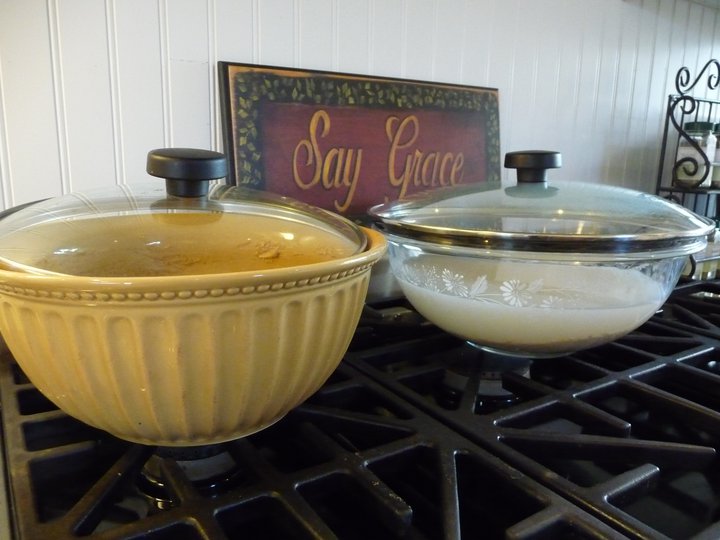 significantly beneficial to your health! In fact, soaking and sprouting grains is a key component in adopting a Real Food Lifestyle.
Why Soak Your Grains?
In a nutshell, the centuries-old process of soaking grains, also known as culturing, helps to breakdown the antinutrients and hard-to-digest components of the grain and at the same time, helps to release highly beneficial nutrients.
Soaking grains really is very easy! It just takes a little planning ahead. The result is a highly nutritious and easy-to-digest whole-grain food with wonderful robust flavor.
So let’s get started! Below are some simple tips to help you discover the joys of soaking.
Why is it so important to remove/reduce phytic acid (phytates)?
Phytic acid is an antinutrient found in grains and legumes which binds important minerals preventing your body from fully absorbing them. Consumption of high levels of phytates:
• results in mineral deficiencies, leading to poor bone health and tooth decay
• blocks absorption of zinc, iron, phosphorous and magnesium
• causes body to leech calcium
• lowers metabolism
• contributes to anemia
Phytase to the Rescue!
Phytase is a natural enzyme that is present in varying degrees within grains, seeds and nuts. This helpful enzyme, when properly activated, works to break down the phytic acid (phytates), and also helps to release beneficial nutrients, making them more bioavailable (more easily digested).
Unfortunately, cooking is not enough to adequately release phytase and reduce phytic acid. Instead, there are three basic methods for utilizing phytase to help reduce phytic acid:
• Sprouting – activates phytase which helps to release important vitamins, as well as makes grains, seeds and beans more digestible. However, according to a recent update by the WAPF “sprouting is a pre-fermentation step, not a complete process for neutralizing phytic acid. Consuming grains regularly that are only sprouted will lead to excess intake of phytic acid.”
• Soaking grains/flour in an acid medium at a warm temperature – also activates phytase thereby helping to release important vitamins, as well as making grains, seeds and beans more digestible. In addition, soaking helps to reduce, or even eliminate phytic acid.
• Souring – another option to reduce/eliminate phytic acid – think sourdough bread,. Sourdough fermentation is by far the preferred method for reducing phytic acid in breads and bread-products.
In general, the best means of significantly reducing phytic acid in grains and legumes is a combination of acidic soaking for considerable time, followed by cooking.
It’s important to note that not all grains contain enough phytase to eliminate phytic acid even when soaked, such as oats and corn. However, wheat flours (such as whole wheat, spelt and kamut) and rye flour contain high levels of phytase. Therefore, adding a small amount of rye flour (or rolled rye flakes) to your oat or corn acid-soak will help to reduce the high levels of phytic acid found in these grains.
Phytate FUNdamental: Did you know that you can help mitigate phytic acid in your diet with complementary foods rich in vitamin C, vitamin D and calcium. In fact, the absorbable calcium from bone broths and raw dairy products, as well as vitamin D from certain animal fats can help to reduce the adverse effects of phytic acid.
A Practical Approach to Phytates
It’s important to note that it is not necessary (or practical) to completely eliminate all phytic acid from the diet, it’s simply best to keep it within reasonable levels.
In practical terms, this means properly preparing phytate-rich foods to reduce at least a portion of the phytic acid, and it’s also recommended to limit consumption of phytate-rich foods to two or three servings per day. However, many experts do recommend that for some individuals, such as children under age six, pregnant women or those with certain medical issues, it is best to consume a diet as low in phytic acid as possible.
Keeping in mind that each person is an individual, and that this article is not intended to diagnose or treat illness (please see your physician for that), research indicates that most problems arise when whole grains, nuts and beans become the major dietary sources of calories.
So the key is to follow traditional food preparation methods (such as soaking), and to seek to maintain a well-balanced diet with an emphasis on low-phytate, nutrient-dense foods making up the majority of your daily caloric intake.
The Key to Effective Soaking
As mentioned above, soaking is an effective method used to help breakdown the difficult to digest components of grains, called phytates. When it comes to soaking, acid mediums are a vital part of the process. That’s because the acid medium serves as a catalyst to initiate the culturing/fermenting process that enables phytase be released.
There are several acid mediums used in soaking. They include dairy based acid-mediums, such as whey, whole milk kefir, cultured buttermilk and whole milk yogurt. Although there is some newer conflicting research suggesting cultured dairy products such as milk kefir, buttermilk and yogurt may result in less phytic acid reduction than previously reported, which has led many to use whey as their primary acid medium of choice.
However, there are several non-dairy acid mediums that can also be used in a soak to effectively reduce phytates. These include: Lemon juice, raw apple cider vinegar and coconut milk kefir or water kefir. So, for those who are dairy sensitive, or simply wish to avoid using dairy, these make great options for soaking.
My personal preference is to use lemon juice or apple cider vinegar as they are very easy to keep on hand. The basic rule of thumb is to use approximately one teaspoon of lemon juice, or apple cider vinegar, mixed with one cup of warm filtered water. Simply use this mixture to replace the liquids in the recipe (so, for example, two cups of milk kefir could be replaced with two cups of water mixed with two teaspoons of lemon juice or apple cider vinegar).
How to properly use acid mediums to achieve an easier to digest, more nutritionally robust grain-based food, is discussed in detail below.
Kefir FUNdamental: Did you know you can make your own kefir? Kefir grains can be purchased to make milk-based kefir, coconut kefir, and kefir water. A great resource for all things cultured is Cultures for Health.
Getting Started …
1. Soaking Whole Grain Flour
Generally, when it comes to soaking flour, it’s as simple as a 12-24 hour soak. Most flour is high in phytase, the enzyme that helps to break down the phytates, so a simple soak is all that is needed to get the most nutritional bang out of your grains! Remember, your soak should contain some form of an acid medium whether you choose to use a dairy option (such as whey, kefir or cultured buttermilk), or a dairy-free option (such as coconut milk kefir, raw apple cider vinegar), it’s up to you!
If you are new to soaking your whole grain flour, start out by following a simple recipe, such as my “24-hour Power Muffins.” Following this easy recipe will enable you to see how simple soaking is, and experience how delicious and nutritious it is too! Then, start exploring more recipes by visiting real food based websites. I also highly recommend Sally Fallon’s book “Nourishing Traditions
2. Whole Grains
Soaking whole unmilled grains (like brown rice for example) is as simple as some *warm filtered water mixed with a small amount of an acid medium. The result of this process is that it helps to break down the hard to digest components of the grain, while releasing the highly beneficial nutrients. (*I use a tea kettle to warm my water until it’s warm to the touch, but not hot/scalding.)
The general rule is to add enough warm water to cover the grain, and then add a small amount of an acid medium to every one cup of grain. As noted above, you can choose a dairy-based acid medium (such as whey), or a dairy-free option (such as lemon juice or apple cider vinegar). Then tightly cover and soak overnight (or up to 24-hours).
Note for Cold Weather Soaking: If you place your soaking rice in the oven with the oven light only on, the rice will stay warm since the oven light will produce some heat to create a nice warm soaking environment. Then be sure to drain, rinse and cook the rice, perferrably in bone broth and butter.
For details on soaking brown rice, check out my Simple Soaked Brown Rice recipe.
Please note: A recent study showed that you can greatly reduce the phytic acid (up to 96%)in brown rice by using a method called accelerated fermentation. For more information, I recommend reading Kitchen Stewardship’s post with details on the process.
• Oats:
The one exception to the above soaking rule is oats. Oats contain a large amount of hard-to-digest phytates and other anti-nutrients. Unfortunately oats are so low in phytase (the enzyme that helps to break down phytates), that soaking them in warm water mixed with an acid medium is not enough to adequately break down the large amount of anti-nutrients that naturally occur.
However, with the help of some additional phytase added to the soak (in the form of rolled rye flakes

This is accomplished by using the following formula:
For every one cup of *oats, add enough warm water to cover the oats, and then add one tablespoon of whey, or one to two teaspoons of a dairy-free acid medium (see note below) and one tablespoon of either rolled rye flakes
Please note: I have found the taste of soaked oats using a dairy-based acid medium (whey or kefir) to be a bit too sour for our liking. So, we use raw apple cider vinegar instead. Give it a try in this delicious Soaked Oatmeal Breakfast Porridge recipe.
*If you’re GF and can tolerate oats, be sure to look for certified GF Rolled Oats
• Buckwheat Groats:
Buckwheat cereal (also called ground buckwheat groats
3. Nuts/Seeds
According to the WAPF’s extensive white paper “Living With Phytic Acid,” there is still not enough adequate research on nut/seed preparation to say with any certainty how much phytic acid is reduced by various preparation techniques. However, it is known that soaking nuts/seeds in warm salt water for approximately seven hours and then dehydrating them to make “crispy nuts” helps to make the nuts more digestible and less likely to cause intestinal discomfort. Additionally, roasting most likely helps to further remove phytic acid, based on research conducted with chickpeas.
An update to the WAPF white paper suggests (although it’s important to note that there are no conclusive research studies specifically sited) that individuals should “use caution when it comes to consuming lots of almonds and other nuts as a replacement for bread products. In these circumstances, an eighteen-hour soak is highly recommended.”
My personal approach is to consume limited amounts of blanched almond flour – one serving daily seems to be fine for me. But each person must find their own balance. Again, I recommend reviewing the principles listed above in the section titled “A Practical Approach to Phytates.” Another option is coconut flour – a delicious and nutritious option for those on a grain-free diet, which is why you will find many recipes using coconut flour here. However, coconut flour is rich in fiber, and for some individuals this may cause issues. That’s why it’s important to do your own research as to the types of foods that will work best for your particular health challenges, and of course to strive for a well varied, balanced diet centered on whole foods.
4. Beans/Legumes
The traditional method for preparing beans is to soak them in hot water (hot to the touch, but not boiling) for at least 12-24 hours, changing the soaking water at least once during this time, followed by a thorough rinsing and then long cooking process. In general, soaking beans and then cooking helps to eliminate approximately 20–50% of the phytic acid depending upon the length of the soak time.
There are conflicting opinions about whether an acid medium is necessary. My personal experience has led me to side, in this case, with the no acid medium option, as I find (as do many others) that the addition of the acid medium reduces the flavor and texture of the bean.
WAPF recommends a very lengthy bean-soaking process of up to 36 hours with the soaking water being changed out and the beans being thoroughly rinsed at least every 12 hours. In addition, WAPF recommends adding a phytase-rich medium to the bean soak to help further improve phytic acid reduction. For those who are eating beans more than once or twice a week, it may be best to heed these instructions in order to keep phytate consumption levels in balance.
For more information about soaking grains, nuts and beans, I highly recommend reading Sally Fallon’s book Nourishing Traditions
My new cookbook is here! With more than 100 irresistible recipes, Everyday Grain-Free Baking teaches you how easy it is to create grain-free, dairy-free versions of all your family’s favorite baked goods.
From breads, biscuits and muffins to savory snacks and decadent treats, you’ll find step-by-step instructions, beautiful color photographs and helpful tips & tidbits to make all of your GF baking adventures a delicious success!

This is basically the 1st thing I’ve ever read about the need to soak grains, beans etc. I am not familiar with it which is surprising to me with all of the nutrition information I have read the past 10 years.
A few questions:
Do all flours need to be soaked? What about gluten free flours? I use the following flours: brown rice, sorghum, tapioca, millet, and premade gluten free flour mixes. Do they all have to be soaked?
How will they affect my gluten free baking? I am new to gf baking and am not confident experimenting with soaking those flours while I’m still experimenting with gf recipes. How does soaking flours affect the liquids needed, the use of starches and the use of xanthan gum?
Sorry for all the questions. It seems like the more I learn about healthy eating the more I still need to learn. It is kind of discouraging and hopeless feeling sometimes. I have made a large amount of changes the last few years and I feel like I can’t ever truly eat healthfully. The more I learn, the higher the bar moves. It feels immensely unattainable.
It is difficult for me to just eat food and not worry.
I’m not meaning to whine or be a “Debbie Downer”. I can’t tell you how much I appreciate your website. It is SOOOO informative, uplifting, encouraging and easy to read. Finding it was literally an answered prayer.
Thank you for all of the work you do and any help you can offer on the above questions.
Hi, KD. Thanks for your note and welcome! I know how hard it can be to sort through all the conflicting info about what constitutes a healthy diet – sometimes it’s all completely overwhelming! But in a nutshell, soaking GF flours that contain all those starches would not be conducive to a good result in terms of baked goods and many of the starches themselves do not necessitate soaking since they don’t contain large amounts of phytic acid – which is the purpose of soaking to reduce this “anti-nutrient.” Phytic acid reduction is important when consuming grains, so the discussion on the benefits of soaking generally applies to grain-based flours such as whole wheat, etc. Brown rice contains phytic acid, so if you’re using large amounts of brown rice flour, that may be an issue, but if it’s part of a blended flour mix and your not trying to heal or resolve a major or chronic illness, then small amounts unsoaked should be fine. Again, the reasoning behind soaking is to help breakdown the phytic acid which is explained in the article (why you want remove phytic acid and how to do this).
I encourage you NOT to become overwhelmed, but to take it slow and steady, and just remember that we are finite beings with finite little minds (although, we – meaning mankind in general – tend to think we’re SO smart). So that’s why all this health information is so varied and often times is so conflicting. We as human beings are constantly discovering new information about the food we eat and it’s benefits and drawbacks. So here is my humble opinion in a nutshell, (after doing much research on the subject of health and nutrition, and after being blessed by God to be healed of a chronic health issue) … The best route to take is to start by removing as much refined, processed food as possible from your diet/your family’s diet. And do this by taking one step at a time because it’s slow, steady progress that results in lasting lifetime healthy changes.
With that said, it’s very important that we not get caught up in trying to live our lives with so much anxiety over what we eat, and instead focus first and foremost on God. After all, He created us and knows what’s best for us. He promises that if we seek Him FIRST, everything else will be added (Matthew 6:33) … in other words, He’ll take care to meet our needs as He sees best for us. It doesn’t mean He’ll always meet our needs in the way we think He should, but in the way that He knows is best for us in the long run.
God’s goal is to draw us near to Him and incline our minds and hearts to bring glory to Him and to seek His will first above all else. Yet, we all can see that our hearts are inclined to please ourselves first and seek comfort and security in the things of the world that we desire – health, financial health, satisfying relationships, etc. rather than finding our joy and satisfaction in Christ. We need to remind ourselves daily that He is our everything and our all! Wow, is that liberating and healing when we do and sets our hearts and minds on fire to do great things for HIM!
I am compelled to share this because my sole purpose in starting this website was for it to be a ministry of encouragement – not just for physical health through eating whole, unprocessed foods (food our creator has provided for our well-being), but more importantly, spiritual health through encouraging a closer walk with and dependence upon God. My heart is to see more and more people grow in their love and service to Our AWESOME ALMIGHTY God!
So, as you continue on this journey of trying to decipher what is the best course to take for good health, I encourage you to read this article I wrote on developing a plan and budget for eating healthy (see link below) as it has been helpful to many and is how my hubby and I set our course for eating healthier so that we could better serve the Lord and our family/community with increased strength and diligence.
With many blessings to you and your family, Kelly 🙂
http://thenourishinghome.com/2012/03/8-tips-for-real-food-on-a-budget/
thank you so much for this comforting and inspiring post. i’ve recently been trying to heal my body through nutrition and was SERIOUSLY getting stressed out and overwhelmed by all the conflicting research and studies out there. i was putting way to much faith in that. You are absolutely right. First and foremost seek God and the rest will fall into place. I need to have faith that God will bring me clarity in all aspects of my life including nutrition. I’m so glad stumbled upon this website. God bless!
Oh, Ebby! What a blessing to hear from you! Thank you for taking the time to write such an encouraging note. I am always so honored that the Lord can use me to encourage others! I am so glad that you are seeking the Lord first in your desires to be healthier. I know He will bless you according to His will – which is always to grow us more into the image of Jesus Christ! Lots of blessings to you, Kelly 🙂
Thank you….that is all I have to say….my son has been having gluten issues (he’s 2) and i found out about soaking grains from a friend but your comment about God and turning to him and not living our lives filled with anxiety was so uplifting….thank you
What a blessing, Samantha! I praise the Lord that He brought you here to read that and to be encouraged by it! Appreciate you taking the time to leave a kind note! Lots of blessings to you as you strive to help your son! Keep casting your cares on Christ and He will continue to give you strength, wisdom and guidance! 🙂
Kelly,
I just found your site while looking for an answer to the question about whether it’s beneficial to soak gluten-free bread mixes. Thanks for the clear and concise answer and explanation.
I loved the testimony that you posted too. I’ll be following your blog!
Thanks and God Bless your ministry,
New GF eater and Weston Price follower, Christine
Welcome, Christine, so glad you’re here! Thanks for taking the time to leave a kind note! 🙂
Hi Kelly! I love that this has been posted for over 3 years and it’s still here for those of us when we are ready to seek out this information and apply it in our lives. This was so timely for me to read your reminder of putting our faith in God rather than all the conflicting information out there. I too, was starting to feel a bit of anxiety and stress trying to figure out all the conflicting information; but will now turn to my Heavenly Father and trust in Him to help me know what is best for myself and my family’s health. I needed to hear that today. Thank you for listening to the spirit and posting this when you did. I am just beginning to start my own blog and include a more spiritual side to the mindset we need to put it in God’s hands. Thank you again for your words full of faith and strength.
You are SO welcome, Rhonda. Thank you for taking the time to leave a kind note. I’m so glad God directed you hear for encouragement. It’s always an honor and a blessing to know that we can be used as His instrument for blessing others. 🙂
Same here. Very blessed to have read your response about putting our focus on God and not stress too much on what we’ve been doing wrong out of not knowing (eating 3-4 cups dry of oatmeal a day!) . Change for the better is gradual, one step at a time like you said, and worth it! So thank you.
Blessings
You are very welcome! Thanks for your kind note! 🙂
Aha! amount written out in letters not numbers. So much for my speed reading abilities.
Again, good article!!! Our family is new to this but it makes absolute sense. Have purchased the book Nourishing Traditions.
Glad you enjoyed this. It truly is just a brief overview of Nourishing Traditions and the phytic white paper provided by the Weston A Price Foundation. Blessings to you, Kelly 🙂
hi, this is a great site! I’m a little confused and have a question. You’re recommending to cook sprouted grains, nuts and seeds to further reduce phytic acid. But there is another prominant school of thought (Whole Food Plant Based Diet), that says it’s healthier to eat sprouted grains, beans and seeds raw as opposed to cooking them because they loose valuable living enzymes when heated above 118 degrees. This same thinking recommends not consuming any dairy or animal proteins due to their acid forming effects in the body, which in excess, can cause disease. These two opinions seem to be opposing, are both right? Is your info sourced from Weston Price? Trying to figure all this out, thanks!
Hi, Darrow, since most people cook their grains, I am explaining the process in this article with that in mind. Cooking grains can minutely reduce phytic acid, but it is certainly not a significant or accurate way to reduce it – sprouting and soaking are the best methods. Yes, I follow WAPF recommendations for the most part, but do my own research and honestly I focus on a balanced approached to good nutrition based on eating whole foods. I certainly agree that eating sprouted and raw foods are a wonderful source of whole food nutrition. But I do not agree that animal proteins and dairy should be eliminated from the diet unless in the case of dairy there are significant allergy/health issues involved. I have personally recovered from two severe chronic health issues eating a whole foods based diet that includes pastured/raw dairy products, grassfed animal protein and healthy fats/oils, along with a wide selection of whole foods, including lots of raw options. With that said, I do believe that each person is a unique individual and therefore it’s important to research and discover what you believe will work best for you. My food philosophy really comes down to this – I eat the real foods that God created as close the way He created them as possible. Because I believe that God knows what is best for us since He is our Creator. So if I stick with eating what He’s made verses processed manmade junk, than I will certainly be much healthier – and praise the Lord, this has been the case and I am no longer on any prescription medications now. Just remember in your search for health and wellness, to not lose focus on what really matters – real life (eternal life) that comes only through the Jesus Christ the Lord.
Lots of blessings to you, Kelly 🙂
Kelly, interesting info. I, too, am doing my research and trying to find the best way to nourish my family. Also, trying to figure out how to eat the way God originally designed us to. I have to ask you about dairy being what He made for us. Why do you believe that milk, made for nourishing a baby calf, was created for adult humans, who drink their own mothers milk but then wean as a toddler? I haven’t been able to make sense of that, nor has anyone else that I’ve asked. Very interested in your thoughts. Seems a lot of info out there is biased in one direction or another. Thanks!
Crystal, You’re right about all the conflicting information between vegan, raw diets, real food lifestyle, grain-free, etc. That’s why it’s so important to make your decision based on what’s best for your personal health, and first and foremost, take your concerns and desires to God for His direction.
As far as the milk issue goes, I don’t believe the argument that humans shouldn’t consume milk simply because all other animals when weaned don’t, is a strong argument. Humans are distinct and there are many things that separate us from animals because God designed us to be the crown of His creation. There are many biblical examples of milk bring consumed by the people of God. In fact, God’s main promise for the Israelites was that they would inherit the land “flowing with milk and honey.” But you have to be careful in also saying “how God designed us to eat” because the people of God’s diet has changed throughout history.
In the beginning all of creation must have been designed to be vegetarian since death did not enter the world until Adam sinned. However, we definitely see meat being sanctioned by God after flood times as we see all the examples from there forward of God’s people eating milk, bread and meat (as well as meat being designated for the priests). Yet, later at the time the law was given, His chosen people avoided the “unclean” animals as a means of being set-apart (ceremonial laws). Then, we find Christ telling Peter in the New Testament all that God has provided is good for meat, which most understand means the ceremonial laws are no longer necessary since Christ fulfilled all the ceremonial law and has set us apart through His spirit for His glory.
So, in trying to eat for better health and wellbeing, I believe the best place to start is to simply start eating whole foods (real food) – the foods God created, as close to the source as possible, rather than the manmade processed and refined distortions of food. This is why raw milk (if you’re going to drink it) is the best form since it is not processed at high heats that destroy it’s natural enzymes and nutrients, as well as distort it’s proteins. (The changes that occur to milk during pasteurization are well documented.)
However, there will be some who simply due to poor gut health, allergies, etc. may not be able to tolerate milk or grains or nuts. Each of these have been consumed since the beginning of time, but that doesn’t mean everyone should eat them – for some, they are problematic foods to be avoided.
Again, if you start out by getting rid of the processed and refined foods in your diet (those are the real problem issues that everyone should avoid) then you can begin to cleanse your body and improve gut health. You will then be able to become aware of the real foods in your diet that may also be an issue for you and/or your family.
For me personally, after one year off all processed foods, I began to realize that I have an issue with gluten, so I stopped eating it and have made huge progress in my health issues – praise be to God! So although the bible calls bread the staff of life, for me personally only GF bread is my staff of life, due to my health conditions which are exacerbated by gluten. And I also have to watch my dairy intake as well, so I focus on limiting it to small amount of cultured dairy just 2-3 times a week.
I hope this helps to clarify my approach to healthy eating a bit more. ABOVE ALL, I always want to encourage people to keep God central in all we do. It’s easy to get obsessed with a healthy diet, especially after you begin to see it helping alleviate troublesome conditions, but we have to remember that God is the one who heals and not allow anything to creep into our lives and slowly become an idol.
A great way of keeping guard of this is to always present our concerns and desire to Him first to seek His direction. Please read this article (link below) about how to set up healthy eating goals – the article discusses eating real food on a budget, but more importantly it explains how to establish healthy eating goals with God’s Will for your personal health and that of your family’s at the center: http://thenourishinghome.com/2012/03/8-tips-for-real-food-on-a-budget/
Lots of blessings to you, Kelly 🙂
Had “God” wanted you to eat gains – man would not have to processes them by soaking. As it is, your soaked grains have now undergone a processing by man. Apparently, God also sent you gluten – Praise be to God! – you should continue to keep it central in all you eat.
I couldn’t agree more in keeping God central in all we do and never becoming caught up in trusting in what you eat rather than trusting in God alone and giving Him praise for all of His blessings. Blessings to you in Him, Kelly
Hello, very nice article, just wanted to make a note: i think wolemeal bread is central in our lives and in biblical context, but the wheat we currently use is far from the original one, see Einkorn, which has a different gluten type and low levels of it.
Hello Kelly,
I am new to the world of raw foods – I enjoy eating raw oats but had no idea they needed to be soaked.
RE. Oats: Once they have been soaked and rinsed what is their “shelf” life? I am assuming I can keep them in the fridge.
Thanks and Blessings,
Nancy
Yes, you can keep them in frig for about 5-6 days, then they start to get really mushy. If you’re not going to be cooking them, then, I’d recommend soaking for at least 24-36 hours. The issue with oats is that they are very high in phytic acid, which is an enzyme that can cause digestive issues and bind to important minerals, reducing your body’s ability to absorb these nutrients. All grains, beans, nuts and seeds contain varying levels of phytic acid, so that’s why soaking is recommended. In the case of oats, because they do not contain a good level of phytase (the enzyme that’s activated during the soaking process that helps neutralize phytic acid), you have to add phytase in the form of rye (or another grain such as spelt or wheat) or if you’re GF buckwheat. Lots of blessings as you begin to soak! 🙂 Kelly
Is this the same reason to soak raw almonds? I soak them overnight and take the shells off.
Thanks for your website! Lots to learn!
you’ve got it, Nancy 🙂
Can I soak a bunch of steel cut oats for 24 hrs, drain/rinse, refrigerate, and use as needed for the next few days? I ask bc I make oats overnight in a crock pot, but don’t remember to soak through the week. If I can soak all the oats Sat-Sun and then use portions of the rinsed oats throughout the week, we can have crock pot oats several times that week. Thanks!
Yes, you can do this. I would use them within 5 days of soaking, which would get you through the busy weekdays. Crock pot oats are so delicious! Good for you to make such a wholesome breakfast! Blessings, Kelly 🙂
Hi I had a question. What about brown rice farina? Is that considered a flour and need to be soaked as well. Or to bypass the soaking could I use white rice farina?
Hi, Shannon. Brown rice farina, is basically finely milled (crushed) brown rice. So I would soak it overnight using same method for soaking brown rice and then drain in a fine-mesh strainer and cook as directed (noting that it will cook faster after being soaked). Yes, you could use white rice to avoid soaking since the outer “germ” is removed (which contains the highest level of phytates in the grain). Nutritionally, you’d be losing some good nutrients and fiber by choosing white over brown, however, I am not one to completely “poo-poo” white rice as a bad choice, as long as it’s eaten in moderation as part of a well balanced whole food diet. In fact, for some, white rice is better tolerated than brown, so for those individuals it’s a better choice. Again, I do encourage individuals to avoid eating a diet high in starches like white rice, but having it on occasion is well tolerated is fine. If you’re GF, it’s important to also avoid using GF flour blends daily, as they tend to be primarily starch-based using potato, tapioca, white rice, etc. That’s why, I stick to highly nutritious, low carb, high protein and fiber options like blanched almond flour and coconut flour for my GF baked goods recipes. I hope this helps! Lots of blessings, Kelly 🙂
Hi,
Very informative indeed! I would like to ask you if you know about the fact that soaking also can leach water-soluble vitamins en minerals from the grains. This is to my opinion an important issue because grains are mostly packed with water-soluble B-vitamins and for example with calcium. Could you please share youre knowlegde about this concern? Thanks in advance.
Kind regards,
David
Great question! Yes, David, you are correct that there is some nutrient leaching that occurs during the soaking process. The problem with grains is that they contain an enzyme known as phytic acid, which binds to beneficial nutrients (not just in the grains you’re consuming but the other nutrient-packed foods you may be consuming with them), thereby not allowing your body to utilize these nutrients.
So although in theory you would have more nutrients in the unsoaked grain, you would also have the issue of your body not being able to utilize the nutrients you’re ingesting due to the phytic acid inhibiting absorption.
So it becomes an issue of bioavailability. In other words, you may lose some nutrients during the soaking process, but the nutrients that are left intact will be bioavailable – your body can absorb them and you won’t have the issue of additional nutrient loss. Also, besides the bioavailability issue is the issue of the harm that phytic acid can do to gut health.
I am a huge proponent of each person being proactive to do their own research and come to their own decisions about what is best for their personal health and lifestyle. So I recommend some additional reading on phytic acid and it’s negative impact on digestion, gut health and the issue it raises with decreasing nutrient absorption.
After thoroughly researching this, I’ve concluded the best option for my personal health is to limit my grain consumption and when I do eat them, I follow the traditional centuries-old practices of culturing/soaking my grains. And of course, I strive to maintain a well balanced diet with lots of variety in the fruits, veggies, animal fats and cultured foods we consume in an effort to maintain good gut health, since without a health gut, it’s impossible for your body to utilize all those healthy nutrients you’re putting into it. I hope this helps to better clarify.
Blessings, Kelly 🙂
• WAPF’s white paper on phytic acid: http://www.westonaprice.org/food-features/living-with-phytic-acid
• Copy & Paste the follow link into your browser, as for some reason it won’t go right to the article otherwise. It’s Sally Fallon’s (author of Nourishing Traditions) article on WAPF website about grain soaking: http://www.westonaprice.org/food-features/be-kind-to-your-grains
Regarding oats, what is the purpose of the acid medium? According to the following link, an acid medium is not necessary:
http://www.rebuild-from-depression.com/blog/2010/02/oatmeal_phytic_acid.html
I used to soak my oats at room temperature (about 69 F), but I have read that it should be above 90 F. I did this last night, but my oatmeal didn’t smell too good in the morning. I wonder if the acid medium is to help prevent the growth of harmful bacteria? How much acid medium should I add to a bowl of oats? Also, I was thinking about coconut vinegar – would that work?
Hi, there. This is a good question and one that is asked fairly frequently. I’m very familiar with the post you’ve referenced, as Amanda and I are actually acquaintances through the Nourished Living Network. She also has another blog called Traditional Foods, that I highly recommend.
To answer your question though, I do not believe Amanda is saying that using an acid medium is not effective, instead, I believe that what’s she presenting is the fact that using an acid medium alone – without added phytase – to soak your oats is useless (other than making your cooking time quicker, it won’t reduce the high level of phytic acid found in oats).
That’s why it’s important when soaking oats to use what Amanda terms a “complementary” high phytase component – she recommends a variety of high-phytase flours (in my case, I prefer to use rolled rye or buckwheat groats, as I find using flour makes the oatmeal very pasty). This concept/research has been written about extensively in other phytic acid papers, such as the free one available on the Weston A Price Foundation website. By adding a high-phytase ingredient to your oat soak, it will help to neutralize the phytic acid in the oats, albeit not 100%.
In the conclusion of her article, it seems to me that the issue Amanda is raising is that because soaking can be inconvenient, if you’re eating it on occasion, perhaps it’s okay to just forget about it, (I would add, if you have good gut health). But rather than just forgetting about it, or forcing yourself to eat sour-tasting oatmeal, I believe a happy medium can be achieved.
By soaking your oats in warm water (just slightly above body temp), adding a bit of apple cider vinegar or lemon juice (or to answer your question, yes, coconut vinegar would work) and adding some phytase in the form of rye or buckwheat, you can reduce a fair portion of phytic acid. Then, by draining and rinsing the oats, you can help to reduce the soured taste (as well as by sticking with vinegar or lemon juice, as dairy based acid mediums result in a far stronger soured flavor). This is the best win-win that I’ve found.
Of course for some, the best option may be to avoid grains altogether, especially if gut health is poor and reactions to phytates are high. In these cases, it’s best to use a diet such as GAPS to work on healing your gut, so perhaps in the future you can include grains and other high phytic acid foods. Hope this helps to clarify. Many blessings, Kelly 🙂
Hi Kelly, thanks for your thoughtful and informative reply. I’m just looking for some clarification on the smell/taste. I used to soak my oats at room temperature (about 69 F) and never had a problem. However, based on your article and others, I’ve started soaking at about 100 F. As suggested, I add a tablespoon of fresh ground whole wheat flour. However, the smell is not sour (like my sourdough starter smells). To me, it smells bad – like a spoiled smell. I made two bowls. I started both the night before. The first, I ate in the morning. It smelled kinda bad, but I ate it anyway. I didn’t get sick (thank goodness). The second bowl I kept fermenting until the afternoon. When I opened it to eat, it smelled so bad I had to throw it out. To me, my sourdough starter smells good and I’ve eaten it raw (sour, but not bad). This smells much worse and the taste is not good. Thoughts? I thought about adding some probiotics to help ensure only good bacteria wins the battle, but I’m not sure if that would interfere with the phytase?
Apologies for not answering your question. If I’ve got this right, your not using an acid medium in the soak? Are you soaking more than 24 hours? I would recommend soaking about 12-24 hours using an acid medium either vinegar, lemon juice or a cultured dairy product (but it does, in my opinion, result in a more soured taste when using a dairy acid medium). As stated previously, the acid medium will not only better activate the phytase, but yes, the acidity can help to prevent mold/bacteria growth. As you know, it’s normal for soaked/cultured foods to smell soured (like sourdough) but they should not smell spoiled. Usually, “your nose knows.” So if it smells off I wouldn’t eat it. If you try all these steps and it is still smelling off, then maybe it’s the oats? I got a batch of oats one time that must have been full of mold spores because after three attempts of soaking it (and getting fuzzy mold after just 12 hours), I tossed it and bought a new brand and have had no issues since. Blessing to you, Kelly 🙂
I’m new to soaking grains and I have a question. Store bought whole grain flour doesn’t have any nutrients intact because it oxidizes shortly after it is milled and loses its nutrients. Flour that has been milled needs to be used right away in order to obtain all the nutritional benefits. My question is would soaking wheat berries before grinding them into flour still release the nutrients? Soaking the flour as soon as it is milled is good for flour that is used for making a batter, but if one needs dry flour, would soaking the wheat berries be as beneficial?
Hi, Roseann. You are correct that as time passes, ground flour becomes less nutritionally sound. So you have two options, you can sprout the wheat berries then grind them and use them – no soaking necessary. Or you can grind your own unsprouted berries and soak them. I use sprouted flour for some recipes where soaking doesn’t yield a good end product (like cookies and biscuits), but for muffins and breads, the flavor of soaked flour (it’s a bit soured like sourdough bread) – is quite delicious. For details, I recommend sites like Weston A Price Foundation. Here’s an article on sprouting wheat berries from my friends at Keeper of the Home, incase you want to go this route: http://www.keeperofthehome.org/2011/04/getting-started-sprouting-wheat-berries.html
Blessings, Kelly
Hi Kelly,
Many thanks for your comprehensive explanations. I am a journalist in Melbourne, Australia and have never heard about soaking oats.. What an eye opener!! I use a lot of food grade essential oils. Would a few drops of lemon essential oil work when soaking oats – as a substitute for fresh lemon juice or apple cider vinegar?
Again, my sincere thanks for all this information.
Jill
Hi, Jill. You are very welcome – I am so glad you find this helpful. The fresh lemon juice or vinegar provides a good acid medium to help release the phytase and activate it so it can better do its job of neutralizing the phytic acid. I do not know if lemon oil will have this same effective. I have not seen anything in the literature on this. So I would recommend sticking with what has been thoroughly researched. However, if you do happen across literature supporting lemon oil, I would be interested in reviewing it. Many blessings to you, Kelly 🙂
Many thanks, Kelly., and yes, I will certainly let you know if I learn more about lemon essential oil and it’s use re counteracting phytic acid. Blessings to you too, Kelly.. Jill
Thanks so much, Jill! By the way if you don’t mind me asking – did you get an email letting you know that I replied to you? I have installed a new comment notification plugin and wanted to be sure it’s working. Thanks in advance for letting me know! Blessings, Kelly 🙂
Yes, I received an email, Kelly. From my perspective, it’s definitely worthwhile. As a journo I live on my Mac and appreciate it when a reply drops into my Inbox. Thanks again.. Cheers, Jill
awesome! it’s a new plug-in I loaded and I just wanted to be sure it was working – thanks for letting me know! Lots of blessings to you, Jill! 🙂
Just a quick question re soaking legumes, Kelly.. You suggest hot water and soaking 12-24 hours. Do you allow the water to cool then store them in the refrigerator? I would be a tad concerned leaving them out of the fridge for that length of time – especially in Melbourne during the summer with temperatures often climbing to the mid-30s. (PS: Many thanks for the maths refreshers!)
LOL – I just want to keep everyone on their toes when it comes to adding. I soak my beans for 12 hours and then drain and store in frig until I’m ready to cook them. Once cooked, beans can be stored in frig for about a week or in freezer up to a month. They do change in texture a bit when frozen, so they’re best suited for soups or other recipes that you can toss beans into. I also mash pintos and store in freezer for homemade refried beans. 🙂
Thanks again, Kelly. I’m pondering whether or not to write an article about this. Will let you know if I do. Cheers for now. Your insight and guidance are a great help and much appreciated.
My pleasure! Lots of blessings to you, Kelly
Hello Kelly. I was just wondering if it’d be okay to substitute buckwheat flour, instead of the groats, to soak oats with in the hopes of reducing phytic acid. Also, what would be your advice for soaking quinoa?
Absolutely, I personally prefer the groats in things like oatmeal, because they make it less pasty. But the flour is just as effective as the groats in helping to provide the necessary phytase to help break down the heavy concentrations of phytic acid in oats. As far as quinoa goes, you should use the same process – warm water and an acid medium. As with oats, I rinse my quinoa after soaking to help reduce sourness, and with quinoa, rinsing really helps to remove the bitter tasting saponins that coat the “grain.” Kimi at The Nourishing Gournet has a nice recipe for basic quinoa you may want to check out: http://www.thenourishinggourmet.com/2012/01/basic-quinoa-soaked.html
Thanks so much for your great question and kind note! Wishing you many blessings, Kelly 🙂
Kelly,
Thanks so much for such an informative post! I have only recently started to eat right and though I generally have been feeling better/clean, I was experiencing uncomfortable/embarrassing gas problem at times and now I see why! I am going to try this soaking method starting today!
A few questions for you if you don’t mind…
(1) I love eating buckwheat for breakfast — when soaking buckwheat, should I add an acid-medium or just plain water would suffice?
(2) I usually soak buckwheat overnight (right after dinner, I soak it in water and eat it about 12 hours later the next morning) and it’s definitely longer than 7 hours you suggested. Does that mean this good enzyme, phytase would leach out in the water and when I dump that water and rinse buckwheat before I eat, does that mean I am dumping phytase along with the water?
(3) What about chia seeds? Does chia seeds need to be soaked beforehand as well? If yes, with an acid medium?
Please forgive me for many questions! I have to admit, it’s quite overwheleming to try to soak in so much information, but I am so glad that I am actually on the right track to healthier me. 🙂
Thanks so much for your info again!
Hi, Juliet! Welcome to the real food lifestyle. I’m glad you’ve found this post helpful to you. I really recommend reading one or both of these books for more information as you start your journey toward traditional food preparation. Check out this article for more details about the two real food books I recommend:
http://thenourishinghome.com/2012/03/what-is-real-food-3/
In the meantime, to answer your questions …
1) The reason it is recommended to only soak buckwheat groats 7 hours is because they tend to get mushy. But if that is not an issue for you, then feel free to soak up to 10-12 hours. Yes, you need an acid medium to help activate the phytase to reduce phytic acid. When it comes to grains (or in this case a seed), I like to use either apple cider vinegar or lemon juice, because I find dairy acid mediums create a much too soured taste for my family’s liking.
2) You don’t have to dump out the soaking water and rinse the grain (or again, seed, in this case). But many people prefer to do so because of taste and texture preferences. If you scroll up in the comments, you can see where I’ve discussed this issue in particular with regard to soaked oats. Dumping out phytase isn’t really the issue, as it doesn’t have any real value for your to consume it. The issue that some people have with discarding the soaking water is their concerns about dumping out nutrients that can leech out during the soaking process.
3) Chia seeds are a funny little seed and if you’ve ever “soaked” them, then you know what you’ll end up with is chia gel. They do contain phytic acid, so most would agree that they should be consumed in moderation. There can be a lot of digestive issues that occur with chia seeds because they are so high in fiber and contrary to what we’ve been hearing in the mainstream diet world, a high fiber diet can actually be a very unhealthy one, especially for those with digestive and gut health issues.
Lots of blessings, Kelly 🙂
Kelly, you are a lifesaver! Thanks so much for such detailed answers! Bless you 🙂
Thanks for your book recommendations as well – I will have to pick those up soon!
So, do you usually plan out a weekly meal, figure out what kind of grains/beans/nuts/seeds you may need for the week, soak them and store them in the fridge until they are ready to be used? Do they stay well in the fridge for a while? I ask you this question because, otherwise I find this soaking process quite cumbersome if I have to do it almost everyday for each meal the next day for smaller quantity (especially because I am a working mom).
My pleasure to help, Juliet. You can soak and store grains/beans/nuts/seeds in the frig/freezer, absolutely. I am all about using time in the kitchen efficiently. Although I don’t site soaking as an example, per se, in this post:
http://thenourishinghome.com/2012/03/cook-once-eat-twice-or-more/
it does discuss the concept of maximizing your time in the kitchen, so I encourage you to read the above article, if you haven’t already.
For example, rather than soak brown rice multiple times. You can soak a very large batch, cook it and freeze it in serving sizes that match-up with your meals/recipes. And yes, you could certainly soak and dehydrate or roast several pounds of nuts and store in freezer, etc. With beans, many people do not like the texture of frozen beans, but I find them to be just fine as additions to recipes. The only thing that wouldn’t work well would be to soak a muffin recipe and put the batter in the freezer. But you could certainly soak a double or triple batch of muffins or pancakes and cook/bake them, then freeze them for quick and easy meals. Hope this helps! Blessings, Kelly 🙂
So sorry! I just thought of a couple more questions!
(1) If you have sprouted lentils/quinoas etc, should you still need to soak them prior to cooking, or they would be fine without soaking?
(2) When soaking different grains, nuts, legumes etc, do you need to soak them all seperately? For instance, if I were to soak “brown rice & barley” (or “black beans & chickpeas” / “walnuts & almonds & sunflower seeds”), can I add them together in a same glass jar and soak them together?
Thanks again so much, Kelly!
Hi, Juliet. Sprouted grains are one of the ways to help deactivate the phytic acid that naturally occurs, so there is no need to soak sprouted grains/legumes. And it’s up to you about soaking together. With nuts, I don’t see any issues. For others, if you are going to cook them together and they have the same cook times, then I don’t know of a reason not to. But many grains/beans do not cook at the same time/temp, so that would be something to keep in mind. Blessings, Kelly
Thank you so much for this straight-forward, helpful post on soaking grains. Such a simply thing to do to make a vast improvement in our overall health.
Quick question: you mention raw apple cider vinegar. Does conventional apple cider vinegar not work? Thanks so much!
Hi, Danae. Thanks for your kind note, and yes, you can use conventional apple cider vinegar. It’s the acidity that serves as the catalyst to activate the phytase in breaking down (neutralizing) the phytic acid. I just like to use raw apple cider vinegar because it is my preferred vinegar of choice due to its powerful antibiotic, anti-viral, and anti-fungal tonic providing a broad spectrum of health benefits. Blessings, Kelly 🙂
Hi Kelly, I just found your website and am loving it! Sounds like we have a lot in common. 🙂 I’ve been getting questions on my site about ‘why don’t you discard the soaking water when soaking grains/flours, and doesn’t this water still have the phytates in it, so shouldn’t you get rid of it?’ From what I’ve read, the phytase is breaking down the phytates, not just leaching them out into the water, which then needs to be tossed. Is that right? A lot of my recipes are ‘blended’ with the soaked grains and water, and sometimes there’s flour in the mix too, so you obviously can’t rinse that out. Have you got a bit of wisdom to share with me on that? Thanks so much!
Jo 🙂
Hi, Jo! Always a pleasure to meet a fellow (or should I say sister) real foodie! Yes, you are correct, phytase breaks down (neutralizes) phytic acid, so it isn’t necessary to discard the soaking water. However, when it comes to soaking grains, the reason many do (my soaked oatmeal recipes recommend draining and rinsing the oats after soaking) is because it can help to improve the taste and texture of grains/legumes. However in recipes using ground whole grain flour – obviously the soaking liquids are part of the recipe itself.
There has been some discourse about this question of “cooking in the soaking water vs. draining the soaking water and using fresh water/liquids to cook soaked grains” in the comments on this post. So if you may want to look for those and read through some of my responses to the questions.
Several have also wondered whether tossing out the soaking water (regarding oats or other grains) is tossing away nutrients that leach out during the soaking process. That is a valid concern, as this does occur to some degree, but it comes down to personal preference. If my kids will eat soaked oatmeal that is made from oats that are soaked then strained and gently rinsed before cooking, but they won’t eat it oatmeal cooked in its soaking water, due to its more soured flavor, I have a decision to make? Personally, if you’re eating a well balanced whole food diet, it should not be a major concern to remove the soaking liquid if it improves the flavor and gets you or your children to eat something they otherwise would not. But likewise, if you like the more soured flavor, then by all means, go ahead and cook the grains right in the soaking liquid.
I hope this helps a bit. I am no phytic acid expert, but this is what I have found to be the case in the research I’ve read. You can certainly look to the Weston A Price Foundation for their article on phytic acid as an excellent resource, as well as Jenny at The Nourished Kitchen, Amanda at Rebuild from Depression (she also has a phytic acid paper), etc. Lots of blessings, Kelly 🙂
Hi Kelly.
very informative.
some questions … can i soak the lentils in the fridge? or at room temperature?
and…
does warm water (at potentially room temp) also apply for black beans and chickpeas? i soak my black beans and chickpeas about 12 hours with cold water in the fridge – have for years .
should i cut back on eating legumes every night for dinner? in terms of iron & other mineral absorption…? i’m not a vegetarian – it’s a more budgetary way of getting my protein & fiber!
thanks,
L.S.
Hi, Lonie. Please take a look at #4 in the post and you’ll see the recommendations by WAPF for soaking beans/legumes. Soaking is not recommended in the fridge, as noted room temp or in the case of beans very warm water is the best method for removing phytic acid. As far as whether you should reduce the amount of beans/legumes your eating, that is a question only you and your healthcare provider can determine together. If you’re in good health, are properly soaking your beans/legumes, are eating a wide and well-varied real food diet, and are not experiencing any health issues, then theoretically there shouldn’t be a reason to stop consuming properly prepared beans/legumes. But I want to stress that I am not a physician, naturopath or otherwise, so it’s always best, if you have any concerns, to discuss them with a qualified healthcare provider you can trust. Thanks for your questions. Many blessings, Kelly 🙂
Hello ,
For knowing the truth about the difference in soaking in medium acid ,between cold ( fridge ) and warm water …. Where can the percentage of destruction of the phytic acid or vitamins absorption percentage can be found ?
I would prefer to see How much vitamins are absorbed , cold vs warm /
Thanks .
Hi, Shai. As noted in this post, I am no longer keeping current on the latest phytic acid research since I am now grain-free. However, as noted in the post, you can keep up with the latest research and address questions directly to the Weston A Price Foundation which compiles research on how to properly soak grains. Here’s their website: http://www.westonaprice.org/ Best to you in your healthy living journey, Kelly 🙂
A few questions:
-We are new to soaking and WAPF eating. Still looking into options for filtered water. What do you use to filter/purify your water? Also, what do you recommend for soaking until we get a purifier installed?
-This may sound silly, but for flours, do you simply buy a bag of flour and soak it as is? Is there any benefit to sprouting over soaking with an acid?
-It’s still cold where we live and our heat is set around 62 at night – how high do we need to turn it up in order to achieve the benefits of soaking (I’m assuming 62 doesn’t count as a “warm kitchen) 🙂 ?
Hi, Kristen. Have you read Nourishing Traditions? If not, I really recommend picking up a copy. To be honest the recipes are a bit lacking in flavor, but the dietary information (which is about half or more of the content of the book) is excellent and goes through the research and reasons as well as the how-tos for soaking, sprouting and culturing foods.
With regard to your questions. We simply use a carbon-based water filter, as we haven’t yet invested in a water filtration system. We’re looking into options, but most are a bit expensive. The key is to remove the chemicals that are generally added to tap water. So in the meantime, something as simple and inexpensive as a Brita water pitcher that you can fill and reuse to have access to filtered water for your soaking would work just fine.
Regarding soaking flour, you’re soaking it as part of the recipe itself. If you click on the link in this post for my 24 hour power muffins, I think that will help you better understand the process, as it explains step-by-step how to soak the flour using the ingredients in the recipe. Here’s the link so you don’t have to search for it: http://thenourishinghome.com/2012/03/24-hour-power-muffins/
And yes, there is a benefit to sprouting over soaking – with sprouting your sprouting the whole grain, then slow drying it using a dehydrator, so you are then able to grind it into flour without having to soak the resulting sprouted flour. The benefit of sprouted flour is that you’re not limited to a recipe that requires soaking. And not all recipes lend themselves well to soaking, like cookies for instance – soaking cookie batter simply does not result in a good end product.
And last but not least, with regard to soaking at cooler temps, a little trick is to simply turn on your oven light and put your bowls of soaking grains into the oven with the oven light left on. Most oven lights can keep an oven quite warm, so this is a good option when it’s winter time. Happy soaking and sprouting! 🙂 Blessings, Kelly
Thank you so much, Kelly! I haven’t read Nourishing Traditions yet. It was on my list, and I think I need to move it to the top! All of the blogs and sites I’ve been reading are recommending it. I am new to your blog, but I love it and will check it often. We already have a Brita and will keep using it for now. Filtration systems are SO expensive. Thank you for all the great info you’ve shared. It’s comforting to know there are other families who are successful with traditional eating. Most of the time I feel like we are all alone in this. And I’m struggling to get my 2 and 4 year olds on board! If you know of any resources or tips to help little ones with the transition from less healthy eating (still healthier than most – they aren’t used to munching on Oreos whenever they like, but their diets have been entirely too grain heavy and have included too much boxed organic snacks) to whole foods, I would be indebted.
The key is taking it slow, replacing one food/food group at a time with healthier options. Of course, be sure your husband is on board with this so you can be allies together. Ex: You can do this in the case of oreos for example, by making your own homemade cookies and simply stop buying the oreos. Don’t let your kids fussing about not having oreos anymore get you detracted. Afterwhile your kids will settle into the new routine. You kiddos are still so young, so believe me it is so much easier now to make these changes than when they get older. (Mine were 6 and 9 when I started this journey and they weren’t all too excited about giving up their processed snacks either.)
Remember you are in charge. I think sometimes for whatever reason Moms go into this “slave” mindset where we think we have to give our kids what they want – even when we know it’s not good for them because we’re afraid they won’t eat or we don’t want to have to handle the attitude/tantrum that may result. I’m not saying to make this into a battle of the wills. But there’s a balance to moving children off of processed foods – a balance between education and participation, and of simply being lovingly firm and consistent that we are not going to be eating certain foods because they simply are bad for our bodies.
The process of educating your children and getting them to participate in healthy eating choices and food preparation is the main focus I encourage because this is what leads to less resistance and lasting changes as they get older and are away from home more often. So, I always recommend bringing them into the kitchen at the youngest of ages, discussing why we’re eating healthy and allowing them to pick some of the meals on your meal plan each week (of course, giving them some options, so that they can pick from healthy options). Participation in the kitchen is one of the best ways to get kids to eat healthier, since they are more apt to eat what they’ve made. That’s why teaching your children basic cooking/baking/recipe following skills is so beneficial – not just because it’s a practical life skill, but because it reinforces and teaches healthy eating principles. These are the reasons I’m such a big advocate of Kids in the Kitchen (definitely check out my section on that on my site).
As far as other resources, there are several blogs I follow that I find to have lots of great ideas for feeding children healthy – Keeper of the Home, Kitchen Stewardship, Modern Alternative Momma, Mommypotomus and more … Start with these and I’m sure you’ll find even more great sites, since these bloggers have contributing authors, so you can check out the sites of those bloggers too. Just remember, each small consistent change adds up over time and leads to lasting lifetime healthy habits. Here’s a guide from Nourishing Our Children that talks about how to get started, this may help: http://www.nourishingourchildren.org/Guide.html and if you haven’t read my article on Real Food on Budget, I highly recommend it. It doesn’t just discuss ways to keep your budget in check, but starts off by explaining how you can set healthy living goals and make forward progress:http://thenourishinghome.com/2012/03/8-tips-for-real-food-on-a-budget/
Hope this helps! Lots of blessings to you and your precious family, Kelly 🙂
Thanks for your lengthy response, Kelly! I think the wording in my previous comment was a bit confusing. The good thing is that my kids actually are NOT used getting things like Oreos all the time. Judging by your advice, we are already making progress. We have eliminated boxed/processed snacks without nearly the fuss I expected. We talk frequently about making healthy choices, and always have – and we are sure to tell them that healthy decisions sometimes change as Mommy and Daddy learn new things. Making switches to all homemade snacks and pancakes with almond flour, for example, has been easy. I think I just have to find some patience in allowing them to reorient their taste buds to some meat and vegetable options that have not been a substantial part of their diets. My husband is on board for the most part and is supportive. I will check out the other blogs you mentioned and I have already read the other parts of your blog – all super helpful. I am sitting down today to meal plan our week. Oh, and just one more question for you – is there a grain mill you recommend? Electric or manual? Thank you, thank you, thank you!
Hi, Kristen! Apologies for the misunderstanding. I’m sure it was me just reading too quick. I tend to get excited about talking about kids learning to eat healthy. As far as a grain mill. I don’t personally have one (I use my vitamix) but my friend Erin at The Humbled Homemaker has the wonder mill and loves it. Here’s her post, if you want to check it out: http://thehumbledhomemaker.com/2013/01/using-a-wondermill-to-make-gluten-free-flours.html. She uses it to grind her own gluten-free flours, but my understanding is it can grind just about any grain and does so beautifully! Hope this helps. Lots of blessings, Kelly 🙂
You recommend against using quick oats. But quick oats are the same as rolled oats — they’re just cut into smaller pieces to cook faster.
Yes, you’ll find that most real food followers do recommend against them. Quick oats are more processed than old-fashioned oats, so they cook up a bit quicker and are mushier in texture. This is especially true when they are soaked. If you are interested in the research behind soaking and culturing, I really recommend reading Nourishing Traditions or Real Food: What to Eat and Why. Lots of blessings, Kelly
Yes, I do know that many people are prejudiced against quick oats, but it seems silly. If being more “processed” than rolled oats just means that they are CUT into smaller pieces — how could that make any difference? The fiber and nutrition is just the same. It’s like dicing carrots or eating them in big chunks. The difference is just cosmetic. Now, I know there IS a difference between them and steel cut oats/oat groats which have more fiber. Blessings to you as well!
Hi, Penny. I agree it’s a bit nit-picky and really not worth arguing over. Here’s the differences between how the various oats are processed: http://wholegrainscouncil.org/whole-grains-101/types-of-oats I think the reason WAPF and others recommend avoiding quick-cook oats is because they are steamed a bit longer (thus “more processed” in their opinion).
But for me personally it comes down to taste and texture. Quick cut oats do not soak well in my opinion and experience. They tend to be pasty and mushy. I prefer to be able to have some of the chewiness of the oat intact. I think the key here is to be sure to properly prepare oats, if you have concerns about phytic acid. I agree it’s silly to quibble over food opinions in general, there are much more important issues in life than oatmeal. 🙂
Hi Kelly,
I am new to sprouting/soaking and just found your site. It is very informative and helpful. I do have one question regarding soaking and sprouting. It’s my understanding with sprouting that not all of the phytic acid is broken down. And the same goes for soaking, not all phytic acid is broken down. So could I soak the grain in an acid medium and then sprout it? Or would the grain not sprout due to the acid medium? Thanks for your help.
Hi, Emily. I have not found any research or literature that recommends soaking sprouted grains or vice versa. I think the key here is to aim for reducing phytic acid, as it is a naturally occurring enzyme in many foods, grains of course more abundantly. The process of soaking and sprouting are traditional methods that societies across the globe have used to prepare grains. Again, I haven’t found any documentation supporting doing both to the grain. But if you locate some research or literature discussing this, I’d be interested in reading it.
There is a movement right now going on that suggests people should not consume any grains. For some, this may be a necessity. But for most this may make for an unnecessary restrictive diet. My food philosophy is to eat the foods that God has provided to mankind since the beginning of creation and to prepare them in ways that maximize their nutritional value. Not to make food an idol – something we trust in or worship – but in order that we can achieve whatever measure of good health God grants for the purpose of serving Him and those He’s entrusted to us (hubbies and kiddos and our circles of friends/family) with greater zeal and energy.
So, if you believe that phytic acid is a major issue for you (and for some it can especially if gut health is poor), then you may want to explore a diet such as GAPS to first work toward healing your gut, and then reincorporate traditionally-prepared grains as tolerated. Hope this helps! Lots of blessings, Kelly 🙂
Thank you for you quick response Kelly. I do in fact have poor gut health that I am hoping to improve. I agree with your comments that food and diet can become an all consuming idol. I’ve been working towards acceptance of God’s plan for me. I think I will learn each technique and see what becomes a comfortable routine for me. I don’t believe that Paleo is meant for everyone but can be beneficial to some. I will look into the GAPS diet and see if that could help me on my journey. Thanks.
You’re very welcome, Emily! I just prayed for you that the Lord will bring you peace and direct your path! Blessings to you, Kelly 🙂
Hello,
I’ve just come across your website! Can you help me understand the difference between culturing, fermenting, soaking, sprouting…and any other similar methods. Maybe some of these names are interchangeable? I appreciate your help on our journey here!
Brandi 🙂
Hi, Brandi. Have you purchased the book Nourishing Traditions? If not, I really recommend getting a copy. This book has one of the most thorough explanations (as well as how-to instructions) on traditional foods. Each chapter covers a different subject matter in detail – it’s more of a text book than a recipe book :). But to give a basic explanation to your question…
• The term “soaking” refers to the method outlined in this article – soaking various grains, nuts, legumes, etc. in an effort to neutralize the phytic acid. (Sometimes soaking is referred to as culturing as well, since a culture is often used as the acid medium – the catalyst for the soak to activate the phytase.)
• The terms culturing and fermenting are used interchangeable and refer to using a culture of some form to create a probiotic-enriched food. Examples include sauerkraut lacto-fermented pickles and dairy-based cultured foods such as milk kefir, buttermilk, yogurt. However, there are also non-dairy cultured foods as well like cultured coconut milk and water kefir, etc.
• Sprouting is a different method than soaking that is used to reduce phytic acid and make the grain more easily digested.
Again, the book Nourishing Traditions covers these methods, but can also find information online as well through resources like Nourished Kitchen – Jenny writes a lot about cultured foods in particular.
Hope this helps! Lots of blessings, Kelly
Thank you, Kelly! That was helpful! If soaking and sprouting have the same goal, is one better than the other?
Brandi 🙂
Hi, Brandi. I would assume it depends upon the grain as to whether one is better than the other. I do know that if you have the time or can afford to purchase sprouted grains, it is a WHOLE LOT EASIER than having to soak and you don’t have the issue of taste or texture changes that can occur with the soaking process. I recommend if you aren’t able to purchase Nourishing Traditions and read through this textbook on traditionally prepared foods, that you spend some time over at Katie’s site, as she has been writing on this topic for many more years than I, and she has an extensive library of posts you can read through that delve into all of the research and details she’s uncovered. I’ve found her posts to be highly informative and helpful. Here’s the link: http://www.kitchenstewardship.com/seriescarnivals/soaking-grains-an-exploration/
Again, it’s important to keep the right balance of striving to eat healthier, yet not getting so consumed by it that you’re living as a servant to food, rather than as a servant to the Lord. I know I may sound like I’m preaching a sermon here, but I know firsthand how easy it can be for a good desire to lead us onto a path of starting to trust in food, rather than trusting in God. So I always want to encourage people to keep focused on the Lord and seek Him for direction. He will certainly keep our paths straight as we keep our eyes on Him!
Lots of blessings, Kelly
Yes, I agree with you wholeheartedly, Kelly! Thank you for your help!
Brandi 🙂
Kelly,
In your soaking instructions above under the Oats section, with using an acid medium, it states, “Then soak at least 24-hours at room temp.” Blog participants and other instructions found on the internet and maybe even Ramiel Nagel’s book Cure Tooth Decay also mention soaking with warm temperature above body temp, 90, or 100… What is the advantage of soaking above room/body temp? greater reduction in phytic acid, by how much, alot, little, significant? Thank you.
Hi, James. Rami actually wrote the white paper for WAPF that I based this overview upon (as well as other WAPF white papers) and he does mention using warm water for your soak in general – not just for oats. However, to sustain a soak at a higher temp than room temp can be somewhat difficult, which is why many (like me) start with warm water and keep our soak on the counter at room temp (this is the traditional soaking method outlined in Nourishing Traditions).
Regarding your question about the advantages of a sustained soak at a temp higher than room temp, the warmer temp does help to further reduce phytic acid.
How to accomplish this? One way you could potentially achieve a sustained temp greater than room temp is to place your soaking receptacle in the oven with the oven light on. Now, I highly recommend first checking the sustained temp as some ovens run really hot with the oven light on. An easy way to do this is to put a reliable oven thermometer into the oven, turn the light on and then in about 6-12 hours (you could do this before bedtime), check the temp of your oven.
Personally, I don’t worry too much about this extra step of placing my soaking receptacles into the oven, but it is an option. I do want to point out that if you’re particularly sensitive to phytic acid, limiting consumption of these foods, especially ones high in phytates is the best option, as even the most controlled soak does not completely eliminate all phytic acid. The other point I like to make is that research is constantly revealing new and often conflicting information about what helps and hinders good health. My food philosophy is simple … We eat whole foods culturally prepared as pure as we can find them within reason and budget. We eat healthy so we can better serve the Lord, but in no way want to become slaves to a diet that is so restrictive and cumbersome as to become more of a burden and stress than it is helpful and healthful.
Hope this helps better clarify. Lots of blessings to you and your family, Kelly 🙂
Hi, I just made cheese and had a lot of whey left over. I didn’t want to just throw it out so I remembered that I can soak wheat berries in it and then dry them. I poured the whey into a 5 gallon bucket and added it to about 2/3 full of wheat. I decided to look up how long I should soak and found I probably should have sprouted them instead and then dried them.
What should I do? I have a fairly good size food dryer, and I don’t want to have all this wheat go to waste.
I’m a bit confused. Can you clarify things for me? My difficulty is:
Should we soak and sprout grain for later cooking and grinding? Is this preferred?
& therefore: Should I only soak flours (and some grains) in an acid that is to be cooked the next day?
Hi, Sharon. First, before I forget, I wanted to share this wonderful resource from my friend Jill at The Prairie Homestead. She has some great ideas for using whey that might be of help to you: http://www.theprairiehomestead.com/2011/06/16-ways-to-use-your-whey.html
As to your question, if you have unsprouted wheat berries, you can opt to either sprout them, dry them and store them until you’re ready to grind them and use them in recipes. Or you can opt to grind the unsprouted wheat berries into flour as you need flour and use the unsprouted wheat flour in your favorite soaked-wheat recipes. And of course, you could certainly do a combo of the two – sprout some of the wheat berries for recipes that you don’t want to have to soak, and leave some of your wheat berries unsprouted for use in soaked-wheat recipes that you enjoy.
Many sources say sprouted grains do not need to be soaked, as the process of sprouting helps to achieve similar results to soaking. Although some research (according to the WAPF) states that sprouted grains do not result in as much phytic acid reduction as soaking provides. Regardless, both approaches are traditional methods of grain preparation and both do provide important benefits. For many, it comes down to the convenience factor and the taste/texture factor … I would certainly agree that in the case of sprouted grains, they are much easier to use because they eliminate the need to soak and also some recipes (such as cookies for example) just don’t have a good end result when the batter is soaked.
Of course, soaking is one of the mainstay’s in the real food-traditional food diet because for many this is an easier option than sprouting grains or purchasing sprouted grains (which are quite expensive). Soaking is a well documented method that helps to unlock nutrients, reduce phytic acid and also help improve digestibility of the grain. With soaking, you simply would grind your unsprouted wheat berries into flour and soak the unsprouted flour in an acid medium as part of a recipe you’re making. In the case of soaking other grains like oats and rice, you can soak those, rinse them and store in the fridge for later use within a 5-6 day period of time. It’s also important to note that you can also sprout rice yourself or purchase sprouted rice as well – if you do then soaking would not be necessary.
So with regard to your whey-soaked grain that was not sprouted, it’s unlikely that this soak effectively achieved the goals of reducing phytic acid and improving digestibility and nutritional benefit. However, there is no need to toss it out, you could opt to either take these grains and follow protocols for sprouting (see below), or you could dry these soaked grains out and then just grind them as you need them for soaked wheat recipes you’re making.
Here are two articles that discuss how to sprout:
• Kitchen Stewardship Sprouting Grain Tutorial: http://www.kitchenstewardship.com/2010/06/14/how-to-sprout-whole-grains-and-make-sprouted-flour/
• Nourished Kitchen on Health Benefits of Sprouting Grains: http://nourishedkitchen.com/sprouted-grain/
So again, I agree that there is no need to waste the wheat berries – either option you decide (whether to go ahead and properly sprout and dry them or just leave them unsprouted and use them in your favorite soaked wheat recipes) is better than tossing them out.
I hope this helps further clarify. Lots of blessings, Kelly
Kelly, you really gave me concise answers, thanks so much. I was wondering if the whey would adversely affect the ability of the wheat to sprout? Have any ideas for sprouting such a large amount, as in containers? Looks like the wheat swoll up to about 3 gallons! I will read the article you sent me next.
I also wanted to praise you for your sensible approach to healthy eating.. not to make it a thing to be almost worshiped, or idolized. I have seen this in so many people. As wells as the ruining of family budgets to buy this food. I think we just do the best we can and with what we can afford. I love your wisdom! Thanks, Sharon
Hi, Sharon. I am not sure about whether the whey would have any impact on the wheat berries sprouting. It’s definitely worth trying to sprout rather than waste the wheat berries. Please do read the articles I referenced, those contain precise measurements for how to properly sprout grain and you may want to ask either of those authors for more details about sprouting since they are far more experienced in that area than I. And yes, it’s all about doing what you can without healthy eating becoming an idol. Seek first the Kingdom of the Lord … Lots of blessings, Kelly 🙂
hi. enjoyed the article…
just a question (or two) :
i really enjoy chickpeas. i’ve been eating them canned & in dry state (i never soaked, just rinsed + cooked for 1.5 hrs + drained/rinsed + dried per package instructions…). i actually ate these maybe 3-4 nights a week. for maybe the past 2 years.
now that i’ve read this article, i really want to prepare them correctly…
so 2 questions : i am very, very busy, with 2 kids and an old father to look after…i don’t have to time to keep pouring out the warm water and rinsing…if i soak the chicks in warm water w/ lemon juice for 24 hours, will the warm water start to grow bacteria? i can ask my dad to maybe change the water once for me (if he can remember!)…
and secondly, how long should i boil my chickpeas? more than 1.5 hours? i can’t see myself being able to do it for more than 2 hours (no time).
thanks!
Hi, Mikey. I’m glad you’ve found this article to be helpful. First, let me start by saying that we all have to do the best we can with the time and resources we have available. You could definitely make yourself stressed out if you’re trying to run a busy household while caring for your Dad and trying to change soaking water every few hours. So again, these are guidelines based on ever changing/updating research. So the key (the rule I myself follow) is to just be aware and to do the best you can in making healthy choices, while always keeping your focus first on serving the Lord and seeking Him.
When it comes to chickpeas they are a more difficult issue, as according to the Living with Phytic Acid white paper written by Rami Nagel for the WAPF, “Even after five days of sprouting, chick peas maintained about 60 percent of their phytate content …Germination is more effective at higher temperatures, probably because the heat encourages a fermentation-like condition.” So the point here is that, with soaking and sprouting you are not going to completely rid the grain or legume of phytic acid, but the goal is reduce it and also to potentially take a look at reducing high phytic acid foods as these can lead to potential health problems for many people over time. So if you can start your soak at a higher temp (warm water rather than cold) and place your soaking chickpeas in your oven with the oven light only on (the oven light can really make a nice warm environment for soaking) and do this for at least 12 hours, this will give you some phytic acid reduction. I haven’t been able to find exact numbers, but suffice it to say, it will be reduced to some extent. This is a much more manageable soak than trying to germinate the chick peas over several days and having to continually change out the water. Because yes, if you don’t it can lead to bacteria and other issues.
As far as cooking, once you’ve soaked your chickpeas, thoroughly rinse them and then cook them to the desired texture however long that takes you to achieve. Cooking does help to reduce phytic acid, but again, I haven’t seen any hard-fast research to support a certain time frame for cooking. So if you’ve come across a white paper or literature on that, please let me know. If you’d like to look into more about phytic acid reduction, I highly recommend visiting the WAPF website at: http://www.westonaprice.org. Blessings, Kelly 🙂
hey kelly,
what legume and/or bean has the least amount of phytate content? i would like to incorporate beans/legumes into my diet, but like the above poster, have little free time.
i love the taste of all legumes (i.e. lentils) & beans (i.e. black beans, red kidney beans) so i’ll go with whatever has the least amount of phytates…and therefore requires less amount for soaking/prep.
-Rhonda
p.s. – this was very informative. had no idea that there was even sucha thing as “anti-nutrients” haha. especially in such supposedly nutrient-dense/commonly-thought-of-as-healthy-foods!
thanks.
thanks!
Hi, Rhonda. Yes, beans do vary in the amount of phytates they contain (from approximately .4 percent to as high as 2 to 3 percent of dry weight), but honestly if you’re eating them regularly, all beans should be soaked for the minimum soak time (overnight in warm water) to remove at least a portion of the phytic acid.
I agree that soaking for days at a time and changing out the water is a bit much – I don’t do it that way myself. But it doesn’t take much time or effort to do an overnight soak and the result will be faster cooking and taster beans as well. This is the method I use, as do most others. Keep in mind that cultures that consume beans have been soaking them before eating them for centuries, so this age-old practice is a traditional method for making them more easily digestible.
With regard to individual beans and which may be lowest in phytates after soaking, this article from my friend Amanda should help you with the details:
http://www.rebuild-from-depression.com/soaking-beans/
Lots of blessings to you, Kelly 🙂
Hello Kelly! Thank you for your informative blog. I recently discovered the WAPF and have started eating raw milk, more grass fed animal proteins and cooking with healthier oils (i.e. coconut). In my search for healthier alternatives to adulterated boxed breakfast cereals for my two young sons, I have also started sprouting my own grains and dehydrating (at 95 degrees). I have tried making my own soaked granola but do not feel that it offers the same nutritional benefits as some of the other grains do. My sons have become accustomed to having cold cereal every morning, so I gently grind up some of the buckwheat groats, spelt, kamut, etc. that I have soaked and dehydrated and then top it off with some unsweetened organic shredded coconut, organic raisins, blueberries, a sprinkle of ground flax meal and of course, raw cow’s milk. Believe it or not, they love it and the raw cow’s milk has caused my son’s eczema to completely disappear! Sometimes I will serve different variations with different fruits, grains, etc. My question is, do you think this type of breakfast dish is unhealthy to have every single morning? Would it be more nutritionally beneficial to grind the hard grains first and THEN soak with an acid medium instead of soaking then grinding? If I cook the cereal combination instead of presenting it to them in raw form, would the nutritional benefits be somewhat lost through the cooking process? I would like to add a bit more substance or crunch to the cold cereal by adding oats but oats scare me… what is the optimal way to prepare them?
Best wishes!
Hi, Jane. It sounds like you are making so many positive changes and so take stock in the fact that you are doing a wonderful job. So many times we forget to be satisfied with our progress because we’re of course always seeking to improve. So I just wanted to take a minute to commend you!
As far as eating the same thing for breakfast every morning, yes, personally, I would strive for more balance. It would be great if you could involve your children in coming up with some alternate healthy breakfast options that would bring more balance to the breakfast table. In particular, I would strive to add some protein to the morning meal. Research studies indicate that protein at breakfast is a real benefit to children, as well as adults. So I would definitely seek to add some protein to breakfast such as pastured eggs, NF bacon or sausage. If you do opt to add oatmeal once in awhile, you can even hide an egg in oatmeal, just check out my power oatmeal recipe in the breakfast recipes section of my site. (As far as your question about proper preparation of oats, please refer back to the article here and you can also refer to my breakfast porridge recipes on this site for the best methods for oat preparation.)
Of course, if your kids are eating this breakfast and then having a lot of other variety throughout the day that isn’t heavily grain-focused, then there isn’t as much cause to have to immediately change this practice (although I would still strive to start getting them accustomed to other breakfast foods at least twice a week – again for the sake of variety and developing their palate for health foods). The issue with grains is again, that of balance. As long as grains aren’t taking center stage at each meal, meaning they are a side dish, not a main dish. Most healthy individuals do fine with properly prepared grains in moderation – meaning 2-3 three servings (or less) daily, as per WAPF recommendations. Of course this is completely an individual issue, as some people do not do well on grains at all, even when properly prepared.
Regarding your question about preparation of the grains. It sounds like you are sprouting grains first, then you are dehydrating them and then grinding them and serving them with raw milk. As noted in this article, sprouted grains are a much more nutritious option, but this process does not reduce phytic acid as much as soaking grains does, and yes, grinding the grain and soaking it would be more helpful to reducing phytic acid than soaking the whole grain (unmilled, ground or crushed) because there would be more surface area for the phytase to penetrate and neutralize the phytates. So you could crush or slightly grind the sprouted grains and soak them overnight, rinse (to remove the soured taste from the acid medium) and then serve with raw milk. As far as the crunch factor, you could add some soaked and dehydrated nuts to add a little crunch.
Of course, if you start to move toward the route of varying breakfast, you could certainly keep serving this cold cereal alternative you’ve created exactly as you are now, and you could certainly keep serving it if they aren’t eating lots of grains at every other meal. It’s really up to you as far as how best to vary their diet.
The key here is balance and low stress! There really is no hard-fast rule to follow – in other words, I do this + that and I get = great health. I wish it were as simple as a easy-to-follow formula that ensured we’d all be perfectly healthy, but it simply isn’t. Each person is an individual and some will be more sensitive to certain things (like grains) and others won’t. So the best we can do is to simply make the healthy changes that we can, with our focus on the Lord, first and foremost. Otherwise, we get into the slippery slope of making food an idol – to where we are stressing over each meal, and we become a slave to food, rather than it serving us and being a natural, stress-free blessing we enjoy. Healthy eating should be a goal we strive for, but not live for. I hope this makes sense.
Wishing you and your family lots of blessings, Kelly 🙂
Hi,
I find this article fascinating. Thanks! I recognize the need to soak/sprout/ferment grains/legumes/nuts based on the info you wrote. But, I’m interested in further research and wondered what your sources were, other than Sally Fallon’s book. Would you be willing to share with me what studies have shown that this is indeed necessary protocol?
Hi Mae. I am a huge proponent of doing your own research and then taking a sensible approach, keeping in mind that each person is an individual and there is no one diet that is perfect for everyone, and keeping food in it’s proper place (in other words, not making it an idol).
There are many resources out there that discuss the benefits of soaking, but I would suggest you start with reading the phytic acid white paper on the WAPF site. Here’s the link: http://www.westonaprice.org/food-features/living-with-phytic-acid
You could also purchase other white papers, such as the one provided at http://www.phyticacid.org/ but the one on the WAPF is free, which is why I recommend it in this article.
I also want to expand on my statement about “no one diet is perfect for everyone.” For some, even properly soaked grains are an issue, as is the case for those with grain and/or gluten sensitivities and so these individuals need to avoid grains/gluten altogether.
My personal food philosophy is to focus on eating whole unprocessed foods – the foods God created, rather than overly processed and refined man-made “foods.” As we begin to clean-up our diet and help our bodies rid themselves from the toxins found in refined/processed foods, we can then discover even those real foods that might be an issue for us.
Eating healthy is therefore a personal journey that will be different for each person. So I never want to imply that there is one specific diet for all. Because I do not believe that to be true. But instead, I seek to provide the information that has helped me and my family to improve our health and well being – thanks be to God! And although soaked grains have helped improve the health of my family, I’m also a firm believer in the benefits of a gluten-free or grain-free diet for those (like myself) who have trouble with these foods. Upon discovering my gluten-sensitivity, I have subsequently found relief by removing all gluten-based foods from my diet, which is why my site now focuses mainly on a grain-free/gluten-free lifestyle since this site documents my family’s health journey.
I hope this helps and wish you the best as you research the right diet for you. Many blessings to you, Kelly
Thanks Kelly! I’m trying to eat only whole foods. It’s a difficult process, but I understand the benefits, even necessity. I’m an aspiring sustainable farmer 🙂
I actually had not come across this information before, which was why I asked for the sources. Legumes and whole grains are a staple in my diet. I definitely recognize that I am possibly, probably, suffering from the adverse effects of an overdose of phytic acid.
How wonderful that you’re an aspiring sustainable farmer. You should consider documenting your journey via a blog or FB fan page. I hope you’ll keep in touch! Thanks again for your kind words. Blessings to you, Kelly 🙂
I’m hoping you can help with this question. I’ve been looking into the benefits of resistant starches and as a result I have started incorporating steel-cut oats into my diet. Would soaking steel-cut oats reduce the amount of resistant starch? Or would it have any effect on the resistant starch found in the oats?
Hi, Yv. I do not know the answer to that question. I would imagine soaking would breakdown starches and especially if you drain and rinse the oats (thus rinsing away starches released during the soak). I suggest you reach out to your sources on the benefits of resistant starch and ask if they have any studies on this subject. Blessings, Kelly 🙂
Hi! I am so grateful for this blog!!! I am trying to uncover the root issues with my nine year old son’s digestion problems. He also has the oral herpes virus, that I somehow passed to him. I have recently been researching the Autism Spectrum Disorders, and have learned that many kids with Autism have trouble with digestion. My son has always had loose stool. So, I starting taking wheat out of his diet, (which is soo hard to do with a bunch of picky eaters!) but he seemed to be doing better. It didn’t take long before I got really worn out, and out of things to make the kids, I decided to try toasting some sprouted bread for croutons one night last week, and put them on their squash soup. The next morning, Simon had broken out with about 5 cold sores on his mouth. I was mortified. My theory, and I am hoping you can give me your opinion on this too, is that his digestion is very compromised, and when he has something that stresses his physical body out, his body elicits an immune response. In his case, I believe the herpes comes out because it is an area his body is already weak, with the virus lying dormant otherwise. Does this make sense? Do you think I’m on the right track? I don’t mean to be negative about all conventional medicine, but they have no interest or awareness in treating the body holisitically and only offer topical creams and antibiotics…which are treating the symptom. They are not interested in trying to uncover the root of the problem, and I am desperate to help my child. Thank you so much for your blog! I am also thrilled that you do it out of your desire to help others and serve God!!! It’s inspiring. 🙂
Hi, Katie. I am happy to hear your finding this site helpful to you. I am not a physician or naturopath, and I do advise seeking out the counsel of a good doctor you trust, particularly one that understands nutrition’s role in improving health.
But to answer your question, absolutely – you are correct. Gut health is a major issue among most children and adults with health issues and in particular, gluten and grains in general have been shown to have a negative impact for those children with Autism Spectrum Disorders. I recommend you pick up a copy of the book Gut and Psychology Syndrome. Here is a website with details about it: http://gaps.me/
I also recommend you visit my friend Cara’s site: http://www.healthhomehappy.com/2012/11/what-can-you-eat-on-the-gaps-diet.html She has an autistic daughter and has followed the GAPS diet to successfully help her daughter tremendously. She is extremely knowledgeable about autism and I know her site will be of great help to you as you strive to help your son live out the best possible health and live possible, according to God’s Will.
Prayers and blessings are with you, Kelly 🙂
Thank you so much!!!
My pleasure to help! 🙂
If I grind first (because I have few teeth left) and then, afterwards, soak — will this cause a major loss of nutrients?
Yes, you can grind grains and in fact it actually makes it easier for more phytic acid to be neutralized. I am not aware of grinding itself leading to nutrient loss, other than storing ground grains over a period of time does. But rather than just take my advice based on my research, I do recommend all readers do their own research and base their diets upon their own unique health needs along with the advice of a good nutritionist. If you read through the comments here, you’ll also find seem references to other great resources, as well as common questions about grain-soaking answered. Blessings to you, Kelly
Hello Kelly,
I have a quick question regarding soaking Quinoa and Quinoa flakes. I’ve read before that Quinoa flakes don’t need to be soaked because the flakes don’t contain saponins and regular Quinoa does. So which soaking method if any should I use with Quinoa flakes and Quinoa?
Thank you
I haven’t heard to soak Quinoa flakes either, since as you mentioned, they have gone through a refining process. But as far as soaking quinoa, it’s the same concept as outlined for whole grains – water and an acid medium. My friend Kimi has a specific soaked quinoa recipe on her site which you may find very helpful since she covers how to soak and cook quinoa step-by-step: http://www.thenourishinggourmet.com/2012/01/basic-quinoa-soaked.html Hope this helps to clarify. Blessings, Kelly 🙂
Hi Kelly,
I’m sorry if you covered this. When soaking oatmeal to make granola with, doesn’t it get soggy? How do you do this?
Thanks!
Katie
Hi, Katie. I have a soaked granola recipe that I highly recommend. Here’s the link: http://thenourishinghome.com/2012/04/the-best-soaked-granola-gluten-free-option/ This should help answer your questions about how to make a soaked oat granola. Blessings, Kelly
wow, that was quick, THANK you!
😀
LOL! I happened to be on and saw it. Glad to help! Merry Christmas!
Hi! This may be a dumb question but I need to ask… I have a recipe that includes 1,1 kg flour (I am in Norway so we use metric system) and 6 dl water. Do I leave 1,1 kg flour soaking in 6 dl water and then use that same water to continue with the recipe? Or do I rinse the flour?
Hi, Isabella. You cannot rinse flour, so when soaking flour, you’ll want to use the liquids in a recipe to help you achieve that. So take this soaked chocolate cupcake recipe and soaked banana bread recipe as examples:
http://thenourishinghome.com/2012/03/soaked-chocolate-cupcakes/
http://thenourishinghome.com/2012/03/banana-nut-bread/
You’ll see the liquids used for the soak are the actual liquids required for the recipe. Hopefully this helps to further clarify. So take a look at the liquids in your recipe and use them for the soak making sure to include an acid medium like apple cider vinegar if you aren’t using an acidic cultured dairy medium (like buttermilk). Again reviewing the two recipes I provided above will help you see what I mean.
When I first started my site back in April 2012, I was using ancient grain flours such as spelt and kamut, but then I had to go gluten-free for health reasons and so since about August of 2012 I have been developing all gluten-free based recipes. But I still get a lot of people who follow a whole grain diet, who find my site because of this article, which is wonderful. Because I definitely do not think everyone should be GF, unless they have to be. Eating properly soaked whole grains can be very beneficial and nutritious for those who do not have health issues that preclude gluten or grains.
Many blessings, Kelly
Hi Kelly,
I was wondering if oat soaking would work for the granola I make. I came across your website and info. while researching the oat/gas connection. The recipe (which I love) calls for rolled oats, along with other nuts and seeds,(all raw) and a honey, oil, vanilla “dressing”, mix up and bake. I’m not sure about starting with wet, soaked oats…. what do you think?
Thank you,
Liz
Yes, you can make a soaked granola. Perhaps my recipe will help you with ideas for soaking yours.
http://thenourishinghome.com/2012/04/the-best-soaked-granola-gluten-free-option/
Just remember that you will need a phytase booster for oats since they do not contain ample phytase on their own. I recommend either rye flakes or cracked buckwheat groats (if you’re GF). You’ll also need to be sure to include an acid medium such as apple cider vinegar. Again, I think my soaked granola recipe will help you see how best to alter your recipe. Blessings, Kelly
Thank you! Can’t wait to try it.
Liz
Hi Kelly,
So glad I have found your site. I was just wondering if you can soak, then dry ingredients? In you brown rice recipe you soak them, then cook straight away. Can you soak a big batch, dry it, the use smaller amounts individually? (I’m particularly interested in oats as well). Thanks very much,
Sabina
Hi, Sabina. I haven’t tried it, but I would imagine you could if you don’t mind the extra work. I do know that many people soak rice and oats, drain and store in the fridge for up to a week and just cook it as they need to. This is a simpler way without the extra set to dry the grains. Just thought I’d share this with you as a simpler alternative. And thank you for your kind words. Welcome to The Nourishing Home – so glad the Lord led you here! 🙂
Excellent. That is much simpler. Thanks so much!
What’s a good recipe for soaked homemade oat milk ? Maybe resulting in about a quart of oat milk?
Also, what do think would be better? Sprouted homemade oat milk or soaked?
What about flax seed milk? To soak or not? Do you know it’s phytic acid status?
My daughters can’t do dairy, almond, and we don’t do soy or rice milk (re arsenic)
Hey, that’s a good question… Do you think soaking or sprouting does anything to the arsenic in the rice?
Thanks !!!
Oh She Glows has a recipe for homemade oat milk that may be helpful: http://ohsheglows.com/2013/01/10/homemade-oat-milk-easy-fast-cheap/ I have not made oat milk, so I haven’t tried this recipe, but I would recommend soaking the oats as described in this overview of the Weston A Price phytic acid white paper, making sure to use a phytase booster and acid medium (ACV works best for reducing the soured flavor from soaking). It’s up to you if you would like to use sprouted oats in place of soaked oats. I have no comment on how sprouted oats would work in oat milk, since I do not make oat milk. But I can tell you that sprouted oats tend to be coarser in texture. Not sure if that would impact the milk? Regarding flax, I only use it occasionally as it does contain high levels of phytic acid, however, it’s important to note that there are other issues with flax, other than phytic acid, that you may want to further research. This article from my friend Kimi can help you get started in looking deeper into the issues with flax: http://www.thenourishinggourmet.com/2009/03/flax-seed-and-oil-phytoestrogens-phytic-acid-and-pregnancy-risks.html And last but not least, I have no research I’ve come across that soaking helps reduce arsenic in rice. Although my hunch would be it would not do anything to help with this as it appears to permeate the grain which is why even processed cereals are showing arsenic levels. But again, I haven’t researched this thoroughly to see if their is any literature on the topic. Blessings to you, Kelly 🙂
Thanks so much! 🙂
Hi
Thanks for your info. Been finding so much contradictory info and it gets me confused sometimes, but I will press on!
Question: what happens if I do my soaking in the refrigerator? Eg I keep my oats and millet and flour in the fridge anyway, so if I then soak them for long periods at room temperature, won’t that make the grains go bad and rancid? I live in the Caribbean too so it is very hot anyway. I hate when my mum soaks peas overnight on the counter. It has all this foam in the morning and it all smells stinky.
What confuses me also is when is it okay to keep the liquid in which our grain has been soaked and when do you need to discard the liquid and rinse? I see some places where a rinse is called for and other places were the soaked iquid is incorporated into the overall recipe. . .
Thanks for your help.
Joy
Hi, Joy. Ideally, soaking should be done at least at room temp, if not at higher temps in many cases. That’s because the phytase is more active at warmer temps and that’s what breaks down the phytic acid. I know it can be confusing, but I really recommend reading through the research. A great place to start is the phytic acid white paper by the Weston A Price Foundation. That is the paper that I briefly summarized in this post (“How to Soak Grains for Optimal Nutrition”). Here is the direct link to the white paper (below). You can also research other information on the WAPF website. Hope this helps. Blessings, Kelly 🙂
http://www.westonaprice.org/food-features/living-with-phytic-acid
Thank you. I will go thru the white paper and the other recommended site . . .
not read the White paper yet but I did an overnight oat flour soak on the counter and it was fine. I actually really enjoyed the pancakes made from it. Will certainly take it further. Thanks
Great! So glad you are finding this information helpful. 🙂 God bless!
good day dear Kelly,
Thank you so much for posting all these useful tips!
I’ve got a question (sorry if it was covered above): where can binding of phytic acid can occur in the body? My question is (in case I have to eat foods with high % of phytic acid) whether it would help to separate consumption of them and the rest, say, by 2 rhs?
Thank you very much,
Irina
Hi. Irina. As far as I know, separating foods may not work, I haven’t seen any literature suggesting this. What’s best is to reduce the phytic acid using proper soaking methods. But you can combine foods to also help reduce the impact on the body, such as including butter and bone broth with high phytic acid foods (such as cooking brown rice in bone broth). As far as where does binding occur in the body, the binding has to do with the absorption of nutrients within the digestive system. I recommend reading the phytic acid paper I mention in this post to start, and then doing your own research based on your health to determine how sensitive you may be to phytic acid and whether it may be causing issues with regard to your health and nutrient absorption. http://www.westonaprice.org/food-features/living-with-phytic-acid
Blessings, Kelly
You might want to update your article to take real independent scientific research into account, instead of relying WAPF (the marketing arm of the animal food industry).
Hi, Cassio. This article does take into account other research outside of WAPF. I think the bigger issue to address relates to your comment about the animal industry … this is not a vegetarian site, although I believe fruits and vegetables to be the biggest component to a healthy diet, I also believe that animal meat and fat from grassfed animals is important to maintaining good health. I was a vegetarian for 14 years and it nearly destroyed my health. I know not everyone will agree, which is why it’s wonderful that the internet is just chalk-full of sites you can find to agree with your dietary preferences. As stated over and over again in this article and throughout my site, I encourage everyone to do their own research. Each person is a unique individual and I do not believe there is a “one size fits all” approach to health and diet. For some phytic acid is a huge issue, for others it’s not, as there may be other bigger issues at play, such as gluten. In fact, since the time this article was published, I have since changed to a gluten-free, grain-free diet and have found it to be a real benefit in alleviating many of my persistent health issues, particularly since discovering the fact that I am extremely sensitive to gluten, which I never knew was an issue for me until I cleaned up my diet. So as with everything, health and diet are a constant journey of learning and discovering what will work for you as a unique individual created by a great God. “Science” can provide us with some good foundations to help us on our journey to living as healthy as we can in this life, But our true reliance should be upon the Lord and trusting in Him for our ultimate health – eternal life in Jesus Christ. And that, my friend, is the real focus of this site – encouraging people to seek the Lord and trust in Him. What we eat and striving for good health is of no value at all, if we are not doing it in order to better serve our KING. Blessings to you, Kelly
Hey Kelly.
I have been wondering for ages whether or not to drain the water the nuts and oats have been in as that might have phytates in it? or does it just simply convert into something else?
i have been draining it as i believe that the water that the food has been soaked in contains inhibitors for digestion.
Regards,
Bianca
Hi, Bianca. That’s a very common question and the answer is that it’s really up to you. The phytic acid is neutralized during the soak, however, most cooks prefer to discard the soaking water as a matter of taste. I personally do not cook oats or rice in their soaking water, but instead drain and rinse the oats/rice prior to cooking. Like other home chefs, I find this to result in the best taste. And like you, I do believe it improves digestion. Hope this hopes. Blessings, Kelly 🙂
Thanks for this response to her question also. I have been wondering that for ages too! Some people say, though, that throwing away the soak liquid means you are also throwing away some of the nutrients that have washed out into the water, but I think I read somewhere that there is not enough research on whether or not nutrients get lost that way.
Yes, that is a common point made and if you scroll through the comments here, you’ll see that it’s definitely come up. Yes, some nutrients may be lost from discarding soaking water, so again, it comes down to personal preferences and one’s health goals. Personally, I would strive to get the most nutrients from veggies and fruits by including more of them in one’s diet rather than grains. That’s just my personal opinion and the way we strive to eat. 🙂
Yeah, more fruits and veggies! But now that brings another issue I have seen being bandied about lately. Is there any such things as consuming too much sugar from fruits? And is there a difference in the effect the sugar has on the body when you juice your fruit as opposed to when you eat the whole fruits? Thanks and blessings to you too also.
I am certainly no expert, but I do know that juicing fruits results in far more consumption of fructose than eating whole fruits. In addition eating whole fruits provides fiber which is lacking in juices. 🙂
Hi,I’m also new to soaking, and I find this information very helpful. Two questions. When you soak with complementary grain, why do you need the flour, can you soak with whole wheat. Secondly, with buckwheat, is there a difference between toasted buckwheat and raw, in terms of rinsing out after soaking. And which grains are low in phyates?
Hi, Alana. I am not understanding your question? When you soak flour, you do not need another grain or flour with it, unless it’s oat flour. When you soak grains, you do not need flour or another grain, unless you are soaking rolled oats or steel cut oats, in which case you need rye flakes or flour (or buckwheat if GF) since oats do not contain enough phytase to reduce phytic acid. For a listing of the phytates in grains, please visit WAPF and review the white paper from Rami Nagel: http://www.westonaprice.org/food-features/living-with-phytic-acid This may also help to answer your questions as it’s quite extensive.
Hi Alana, usually the toasted buckwheat from the stores get heated in one way or another, so the product will lose at least vitamins group B. The raw or green buckwheat will still have it (depends on a vendor) and it will be up to you on how to process it for your plate.
Another problem with the soaking is that those vitamins from B group are water-soluble … which means if the groat will open to the water the vitamins will be in the water less or more, so throwing away the water does not look good … Maybe I need to look what happens with phytic acid after it gets neutralized …
Hi, apologies for the misunderstanding.
What I mean was when I soak my steel cut oats, can I use the whole wheat, or whole buckwheat as my grinder doesn’t work? I don’t suppose you get the same benefits. I also though millet and corn were low in phytase?
Also with the buckwheat query, I read that you need to rinse after soaking for raw buckwheat but not toasted?
Thanks
No worries at all. For best results, you’ll need to crack the wheat or buckwheat. You could do this with a quick whirl in a blender, or place in a bag and give a couple whacks with a large spoon or hammer (I don’t recommend doing that on your countertop). The reason is you need to expose as much phytase as possible, so you need to crack the bran layer. And yes, if you check out that white paper it talks in more detail about corn and millet. I am not aware of research about specifically rinsing unfrosted buckwheat, but I personally use toasted crack groats for rolled oat soaks. And I always rinse my oats after soaking, as you can see from my recipes. I find it results in a much more palatable oatmeal. Blessings, Kelly
Kelly
Also if I want to start givign my bub grains, I was thinking of starting with brown rice cereal, or rice cerea. Should I soak this flour overnight with acidic medium. Cant remeber if rice is high in phyates? I dont think it is?
Cheers
Alana
Hi, Alana. Yes, brown rice is high in phytates, but not white rice. It’s the bran of a grain that contains the most phytates. Most baby cereals are white rice based and are highly processed. For information about feeding infants and toddles, I high recommend reading this article from Nourished Kitchen: http://nourishedkitchen.com/baby-led-weaning/ (she includes other references at the conclusion) and I cannot recommend enough this book:
• Real Food for Mother and Baby by Nina Planck: http://amzn.to/1hCig7I
Hope this helps! Blessings to you and your little one! 🙂 Kelly
Hi Kelly,
Firstly, I wanted to thank you for all the fantastic work you’re doing in educating us/the world. It’s brilliant to be able to come across your website and learn, importantly, about food – our sustainer.
So my question is about oats. I just wanted to ask you about soaking whole (groat) oats – my husband and I have started to have this on a regular basis and we’ve actually started to use Peter D’Adamo’s ‘Eat Right for Your (Blood) Type. So far, so good – we’re really noticing big improvements in our general health. The thing is, oats is one of the few whole grains my husband can have – his system cannot take buckwheat or rye. Is there any other medium we could use in which to destabilize the phytic acid while soaking?
Look very much forward to your reply.
Hi, Jane. Thanks for your kind words. So glad you’re experiencing some great benefits on your real food journey. To answer your question, you can use almost other grains that are high in phytase such as whole wheat, spelt or kamut. I do know that Bob’s Red Mill makes spelt flakes, which are nice because then you don’t have the pasty texture that happens with flour as the phytase booster. Of course, if you drain the soaking water and rinse well, this can help overcome the issue. Here’s a link so you can see what spelt flakes look like: http://amzn.to/1lR89nj
Blessings, Kelly
Hi thanks for this article! You really helped to simplify a lot. I have a question. I was considering using amaranth flakes (like quinoa flakes/pressed whole into that flaked shape) for breakfast and haven’t seen much info about them being cooked much less soaked. I was wondering, should I worry about soaking them? Do you think that the processing got rid of the phytates just like with quinoa flakes? Has any here ever used amaranth flakes? I would greatly appreciate the input! God bless!
I personally would soak quinoa and amaranth flakes, but I don’t eat these, so I can’t say how they taste once soaked – whether pasty or not. Here’s an article about soaking these grains that you may find helpful. Blessings, Kelly
http://superhumancoach.com/pros-and-cons-of-soaked-organic-quinoa-amaranth-or-millet/
Hello,
Great article, but I want to know why you are comparing almond flour to coconut flour? I feel they are not equally good.
“My personal approach is to consume limited amounts of blanched almond flour and coconut flour as grain-free replacements to gluten-based baked goods. ”
In fact, coconut products and coconut flour is superior to almond flour in many respects.
Regards,
Michael.
My intention was to say that I limit grain-free baked goods as I want the bulk of my diet to be centered on whole foods like vegetables, fruits, grassfed eggs/meat, healthy fats, etc. Grain-free flours can be quite filling and for me personally, I want the bulk of my intake to be more nutrient dense. But that’s not to say there’s not a place for these and I certainly do enjoy creating grain-free flour based recipes, as you will find on my site. In addition, this statement is meant to support that almond flour and coconut flour are far better choices than the starch based GF flour blends commonly used within the GF community. Hope this helps better clarify.
Thanks, Michael. I went back and re-wrote that section to hopefully better clarify my position on almond flour and coconut flour as grain-free alternatives. As someone who was recently diagnosed with Non-Celiac Gluten Sensitivity, I am no longer eating gluten-based grains. So I do bake with both blanched almond flour (not almond meal), as well as coconut flour, which again are better choices compared to the heavy starch-based GF flours that are commonly used. Appreciate you leaving a note so I could better express my personal thoughts. But again, these are just my personal thoughts after examining several of the phytic acid research papers. I highly recommend all individuals do their own research of course, particularly since everyone is a unique individual with different health concerns. Blessings to you, Kelly 🙂
Hello Kelly,
Thank you for updating the section 3 on nuts/seeds, it is so clear now even an immigrant like me whose mother tongue is not English can understand!
By the by, you have great information and I like some of your vegetarian recipes as I don’t eat any meat.
Usually, I don’t comment on blogs, but your article was exceptional and I grew up in Asia among coconut trees and when I read coconut flour and almond flour as equals in nutrition, I thought I should let you know.
I may be prejudiced about coconut, but it is much superior flour than almond flour in my opinion!
Regards,
Michael.
So great to meet you, Michael. I so enjoy meeting people from across the globe. And I am bias with you because you are right that coconut is a better choice for those with high sensitivities to phytates and it is exceptionally rich in nutrients. Appreciate your kind words and so happy that the Lord has led you here and you’re enjoying the recipes and information. Blessings, Kelly
Hi Kelly, I have been soaking oats, rice, grains, and legumes for well over a year now with great success, thanks mostly to your instructional post, and in part to my “Nourishing Traditions” book. I have to ask you this question: Where can I find the lovely yellow and clear cooking/bake ware shown in the photo accompanying this post? I would really like to purchase some. Thanks again for your great recipes!
Hi, Gail. The clear mixing bowls are old corningware bowls I got for a wedding gift years ago. I couldn’t find them on amazon, but I did find these and they are quite pretty and practical: http://amzn.to/PIKxmF/ As far as the ceramic bowls those were also a gift and I believe you could find something similar at Williams Sonoma, The Container Store or on amazon like these: http://amzn.to/QMW6u4 These are just some ideas, but there are so many beautiful mixing bowls out there, I am sure with a quick search, you’ll find something you love. Blessings, Kelly 🙂
The above article is excellent!!! But I do want to make mention that the Rye Flakes will have to be raw and not steam rolled, otherwise the phytase enzyme in the rye would have been killed by the steam rolling process. 🙂 Thanks, Kelly for writing this very important and informative article, as well as all the time for research you took to do it!!!
Blessings to you all!!!
Thank you, Lori. I would love to read that study, could you send me a link. I most certainly want to be sure to update this, so I am not giving outdated information. Thank you again! 🙂 Blessings, Kelly
Kelly, I was just doing a bunch of reading on this subject, but I think it was on the long article put out by Nourishing Traditions (Sally Fallon) with the updates on soaking. One of the things that was being said is that long term storage of flour (and maybe grain, too) or freezing ends up breaking down/and eventually destroying the phytase enzyme in flour. This is why they always seem to stress freshly ground rye flour, etc. I had looked up and found Rye flakes and even bought some, only to find out they are steam rolled. . . Well we already know that the temperature used to steam rye or oats is high enough to destroy the phytase. . . Oh well, 🙂 I have to admit, I’ve got flour stored in the freezer and have for a long time, since I don’t grind mine fresh. This is certainly a learning journey on all of this.
By the way, I just did peanuts, and boy are they good! Did them for 36 hours! Changed the warm salt water in between and they even began sprouting a little bit. I had to do a lot of rinsing to get all the slimey stuff off and most of the peanut skins, but I think it was worth it!!! I then put them on a tray and sprinkled sea salt on them, dried them/slightly roasted them at 225 degrees for a few hours until I liked the taste, look and texture. This is the best batch I’ve ever made. No more 12 hour soaks for me! 🙂
Blessings to you!
Lori
thank you so much for this thorough reply. I have to admit that I haven’t been staying on top of the latest grain soaking research since I went gluten-free grain-free due to health issues, so I appreciate you taking time to share this information so I can look into this further. many blessings to you! 🙂
Kelly, you know how I asked you about whether you could put raw rye in with brown rice because it has a good amount of phytase enzyme? Well, I got my answer by re-reading the article on Weston A. Price org. written by Ramiel Nagel. The article is called “Living with Phytic Acid. And he does say you can add fresh ground rye flour when soaking corn, oats and even brown rice, since they are all low in Phytase Enzyme. 🙂 Thanks for all you do!!!
Lori
That’s a great article, which is why I referenced it in this one. Glad you read it. I noticed he updated it, so I need to go back and re-read it myself. Best to you and happy soaking! 🙂
I am on a gut healing journey for MS. As it takes SO much time to cook from scratch, thank you for the encouragement to keep the Healer first. Thank you for helping others! Sourdough bread is my next step. Since you are gluten free I hope you can help. Most GF sites suggest brown rice flour as the starter medium – soak it or buy brown rice and crack hull and soak and dehydrate and grind – many steps? Or what do you suggest for the starter and for the breads themselves perhaps to vary the grains and make healthier?
Thank you!
Hi, Melissa. I am now grain-free due to several health issues and have found this to be the most helpful at this point, so I am not going to be your best source for sourdough, but I have a friend – Adrienne at Whole New Mom that has years of experience in sourdough starters and perhaps she can help you with questions about GF starters. You can find here here: http://wholenewmom.com/recipes/gluten-free-sourdough-starter/ Hope this helps! Blessings, Kelly 🙂
Thanks for this comprehensive article! I have shied away from cooking with grains ever since I started reading WAPF literature because it felt so complicated. Now I am getting back into it and actually doing it and I realize it is not complicated at all. Thanks for doing a good job of highlighting the principles at work here. Now I’m off to soak some oats. 😉
You are so welcome! Glad this was helpful and encouraging to you! 🙂
Oh, quick question for you: was your section on oats written with whole, steel-cut or rolled oats in mind? Or does it matter? Thanks!
Any cut of oat should be soaked using the method described. 🙂
Hi Kelly, I tried to subscribe to your blog but didn’t succeed. Maybe the problem is with my computer. Can you subscribe me? Thanks!
Yes, to God be the glory! Who alone is worthy of all praise! May God’s great Name be praised throughout all eternity! I owe my life and everything I have to Jesus. Thank you Precious, Beautiful Jesus for your Amazing Love! I’m forever in Your debt! Jesus, the sweetest Name I know!
10 years ago I lived without realizing it in an apt with toxic mold for 3 years. Got sicker and sicker but far, far worse after docs gave me shots. That was approx. 2 years ago. I don’t know what was in those shots! Scary! Nevertheless, I believe God is going to heal me! Only God can heal me now.
For quite some time I went grain-free but it didn’t help. Nothing I have ever done has helped.
I read you are always supposed to use an acidic medium for beans and grains which I have always done, but just recently read not to with beans. Anyway, I just soaked rye grains for the first time without an acidic medium. I changed the water last night and this morning was amazed and delighted (never had this happen before) to see bubbles on the top of the water and bubbles rising up! I just now started the process of sprouting. Any advice on how to ferment grains and beans? I live in South Florida. Very hot! Yesterday weather.com reported temp of 92 degrees and reported it felt like 104 degrees! I didn’t use heated water for soaking.
Hi, Linda. I just added you to my email newsletter. I will also email you to send you the link you would have received when subscribing so you can download your free goodies. Sorry to hear of your health issues, but so happy to hear of your love for the Lord. As you know, He gives us the grace we need each day! I can’t help but think of Paul who had that thorn in his side and God told him “MY grace is sufficient.” For those of us with chronic illness, I think we can truly relate to that and although it would be amazing to be completely healed and feel great, there is something even more amazing seeing God use our weaknesses and pain for His glory and our increased faith and love for him. As far as your question, here’s a link that may help you. Blessings, Kelly
Sprouting grains: http://nourishedkitchen.com/sprouted-grain/
Fermenting grains: http://www.nourishingdays.com/2012/01/fermented-grains-the-perpetual-soured-porridge-pot/
Why grains may not be good for some: http://wellnessmama.com/3807/sprouted-soaked-fermented-grains-healthy/
Kelly, Thank you very much! God bless you!
I have recently decided to eat healthy as I have a pretty fast metabolism. I usually eat 4 times a day and up to six times if the weather is particularly cold. I have spoken to my chiropractor and he recommended I go on the anti-inflammatory diet. So far I have been eating lots of broccoli, red capsicum, green beans, ginger, ground turmeric, baby spinach, carrot, walnuts, honey, ground cinnamon, apples, passion fruit, lemons, oranges and ricotta. I can add a few things here and there but these usually remain each week. And since I get hungry quite fast I add whole grains such as bulgur, buckwheat, cous cous and barley.
My question is, do the green beans also have to be soaked as mentioned above? And should I soak the grains I mentioned also? This is the first time I have come across soaking/fermenting.
Another question I would like to add (although it is not quite relevant to this article but I don’t know where else to write – I usually don’t participate on forums) what else should
I do to improve my diet? I am new to the whole concept of cooking (I live with my parents and recently decided to break away from their inflammatory foods and be healthy).
Thank you so much!
Ruth
Hi, Ruth. Sounds like you’re on the right track. Green beans do not need to be soaked since they are not a grain. With regard to the others you listed, buckwheat can be soaked, but requires a much shorter soak time since it will become very mushy if soaked more than 7-10 hours. Same goes for bulgar and cous cous. Barley grain should be treated same as wheat, spelt, etc. And as far as learning more about eating a real food diet, you can see the books I recommend here (just scroll down to “real food resources”): http://thenourishinghome.com/favorite-books/ Hope this helps! Blessings, Kelly 🙂
I read the post and am looking at your oatmeal recipe but I wondered… have you done any soaking in just acidic water? Would that be as effective as using Apple Cider Vinegar? Thanks so much!
Hi, Erica. Not sure what you mean by acidic water. When soaking, you can use many different kinds of acids in water – vinegar, lemon juice, yogurt, kefir, etc. The acid medium is what helps as the catalyst for the phytase to break down the phytates. 🙂
I mean water that has been separated with a water ionizer (Alkaline water machine) that has a ph of 4.0, 5.0 etc. that is by definition Acidic water due to its PH. I have an ion ways Alkaline Water Machine and we use both the Alkaline Water and the Acidic water for lots of things and I wondered about using it for this purpose as well. Blessings!
That is interesting, Erica. I happen to have PH strips on hand (when I first started making Komubcha, I bought some to make sure my Kombucha was reaching the proper PH level). So I tested 2 cups of water with one teaspoon of ACV, which is what I typically use for soaking 1 cup of rolled oats. The water was at about 4.5 on the PH scale according to my PH strips. So it sounds like your acidic water should be fine. Although I do recommend doing a google search on ionized water for soaking just to see if there is any research on it. Blessings, Kelly 🙂
I was told that you can lose weight by drinking the water that the buckwheat has been soaking in. If this is true can you tell me how to do it.
I haven’t heard that one. I’d recommend doing some research on that. 🙂
Hi Kelly! I’ve been having some issues with soaking and I’m hoping you can clear a few things up for me because I can’t seem to find clear information. When I first started soaking grains and legumes a few months ago I had no issues with them smelling. Sometimes I’d leave quinoa 48 hours to start sprouting and they still wouldn’t smell, and beans 48 hours with no smell. Lately, if I leave them to soak even 24 hours they start to smell very sour, I’m assuming it’s them fermenting because there’s also a lot of foam on top of the water- but I’m new at this so I’m not sure. I’m assuming that because it’s summertime now and much warmer in my kitchen, it’s the temperature that’s causing this. Are grains and legumes safe to eat when they smell like that? To be safe I’ve been throwing them out which is such a waste. In warm summer months, can grains and legumes be properly soaked in the refrigerator to prevent the smell? It seems that less of a soak time wouldn’t properly remove the phytic acid. Thank you 🙂
Jen
Temperature has a significant impact on the fermentation process. So in warmer climates and warmer seasons, fermentation will take place more quickly. In addition, if you are soaking more than 12 hours, it’s recommended to change the soaking water to avoid issues. If you are wanting to properly sprout grains, I recommend you read about sprouting as it is different process. Here’s an example of Jenny at Nourished Kitchen speaking on sprouting: http://nourishedkitchen.com/sprouted-grain/. And as far as being safe to eat, I always say, “the nose knows!” If it doesn’t smell right and creates doubt or is repulsive to you, that’s your body’s way of saying no, thanks, this might be unsafe. So follow your instincts. Grains that are soaked properly or sprouted properly may have a slight buttermilk scent, but they do not smell spoiled, rancid or unappealing. I hope this helps! 🙂
so helpful- thank you! Can grains/legumes/nuts be properly soaked in the refrigerator?
As we talked about proper temperature is key to fermentation. Room temp is the ideal. Cold slows the process significantly and is not recommended for best results in reducing phytates. You may want to read the actual phytic white paper on WAPF’s site. It’s a bit technical, but is very thorough. I reference it in this post, but here’s the link again: http://www.westonaprice.org/health-topics/living-with-phytic-acid/ Hope this helps! 🙂
Hi Kelly,
I am a vegetarian who enjoys grains but I need some help with the soaking process.
I have a chronic condition with digestion and food sensitivities and so soaking is important to me. However this is what I find: Soaking brown rice, millet etc. and draining away the soak liquid resulted in losing too many good nutrients with the soak water and ended up making me weak due to nutrient deficiencies. So I retain the soak water and cook the grains in it. However, if I soak too long in too warm an environment, here in Florida in the summer, the grains get sour and I have a reaction to the bacteria which sour the grains. So for my specific situation, is there a way to soak and still get the benefits without actually souring? Maybe soak in lower room temperatures like 78 deg F? Any help is appreciated.
Hi, Kailash. Apologies for the delay. It’s been a busy summer. 🙂
First, I don’t want to try to convince you to change your dietary preference, but I will say that I was a vegetarian for 14 years and I truly believe it is what led to the many health issues I have worked so hard to overcome with the Lord’s kind mercy. I had a heavy reliance on grains when I was a vegetarian and I believe it greatly taxed my gut health.
Grains, although the do contain nutrients, can be very difficult to digest and in many cases (for certain individuals) can lead to, or greatly exacerbate, health issues, particularly digestive disorders. So moderation is really key, and so is proper preparation. I would recommend that you read this white paper by WAPF for more information about phytic acid and the soaking process: http://www.westonaprice.org/health-topics/living-with-phytic-acid/ if you are planning to continue on the path of including grains in your diet.
With regard to your note about soaking too long and experiencing soured grains as a result, that is because high temps will cause that to happen, just as you suspected. What you will need to do is decrease the soak time, and lower the temp, as you suggested. Or you may wish to sprout grains instead, which requires changing the soaking water frequently to avoid bacteria from thriving, or the sour taste that many individuals do not find pleasing. You can find much information about sprouting online and in the Nourishing Traditions book.
Again, I am not trying to convince you or anyone to go grain-free, but do know that I have been grain-free for two years now and have seen remarkable health improvements as a result. Therefore my website as shifted to a grain-free approach in the recipes I develop and share, although I still leave this information here for those that do opt to include grains in their diet in order to help point people to the importance of proper preparation if you do eat grains.
So again, for some, healthy living is truly journey of discovery with unexpected curves along the way that cause you to rethink what’s best for your personal health. So if you continue to have digestive issues despite the healthy changes you’re making, I would recommend seeking out a good natural health practitioner, as well as exploring new options in your diet that you previously may not have considered – with much research of course to support this change. And above all else, take your concerns to the Lord! Because only the Lord can bring true healing and give grace and peace in all circumstances. Although He’s made wonderful nutritious foods to help sustain and heal us, the reality is, He is the one who heals (it’s the Creator, not the creation what brings about real life) and so we need to put our trust in Him first and foremost. I hope this encourages you! Blessings, Kelly 🙂
I don’t normally make comments but I just had after reading your story..I feel I came across your website at the Lord’s guidance 🙂 Loved your first comment on this website, dated June 28th, 2012…so true we need to take it easy in changing our eating habits, learning this soaking thing.. since it takes time and most importantly not do this at the expense of losing sight of God or spending time with Him as ultimately He gives us the healing, all the guidance we need. I had to say something since I feel we speak the same language 🙂 God bless you and give you the desires of your heart.
Welcome, Adina! I just love how the Lord can connect us all in amazing ways like the internet. Thank you so much for taking the time to leave a kind, encouraging note. You are a blessing! 🙂
Hi Kelly,
First off, what a helpful article! Thanks for sharing. I’m a recent college grad trying to cook a bit more healthy. Just wondering if canned beans are treated differently than dry beans? For instance, if I purchase canned beans from Trader Joe’s (Pinto, Black, etc.) does that change anything with the process of soaking the beans overnight you outline so well?
thanks,
Ben
Hi, Ben. You’re so welcome. To answer your question, since canned beans are already cooked. It’s not possible to soak them. So if you want to use the soaking methods, you’ll need to purchase dry beans and soak them. Using a crockpot will help make the process easier when cooking them. But remember, it’s all about balance. So small amounts of canned beans in a relatively healthy diet should not pose a major issue, unless you have sensitivities. If they make up a daily (or moderate portion of your diet) then proper soaking is definitely recommended even for those without any evident health concerns. 🙂
Thanks Kelley, that makes sense – really appreciate the help.
Kelly*
You are so welcome! 🙂 My pleasure!
Hello, how could I dry soaked oats before making granola with them? I don’t have a dehydrator, would they dry while the granola cooks in the oven?
Also, how long do we have to soak lentils before cooking them? I would imagine it takes a bit less time than bigger beans. Do we have to add vinegar to the soaking water? Baking soda?
Hi, Sophie. I have a soaked granola recipe here you may be interested in trying: http://thenourishinghome.com/2012/04/the-best-soaked-granola-gluten-free-option/ With regard to lentils, please see this post: http://nourishedkitchen.com/lentil-stew/ Regarding your questions about beans/lentils … yes, you can add baking soda or vinegar, I don’t but here’s a site who does: http://www.modernalternativemama.com/blog/2011/12/15/how-to-soak-and-cook-beans.html 🙂
Something to consider: When I did a heavy metal detox (on going), increased my mineral and salt and water intake (balanced it), increased my stomach acid and increased the good bacteria in my gut (on going), my sensitivity to grains went down. Whole grains are high in Nickel which interacts with cadmiun (a toxic metal that accumulates in the body when you are deficient in Zinc and other minerals). After taking a supplement to pull the heavy metals out (mainly cadmiun), I found that my sensitivity to nickel containing jewlery had decreased a lot. I know mercury interfers and causes problems in the digestive track as well. The health state of the adrenals have an affect also.
Thank you for sharing your experience with us. 🙂
This is the best article I have read so far that actually makes soaking grains seem relatively easy and totally manageable for someone. I REALLY a appreciate this.
Jenny
Thank you! You are quite welcome! If you don’t already have the book Nourishing Traditions, I highly recommend it as well! Blessings, Kelly
Kelly, I am blessed that you praise the Lord in your answers. My question is: I soaked hard white wheatberries for 36 hours , rinsed them and put in dehydrator. They’re giving off a sour smell. Should I be concerned?
Hi, Marg! Thanks for your kind words. Yes, I definitely want to use this site to bring glory to the Lord. 🙂 As far as your question, I do want to point out that I have been grain-free for about a year and a half now so I am not keeping up on the latest research in soaking and sprouting grains. However, I would recommend that you change the water if you’re going to soak longer than 18-24 hours particularly in warmer climates. Soaking for a full 36 hours without changing the water may result in a soured flavor and possibly with unwanted bacteria. Instead, what you may want to look into is sprouting your wheat berries. This is a great article that describes the process: http://nourishedkitchen.com/how-to-make-sprouted-grain-flour/ I hope this helps.
Dear Kelly,
I know you are now GF, but I thought I might consult with you on soaking. I make my own baby food and soak all grains and legumes before cooking. In order to make porridge for baby, once I soak, I air dry the grains/legumes so that I can grind them into a powder before cooking. My question is, is it possible to soak, dry, and then store the grains/legumes or must I use them immediately? It would make it easier for me to have pre-soaked and dried grains/legumes on hand so that I can grind them on a moment’s notice if needed. Thanks so much!
I would think it would be fine to do as you suggest. I would just recommend storing in the freezer. That way, just incase there is any moisture remaining, you wouldn’t have the potential for bacteria or mold. You can still grind the frozen soaked and dried grains, or allow them to thaw a bit first before grinding. 🙂
Great. Thanks! Do you know if the boosted nutritional value of the soaked grains/legumes degrades over time while in storage? Also, if they are completely dry and I don’t store them in the freezer, how much of a shelf life do they have after having gone through the soaking process?
All food’s nutritional values degrade over time, so yes, that would be true in the case of extended storage of soaked grains. And I cannot speak on the shelf life of soaked dried grains, you would need to do some research on that. The reason I suggest storing in the freezer is because you’re wanting to use these for an infant and so I am recommending the safest course of action to ensure the least likelihood of any source of mold or bacteria forming on grains that may not be thoroughly dried. I always err on the side of caution.
Hi Kelly! I’m so glad I found your website and the article about how to prepare grains and beans.
It’s so clear and comprehensive that I used it in my blog. Of course I gave you whole credit. I hope you don’t mind but in case let me know. : )
Best and thank you!
coco
Hi, Coco. Please email me to clarify what you mean by using my post in your blog? This is copyrighted content and is protected by law. It cannot be copied and placed into another website, as that would be a violation of copyright. If you enjoy the article, you are more than welcome to link to the article and direct your readers here to read my article in its entirety, but it is not permissible or legal to copy anyone’s work and place it into other sites or publications. You can reach me via email at TheNourishingHome@gmail.com to discuss. Thank you.
Hello,
First of all I’m really glad that I’ve found your site, as I previously had no idea that cereals need to be soaked. No wonder I’ve always found whole grains to be hard on my digestion. Thank you for putting together all this info!
As I’m trying to find ways to heal my gut.. gastritis.. I’m kindly asking for some more clarifications on soaking, hope you don’t mind. Here I go:
1. do refined grains need soaking? Eg basmati rice, jasmin rice, refined millet.
2. I am concerned about the acidic medium that is used when soaking, as I’m following an alkaline diet, to suit my gastritis. Any idea whether the grain itself turns acidic while soaking?
3. after soaking, do whole grains turn out as easy to digest as refined ones? I was reading about a bland diet for gastritis, and they were saying to avoid whole grains, as they are hard to digest, but they didn’t say why they are so.. So I’m thinking it might be because of the phytic acid.
Thank you and best whishes,
Alex
Hi, Alex. As I mentioned in the beginning of this post, I am now gluten-free and grain-free, so although I’ve left this article up for those who are still following a whole grain, real food lifestyle, I am not fielding questions at this point, since I am no longer keeping up with all the research on grains. What I do recommend is that you review the Weston A Price Foundation white paper on phytic acid/grain soaking and contact them with any questions or Sarah Pope, one of their spokespersons (see second link below):
• http://www.westonaprice.org/health-topics/living-with-phytic-acid/
• http://www.westonaprice.org/beginner-videos/proper-preparation-of-grains-and-legumes-video-by-sarah-pope/
With regard to GI issues and why whole grains are hard on the GI tract, I can tell you that for many individuals who have GI issues, it truly makes a significant impact on one’s health to follow a grain-free lifestyle. For more information, I recommend reading “Breaking the Vicious Cycle,” you can find the book here on their website, as well as read more about how grains can impact GI health for those with chronic GI issues and autoimmune and inflammatory conditions: http://www.breakingtheviciouscycle.info/
I hope these resources help you to find the answers you’re looking for. Best to you in your healthy living journey! 🙂 Kelly
MAXIMUM TEMPERATURE FOR PHYTASE ACTIVITY
Can anyone confirm the maximum temperature before phytase is rendered useless? Weston A Price recommends a soaking temperature of 37 deg C. (100 deg. F). I want to buy an electric yoghurt maker to soak my oats + rye in that. The temperature range of the machine is 39 to 41 degrees C. (102 to 106 degrees F.).
Is that too hot for phytase?
Thanks for your avice.
If you scroll down in this post: http://www.yogitrition.com/soaking-grains-beans-nuts-and-seeds-101/
you’ll see that this blogger gives recommended temperatures for soaking grains. I would recommend contacting her to ask for the research behind where she arrived at these temperatures so you can research for yourself if these temps are accurate.
Hope this helps! Blessings to you, Kelly
Thank you 🙂
My pleasure to help!
Just want to clarify about the oats. Are you saying that in addition to adding an acid, i.e., Apple Cider Vinegar, that I should also add some spelt or rye flour to the soaking water? If so, Does the spelt flour (which I have) have to be soaked first before I add to the soaking water? Thanks so much!
Hi, Amelia. The spelt or rye should not be soaked first, you can add it to the oats either as flour or as rolled flakes. I recommend the rolled flakes because they result in a less pasty oatmeal. But either will work to provide the added phytase needed to reduce the phytic acid in oats. Blessings, Kelly
Thank you for explaining and thank you for your service to the Lord in this capacity. I am also a member of GNOWFGLINS. It is awesome the way I just “happenened” to come across these two sites that are Christ based! Continued blessings to you.
Thank you for your kind words. Wardee and I are good friends – so wonderful you are following her site as well. She is definitely an expert in soaking and traditional food preparation. She was one of the first bloggers I followed when I started my real food journey years ago. I can’t speak highly enough of her. Blessings to you in your healthy living journey! May God bless and direct you! 🙂
Hi, I bought a yogurt maker specifically to make yummy yogurt and also to soak oatmeal in sustained warmth (it maintains 102-105 degrees F, or 39-41 degrees C). I soak the oatmeal with a teaspoon of apple cider vinegar + a tablespoon of ground rye for each cup of oatmeal, covered with warm water. Sounds right, I know.
But at 24 hours it smells distinctly different – not entirely ‘bad’ as in ‘pathogen bad’, but not exactly attractive either. It doesn’t have the nice fruity smell of fermentation that I recognise in sourdough. I rinsed and drained the oatmeal, but the funky smell remained. I then cooked it, but that made no difference. It’s lost the ‘sweet and oaty’ taste that my normal porridge used to have.
What do you think is going on? Is this smell normal, and do I just need to get over it?
Is there any other way of getting rid of the phytates without ending up with a funky breakfast?
Thanks for your help.
Hi, Tomas. This is because by soaking in a very warm environment for an extended period of time without changing the soaking water you are actually souring the oats.
As I’ve mentioned to others in the comments above, it’s a fine line between soaking for the health benefits and being able to actually enjoy your food. That’s why, when I make soaked oatmeal for my kids (they are not grain-free like I am), I do not do an extended soak at high temperatures because they simply will not eat the resulting soured oats. You can see what I do here in this post: http://thenourishinghome.com/2012/04/soaked-oatmeal-wgluten-free-option/
It may not be as effective at removing phytic acid as a 24-hour soak, but it does result in moderate phytic acid reduction with the benefit of the oatmeal actually tasting good. 🙂
Another recommendation would be to change your soaking water every 4-6 hours so that you are curbing the souring process and helping to make sure you aren’t breeding harmful bacteria.
Hope this helps. Blessings, Kelly
Hi I would like to know whether soaking of medium fried grains(millets …I fried it cos its infested with beetles) has any effect on phytates
Hi, Daphne. Heating grains does reduce phytates, but I do not know how much phytate reduction will occur to soak fried grains. Since this is now a grain-free blog for the most part, I am no longer keeping up with the research, which is why I recommend at the beginning of the article to contact Weston A Price Foundation with questions and for further documentation and research. Blessings to you, Kelly
Hello Daphne, when soaking oatmeal, please tell me if i must discard the soak water or may i simply cook in it? also, forget oats, may i soak oatmeal, as in Quaker Oats?
thank you, Nancy
I’ve googled and can not find information regarding how fermenting grains effects the carbohydrates. I’m curious as to whether they are reduced in the process?
I’m on a strict doctor prescribed diet for weight loss and must keep carb count very low for a temporary period. I do eat the veggies I ferment as I know much of the sugar is eaten up in the fermenting process…but now wonder about the starch carbs in whole grains?
Hi, LynnAnn. Thanks for your note, however, as I mentioned at the beginning of this article, I highly recommend contacting WAPF for questions as they lead the research on soaking. As far as carbs go, I haven’t read any studies on how soaking may impact carbs, my guess is because it doesn’t. If you are on a carb restricted diet, you may wish to consider going grain-free. Since my site is now a grain-free site, I have many delicious recipes with healthy options for those who wish to restrict or avoid grains. Blessings, Kelly
If I want to make a sprouted bread, would I need to sprout wheat berries in cold water and then use the warm warm/acid soak after? What would you suggest?
Most agree that it’s not necessary to soak sprouted grains. Here’s some info from Cultures for Health that explains: http://www.culturesforhealth.com/sprouting-vs-souring-vs-soaking As I mentioned in the beginning of this article, I am now following a grain-free lifestyle due to health issues, so I am not keeping up on current research, so I do recommend following the WAPF site for the latest on soaking. You may also find this article from Jenny at Nourished Kitchen helpful: http://nourishedkitchen.com/soaking-grains-nuts-legumes/ Blessings, Kelly
Is it possible to reduce phytic acid by soaking in salt water instead of the acidic medium? I have very severe GERD and I was eating soaked quinoa every evening (around 5pm) until I realized it was causing me more acid at night. I can’t have any type of fat, meat or acidic foods for my evening meal because it contributes to my reflux. I’m wondering if I could soak my quinoa in salt instead. Would this still be effective at removing physic acid? Nuts and seeds are soaked in salt water, so I guess I was just wondering what the difference would be with quinoa. Thanks so much!
Hi, Andrea. You may have missed my opening comment in this article that my dietary lifestyle is now grain-free, so as a result, I’m not keeping current with the literature on soaking, although honestly I’ve not seen much new info coming through the research pipeline. Still, I would encourage you to visit the Weston A Price Foundation. You may also want to consider changing to a gluten-free diet focused on gut healing. There is so much literature on gut healing via a GF lifestyle and how it positively contributes to reducing and even healing GERD. If you do a quick google search on “health benefits of GF diet for GERD,” you’ll see what I mean. Blessings to you in your healthy living journey! 🙂
Hi Kelly,
What kinds of improvements health or otherwise, have you experienced since omitting grains from your diet?
Thank you,
Julie
Hi, Julie. Since I have severe gluten sensitivity, I’ve experienced some remarkable benefits from removing gluten, but when I also opted to remove grains as well as gluten (and limit dairy), I began to experience healing and relief from my autoimmune conditions that has enabled me to live a much fuller, healthier life. For anyone with chronic health issues, particularly autoimmune-related, I highly recommend giving the grain-free lifestyle a 30-day minimum test run. That’s why I encourage and lead Whole30 Challenges here on the blog. You can find out more about this free program here: http://thenourishinghome.com/2014/09/join-me-for-whole30/
Hi Kelly, Thank you for your reply. How did you figure out you have an autoimmune condition?
I underwent myriad tests and was finally diagnosed by specialists, including suspected Celiac disease. I refused the definitive test which is a colon biopsy and decided I had had enough and had already made the commitment to live GF. It was a long road, but I’m so thankful to have found out about my autoimmune conditions, because changing to a grain-free lifestyle, along with using essential oils, supplements and other healthy changes has resulted in me being able to regain my health, energy and wellbeing. I pray the same for you as well!
Hi Kelly,
I was wondering if I can just add rye berries (instead of rolled rye flakes/rye flour) as a starter to break down the phytates when soaking oats? And do I need to soak rye berries before using them as a starter? I forgot to say, in this case I’m not talking about soaking “rolled oats” but simply “oat groats”, as to when you make kasha and not a regular porridge. I was thinking to use rye berries because they are supposed to be less processed than rolled rye flakes/rye flour (unless you grind or roll your own rye groats), so you can be quite positive the organic properties of oats are preserved after all.
Hi, Stefano. Since I’m no longer consuming grains as noted in the post, I’m asking friends to contact Weston A Price Foundation directly with questions. I have seen talk that groats should be cracked in order for the phytates to activate. But again, please do contact WAPF with questions. Thank you! 🙂
Thanks for your advice, I’m going to try and contact WAPF about this topic.
You are quite welcome! 🙂
Thank you so much for your detailed posts on oatmeals, I have learnt so much.
So far I have been soaking my oats in the fridge, but now I know that they should be left at room temperature at the very least.
I was wondering if the following practise would be safe & also remove the phytic acid sufficiently:
My oatmeal contains: Rolled Oats, Rolled Barley, Rolled Triticale, Rolled Wheat, Rolled Rye, Rolled Rice.
I put it in a cup, pour boiling water, cover & leave it for 24 hours.
So my two questions are:
+ Would it be safe to consume? I thought that food left at temperatures 5-60 degrees is in the danger zone; bacteria grows rapidly.
+ Would the phytic acid be sufficiently removed? I don’t use an acid medium but I do have some Rolled Rye.
Thank you for your help!
Hi, Scarlett. As noted at the beginning of the post, I recommend contacting Weston A Price Foundation per the links included in the post for questions and updates on the latest research with regard to grains and phytates. Thank you! Blessings, Kelly
Thank you, your article is so helpful 🙂 !
-Irene.
You are very welcome! 🙂
Can I prepare several batches of soaked oatmeal ahead of time, and if so should I refrigerate them after the 24 hour soak?
You should always refrigerate after the ferment. You can either cook or not cook the oats first before refrigerating. Use within 4 days for best results.
What about flax meal? I like to take it for fiber, does it have phytic acid?
Hi, Doug. You may want to check this article out from Kristen at Food Renegade: http://www.foodrenegade.com/is-flax-healthy-5-reasons-to-exercise-caution-and-moderation-with-flax/
May I ask how long it took for you to notice a difference from going grain free? And what kind of differences? I’m limiting my intake now and trying to go grain free for a while, but find it super hard. I find myself eating potatoes and banana’s till I’m getting an aversion to them and then I go back to grains. I still need/crave carbs. I also replaced it with legumes, but now I read that those are inflammatory as well?
The reason I want to try it is because I notice my inflamed gums get worse when I eat a lot of oatmeal. And when I eat a lot of grains in general, I get more pimples. I eat whole grains and avoid sugar as much as possible (no candy, soda, juices, never add sugar).
Hi, Jill. Apologies for the long delay in responding. There is not a specific timeline for noticing changes when you go grain-free because it varies by person based on their health issues, but I will say that personally speaking, I noticed improvements within a month but the major changes I’ve noticed (almost a reversal of my autoimmune issues) took nearly two years, and I’m still making dietary adjustments. So it’s definitely a journey. I highly recommend that you find a nutritional therapist or functional medicine doctor to work with in order to see the best results and monitor your health for any serious medical issues. With blessings, Kelly 🙂
This is just about the best post about soaking, sprouting, and fermenting grains and legumes that I’ve ever seen. I’ve been doing this for a couple years, but I still get confused about which grains do or dont have enough phytase. This post makes it all so clear and easy to access. I’ve printed out the whole post and have it in my kitchen. Thank you so much!
Glad you’ve found this post to be helpful. Thanks so much for your kind note. 🙂
Wow, a lot of comments. I can see this is a big topic at the minute, can anyone help me with information in regards to soaking lentins (split, urid, brown etc.) and in particular Steel cut oats. I have had some teeth/gum probems recently and really do want to know how to properly prep my food, thanks.
Anton
Hi, Anton. As I mention at the beginning of the article, I’m now grain-free so I’m not keeping current on the latest research in soaking, although I do know that Weston A Price is still a strong proponent of soaking as I describe in this overview. The best bet for you, if you are wanting to resolve dental problems, is to grab a copy of Cure Tooth Decay by Ramiel Nagel (here’s what I’m talking about: http://amzn.to/2nIuDOd). In this book, he covers the exact diet to follow. You may be able to find this book via your local library or just get it via kindle to save money. Blessings to you, Kelly
Hey! Regarding the disclaimer. Why do avoid grains and gluten now? What made this not worth it, is there too much from grains and seeds that’s hard? I can’t digest more than 5 foods, so I get that!
Hi, Sam. You are correct the reason I am now gluten-free, grain-free is due to digestive and health related issues. In my case, I have a severe gluten sensitivity (celiac), so I cannot have gluten at all, whether it’s soaked, ancient grains or whatever, gluten is completely off limits for me. As far as non-gluten containing grains, I have eliminated all but occasionally I have white rice. Because my digestive system has been so taxed for so long, grains like oats and corn are just too hard on my system and cause me to have uncomfortable symptoms. Although I don’t believe that every person in the world needs to go gluten-free or grain-free, for many people with autoimmune issues and inflammatory related health issues, going gluten-free (and potentially grain-free) can help tremendously with healing and symptom relief. With blessings to you, Kelly
I appreciate your reply! I’m fighting for every-way to digest grains (even though I already know I can’t digest grains well) and trying to understand exactly what my body wants, perhaps it’s timely. I understand your journey and feel well inclined to know that you probably went through the same battle, and came out with very specific and very firm associations. Honestly, don’t take your own resolve lightly. I apologize for my wording before and typos, sometimes it may be hard to reply to people who come across as a little “forgotten”. I wish you luck! Have had Ulcerlative Colitis over 9 years, 9 year diagnosis and you remind me exhaustion is key! Lifestyle and predisposition and environment sure can cause the body to preform in highly different energy states. I’m happy you found and named your evil, which I believe is just a consequence of life as it stands. Shared blessings for us both.. thank you.
Thank you for your kind words! I pray you can find relief and rest in the fact that God can use the trials of this life to draw us closer to Him. That is how all trials are blessing in disguise! With blessings, Kelly
Hi Kelly! Thank you for the excellent resource and for all the information.
What do you think about the B vitamins (are a class of water-soluble vitamins that play important roles in cell metabolism). We do not normally get lots of them with the food and the buckwheat, for example, is an excellent source… I’m reading some information here and there but I do no have the whole picture on how the phytic acid getting neutralized after the soaking and how much of water-soluble B vitamins will be thrown away with the water from buckwheat, for example. I do not care about how my buckwheat will look (I use raw or green groats) after the cooking 🙂 … I just want to get good and healthy product which is free (or very low) on phytic acid (which buckwheat is even without the soaking).
Should we throw away the water or not? Did you see any science proves on this case? I have big concern on the B-vitamins and lack of them in the food which we consume. Thank you for any information!
Best regards,
Sergey
Hi, Sergey. I don’t know if you saw my note in the beginning of the article, but since I have been grain-free for a couple of years now, I am no longer keeping up with the research on grain soaking. I would recommend chatting with the Weston A Price Foundation to find answers to your questions. Thank you! With blessings, Kelly
Hi Kelly, thank you for a quick reply. I found your excellent resource by looking for Phytic Acid, and there are a lot of other foods that have it:
https://paleoleap.com/phytic-acid-antinutrient/
… and especially the nightshades
https://paleoleap.com/nightshades/
… so I was trying to get as much as possible about it. Thank you again for the information – I’ll keep looking, and I’m reading the “Weston A Price Foundation” resource now!
Best wishes, Sergey.
Best wishes to you as well! I hope you’re able to find some good conclusive information! Thank you for your kind note! Blessings, Kelly
Hello dear. I’m glad I stumbled upon your great website. Thanks for sharing your positivity and knowledge with the world, God bless. I have a question. I have psoriasis, an autoimmune skin disorder and want to go gluten free. I’ve heard there are alternative flours and pseudograins like buckweat etc. Which others do u recommend? do these need soaking? how to process them?Thanks in advance.
Hi, George. I’ve been following a gluten-free, grain-free diet for over five years now and so my recipes reflect a gluten-free, grain-free approach. The flours that are used for grain-free baking tend to be nut-based flours and coconut flour which do not need to be soaked. If you’re following a gluten-free diet with grains included, you should consider soaking as this article outlines. Many blessings to you as well! 🙂